

The resilience of Islamic banking in the Middle East is increasingly tied to the ability of financial regulators to align Shariah-compliant banking models with evolving international capital standards, as regulators and policymakers from across the region examine how Basel III can be effectively applied to Islamic financial institutions.
This challenge was at the centre of a five-day workshop jointly organised by the Islamic Development Bank Institute (IsDBI) and the International Monetary Fund Middle East Center for Economics and Finance (IMF-CEF) in Kuwait City from September 6 to 10, 2026.
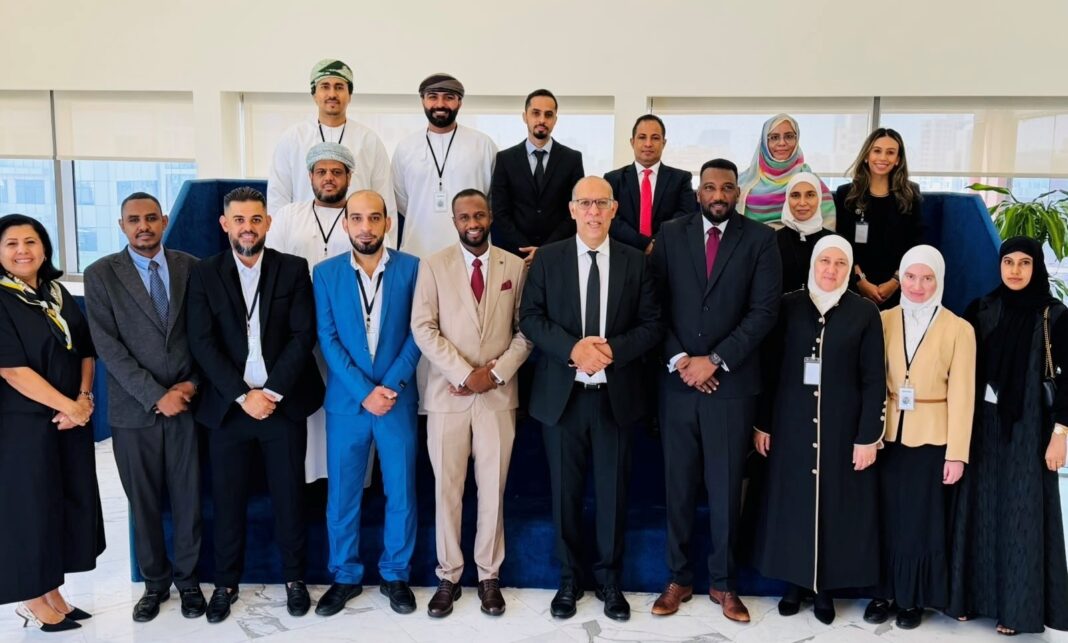
The workshop, titled “Capital Adequacy Implications for Islamic Banks Based on Basel III,” brought together senior officials and financial-sector specialists from central banks and ministries of finance across the Middle East and other Islamic finance markets. The discussions focused on strengthening the regulatory foundations of Islamic banking and ensuring that banks maintain sufficient capital to withstand financial and economic shocks.
Islamic banks have distinctive business models because their operations must comply with Shariah principles, including restrictions on interest-based transactions and requirements governing risk-sharing, asset-backing and permissible investments. These characteristics can create specific regulatory challenges when global banking standards developed largely around conventional financial institutions are applied to Islamic banks.
The workshop therefore examined how Basel III capital requirements can be adapted and implemented while recognising the particular characteristics of Shariah-compliant financial instruments and banking operations.
Delivered by Dr. Abozer Mohamed, Senior Islamic Finance Specialist at IsDBI, the programme provided participants with a detailed examination of regulatory capital frameworks and their application to Islamic banks. Key areas included the composition of regulatory capital, regulatory adjustments and deductions, capital buffers, risk-weighted assets and capital requirements for credit, market and operational risks.
Participants also examined leverage ratios and other measures used by supervisors to assess the financial strength and resilience of banking institutions.
The discussions were particularly relevant for Middle Eastern financial systems, where Islamic banking has become an important component of the broader financial sector. Effective capital regulation is critical for ensuring that Islamic banks can continue expanding their role in financing businesses, infrastructure, trade and economic development without compromising financial stability.
The workshop attracted representatives from the central banks and ministries of finance of Libya, Mauritania and Somalia, alongside officials from the Palestine Monetary Authority, Central Bank of Yemen, Central Bank of Syria, Central Bank of Oman and the Central Bank of Kuwait.
The broad participation enabled regulators to compare experiences and discuss differences in supervisory frameworks, implementation challenges and approaches to capital adequacy within Islamic banking markets.
Opening remarks were delivered by Dr. Sami Ben Naceur, Director of the IMF Middle East Center for Economics and Finance, and Dr. Abozer Mohamed of IsDBI. They underscored the importance of professional training, institutional cooperation and knowledge-sharing in strengthening financial-sector resilience.
Beyond theoretical presentations, participants engaged in practical exercises, case studies and technical discussions aimed at translating Basel III principles into real-world capital adequacy calculations. Particular attention was given to the difficulties supervisors may encounter when assessing risk-based capital requirements for Islamic banks.
Participants also presented an overview of their respective national regulatory frameworks, highlighting supervisory practices, capital requirements, and challenges affecting the implementation of international banking standards.
For the Middle East, the initiative comes as Islamic finance continues to evolve alongside broader financial-sector reforms. Strengthening regulatory capacity can help ensure that Islamic banks remain adequately capitalised while preserving the distinctive principles underpinning Shariah-compliant finance.
The first joint workshop between IsDBI and IMF-CEF consequently represents more than a capacity-building exercise. It signals deeper institutional cooperation around the regulation of Islamic finance and provides policymakers with a platform to address the intersection between global banking standards and Islamic financial principles.
The successful conclusion of the programme reinforces the shared commitment of the two institutions to developing regulatory expertise, promoting sound supervisory practices, and strengthening the stability of Islamic banking systems across the region.



