The World Health Organization (WHO) is stepping up efforts to bring traditional medicine closer to mainstream healthcare, calling for stronger scientific research, improved regulation and international collaboration to establish its role in improving global health.
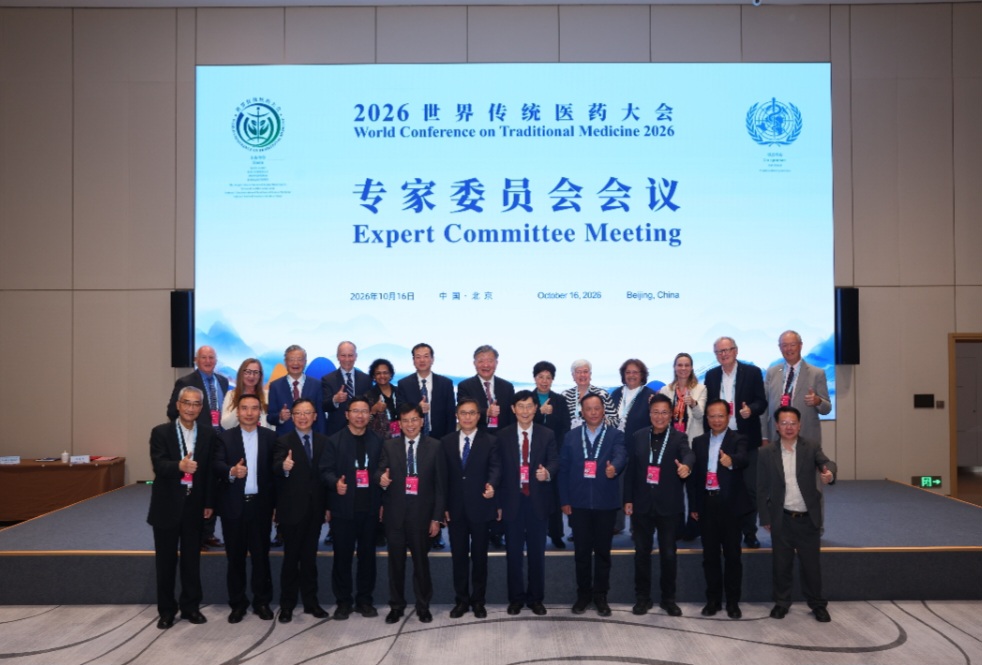
The push gained momentum following the World Conference on Traditional Medicine 2026, which concluded in Beijing, China, on October 18, with a series of commitments aimed at strengthening the development, conservation and integration of traditional medicine into health systems.
Among the major outcomes was the adoption of the Beijing Initiative on the Conservation and Sustainable Use of Traditional Medicinal Plant Resources, alongside the establishment of the Global Alliance for Traditional and Integrative Medicine (GATIM), a platform intended to promote international scientific cooperation.
The conference also saw the promotion of the New-Era Shennong Herbal Project and the publication of a report examining how artificial intelligence could support the global development of traditional medicine.
Addressing participants through a video message, WHO Director-General Dr Tedros Adhanom Ghebreyesus emphasised that traditional medicine should not be positioned in opposition to modern scientific approaches, but developed through research, innovation and quality assurance.
“This is not a choice between tradition and science,” he said, stressing the need for stronger evidence on the effectiveness of traditional treatments, the populations they benefit and the conditions under which they can be safely used.
The emphasis on scientific validation comes as countries explore ways of incorporating traditional and complementary medicine into formal healthcare systems while addressing concerns around safety, product quality and regulation.
For many communities, particularly in parts of Africa and Asia, traditional medicine remains an important source of healthcare knowledge and practice. However, its integration into formal health services requires reliable evidence, appropriate regulatory frameworks and safeguards to protect patients.
The Beijing conference was held under the theme, *Technology Empowerment and Integrated Development: Advancing Traditional Medicine for All*, bringing together nearly 2,000 participants, experts and scholars from 103 countries and areas, including 16 ministerial-level health officials.
Discussions focused on integrating traditional medicine into international health systems, evidence-based development, drug regulation and the application of artificial intelligence in traditional medicine research.
The outcomes also align with the WHO Global Traditional Medicine Strategy 2025–2034, which identifies four key priorities: strengthening the evidence base, ensuring safety through regulation, integrating traditional and complementary medicine into health systems, and maximising its contribution through action across different sectors.
Speaking at the opening ceremony, China’s Premier Li Qiang called for stronger international cooperation to harness traditional medicine resources and advance scientific and technological innovation.
He also highlighted China’s commitment to the digital transformation of Traditional Chinese Medicine and encouraged collaboration between domestic and international research institutions.
WHO Regional Director for the Western Pacific, Dr Saia Ma’u Piukala, underscored the importance of integrating traditional medicine into mainstream healthcare in line with the global strategy.
The establishment of GATIM is expected to provide an additional avenue for scientific collaboration, bringing together different countries and institutions to advance research and development in traditional and integrative medicine.
Meanwhile, the Beijing Initiative places attention on the conservation and sustainable use of medicinal plants, recognising the importance of protecting natural resources that underpin traditional healthcare practices.
The growing application of artificial intelligence also emerged as a significant area of discussion, particularly in exploring how technology could support the documentation, research and development of traditional medicine.
In the closing session, Dr Shyama Kuruvilla, Director of the WHO Global Traditional Medicine Centre, said the conference had provided an opportunity to exchange different perspectives and scientific advances while focusing on practical actions to improve human and planetary health.
The conference was co-hosted by the People’s Government of Beijing Municipality, China’s National Health Commission, the National Administration of Traditional Chinese Medicine and the National Medical Products Administration, with WHO participating as a co-sponsor.
The outcomes signal renewed international interest in traditional medicine, with its future integration into healthcare increasingly linked to scientific evidence, patient safety, effective regulation and sustainable resource management.