

The Intergovernmental Authority on Development (IGAD) has begun work on a regional Artificial Intelligence (AI) framework and strategy aimed at helping countries across the Horn of Africa harness emerging technologies for economic development, climate resilience, healthcare, agriculture and regional integration.
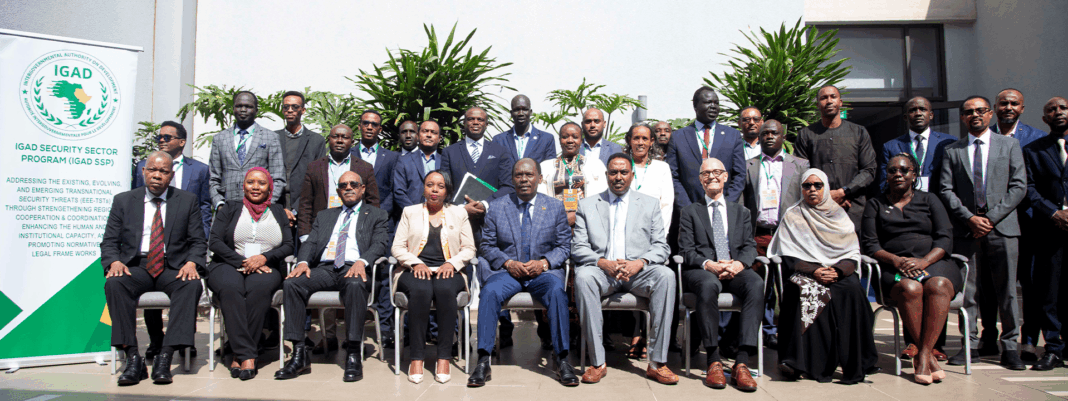
Recently IGAD held a two-day stakeholder consultation, held in Addis Ababa , bringing together policymakers, technology experts, academics, private-sector players and development partners to help shape a common regional approach to AI.
The initiative comes as AI rapidly reshapes economies and public institutions worldwide, while countries in the Horn of Africa face persistent challenges including food insecurity, drought, conflict, weak digital infrastructure and limited access to essential services.
IGAD Executive Secretary Dr Workneh Gebeyehu said the region must move beyond being a consumer of technologies developed elsewhere and instead develop the capacity to shape how AI is deployed to address its own development priorities.
“The question is no longer whether artificial intelligence will transform our region, but how we harness it to accelerate development, uplift our communities and secure our collective future,” Dr Workneh said.
At the centre of the consultations is the development of a Regional AI Framework and Strategy that reflects the realities of IGAD’s member states while aligning with the African Union Continental Artificial Intelligence Strategy and the United Nations Global Digital Compact.
For the Horn of Africa, the proposed strategy could have significant implications for agriculture and food security. AI-powered systems can analyse weather and satellite data, improve agricultural forecasting and help governments anticipate droughts, floods and other climate-related threats.
The technology could also strengthen IGAD’s regional early-warning systems, particularly in a region where climate shocks frequently contribute to displacement, food insecurity and competition over scarce resources.
Pastoral communities could benefit from AI applications capable of monitoring rangeland conditions, livestock movements, water availability and weather patterns. Such tools could support governments and communities in responding earlier to drought and reducing the economic losses associated with climate emergencies.
Healthcare and education are also expected to feature prominently in the emerging regional strategy. AI-enabled diagnostics could expand access to medical expertise in remote and underserved communities, while digital learning platforms could help overcome shortages of teachers, specialised skills and educational resources.
The strategy is also expected to address AI’s role in regional economic integration. Harmonised digital policies and interoperable systems could make it easier for businesses, governments and citizens to operate across borders, supporting trade and strengthening digital connectivity among IGAD member states.
However, IGAD officials have stressed that technological expansion must be accompanied by strong governance.
Dr Workneh placed particular emphasis on data sovereignty, privacy, cybersecurity and accountability, warning that rapid AI adoption without appropriate safeguards could expose countries to new risks.
For the Horn of Africa, control over data will be particularly important as governments increasingly digitise public services, economic systems and national databases. The proposed framework is therefore expected to explore how regional data can be securely managed while ensuring that AI systems serve local development priorities.
Ethiopia’s Director for IGAD Affairs, Ketema Haile, reaffirmed his country’s support for an inclusive and human-centred AI agenda. He pointed to Ethiopia’s digital transformation programmes and its newly established Artificial Intelligence University as potential resources for building regional expertise.
The consultation will draw on an AI Readiness and Ecosystem Assessment and examine national AI initiatives across IGAD countries. Participants are expected to identify common priorities, regulatory gaps, investment needs, skills shortages and opportunities for cross-border cooperation.
The ultimate objective is to produce a practical framework capable of guiding member states in developing AI ecosystems, attracting investment, building technical capacity and using technology to advance sustainable development.
For the Horn of Africa, the emerging IGAD strategy could therefore represent more than a technology policy. If effectively implemented, it could become a regional development instrument—helping countries use AI to confront climate pressures, improve public services, strengthen food security and deepen economic integration while ensuring that the region retains greater ownership of its digital future.



