

For Thomas Bazawi, the sound of gunfire is more than a reminder of conflict. It takes him back to a time when he was young, hungry and afraid, walking through thick forests with no certainty about where the next day would find him.
He was searching for one thing: safety.
“I was hungry, exhausted and scared. But every morning I told myself to keep walking because stopping was never an option,” he recalls.
Thomas eventually crossed from South Sudan’s Western Equatoria into the Central African Republic before moving on to Uganda, where he lived as a refugee.
Decades later, he has returned to South Sudan — not as someone fleeing violence, but as someone helping communities affected by it.
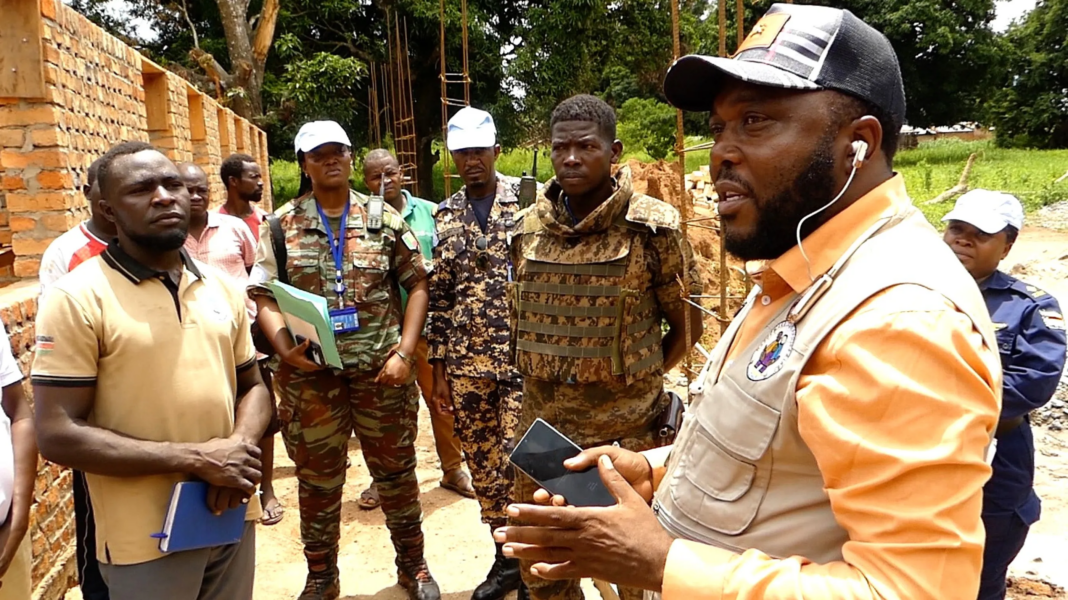
At 52, Thomas works as a Protection, Transition and Reintegration Officer with the United Nations Mission in South Sudan (UNMISS). His work involves protecting civilians, supporting dialogue between communities and helping people find peaceful ways to resolve tensions.
But for Thomas, peacebuilding is not simply a profession. It is deeply connected to his own story.
“When you become a refugee, you lose much more than your house. You lose the life you knew and sometimes your confidence. But I refused to let conflict define who I would become,” he says.
His experience as a refugee shaped his determination to rebuild his life. He pursued a degree in Social Work and Social Administration, seeing education as a way to turn painful experiences into something useful to others.
“Education gave me purpose. It helped me understand how I could support people facing the same hardships I experienced.”
Yet returning home did not mean escaping the realities of conflict.
In 2017, Thomas was detained by an armed group in Western Equatoria for nearly a week. Once again, he found himself confronting the fear and uncertainty he had known as a young refugee.
“The hardest part was the uncertainty. Every night I wondered whether I would ever see my family, including my 11 children, again,” he recalls.
The experience reinforced his belief that conflict takes away more than physical security.
“Conflict can quickly take away your freedom, dignity and ability to make decisions about your own life.”
Thomas could not change what had happened to him. But he could decide what to do with those experiences.
“I could not change what happened to me. But I could decide what kind of person I wanted to become. I wanted my experiences to help protect others and contribute to peace.”
Today, he spends his working days alongside displaced families, community leaders, women, young people and local authorities. He listens to their concerns, helps identify protection risks and supports dialogue in communities where mistrust and fear can easily turn into violence.
His own experience has changed the way he listens.
“When people tell me they have lost their homes, I don’t hear statistics. I see families trying to rebuild their lives. I know what that feels like because I have lived it.”
That personal connection has helped him build trust with communities.
His team leader, Charles Okwir, says Thomas brings an understanding of conflict that goes beyond professional training.
“Thomas deeply understands the conflict dynamics and provides analysis rooted in lived experience. This enriches our civilian protection efforts and fosters community trust,” Okwir says.
Thomas’s work has also taken him into some of the country’s most difficult conflict-affected areas.
During violence in Tambura, he continued supporting affected communities despite the risks. At times, the sound of gunfire brought back memories of his own journey through the forests years earlier.
“There were moments when I heard gunfire and remembered my own escape years earlier. But seeing the families around me, I knew I had to stand with them.”
For the families he serves, his story offers something that is difficult to measure but powerful: hope.
Community leader Ippai Christine says Thomas’s life demonstrates that a person’s beginnings do not have to determine their future.
“He left as a refugee, pursued education, and returned to serve his people. His journey shows hardship can shape rather than break you.”
For Thomas, peace is ultimately about people.
It is about a mother being able to return home without fear, a child growing up without knowing the sound of gunfire, and young people having opportunities beyond violence.
His own journey began with a desperate walk through a forest, carrying the uncertainty of a young refugee.
Today, he walks a different path — helping others find the safety, dignity and hope that he once searched for himself.



