
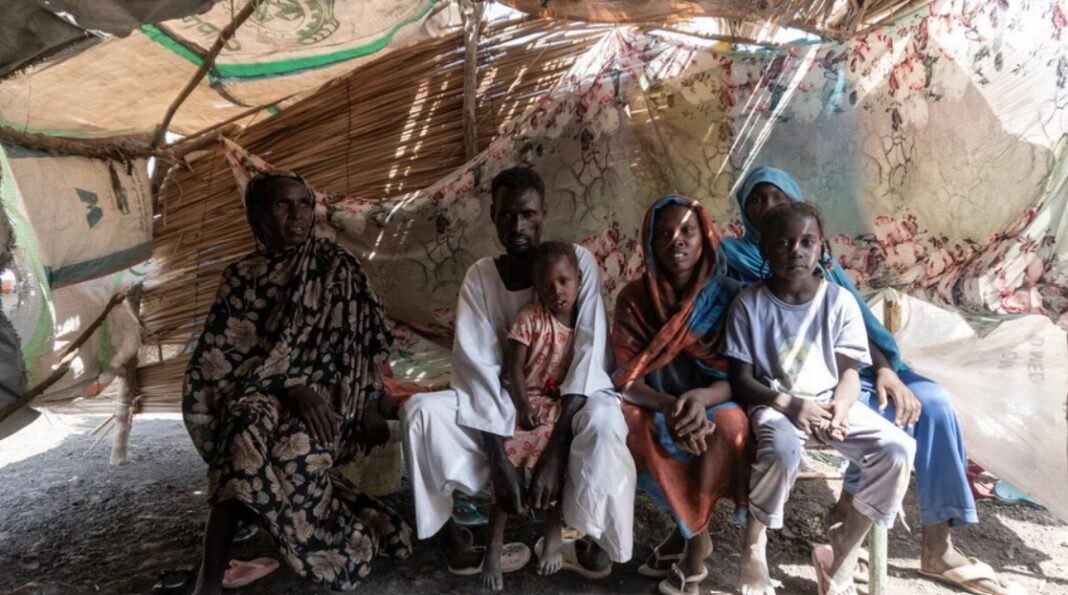

Millions of people displaced by Sudan’s prolonged conflict face the risk of losing access to emergency shelter and essential household supplies as humanitarian funding shortages threaten to exhaust critical relief stocks, the United Nations refugee agency and the International Organization for Migration (IOM) have warned.
The two agencies said an estimated 15.4 million people across Sudan urgently need emergency shelter and basic household items, including materials to protect them from harsh weather and unsafe living conditions.
However, limited resources have left humanitarian organisations able to prioritise assistance for only 10 per cent of those in need. So far, approximately 936,000 people have received support, highlighting the widening gap between humanitarian needs and available funding.
UNHCR and IOM warned on Friday that without an urgent injection of flexible funding, emergency supplies could run out, leaving millions of vulnerable families without adequate protection against insecurity, extreme weather and exploitation.
The warning comes as Sudan continues to experience the world’s largest displacement crisis, more than three and a half years after the conflict began.
Approximately 8.6 million people remain internally displaced, while more than 4.6 million have crossed international borders in search of safety. At the same time, more than 5.2 million people have returned to their areas of origin, including internally displaced families and Sudanese refugees coming back from neighbouring countries.
However, returning home has not necessarily meant returning to normal life.Many families are finding their homes destroyed, infrastructure damaged and essential services disrupted by years of fighting. With limited resources to rebuild their lives, emergency shelter and household assistance have become critical to their survival and recovery.
For families repeatedly forced to flee violence, access to a safe place to sleep, cooking materials and other basic household necessities provides more than immediate relief. Such assistance helps restore dignity and offers a degree of protection, particularly for women, children and other vulnerable groups.
For returning populations, shelter support is also an important first step towards rebuilding communities and restoring livelihoods.
The humanitarian response is further complicated by continued fighting, insecurity and drone attacks, which are triggering fresh displacement and restricting relief operations. Damaged infrastructure and logistical challenges are also making it difficult for humanitarian agencies to transport and position emergency supplies in areas where they are most urgently required.
The funding crisis is adding further pressure to an already overstretched humanitarian response.
Sudan’s 2026 Humanitarian Needs and Response Plan requires US$2.9 billion to deliver life-saving assistance to 20.4 million people out of an estimated 33.7 million people requiring humanitarian support nationwide.
However, only about 47 per cent of the required funding has been received, forcing humanitarian agencies to reduce services and concentrate available resources on the most urgent cases.
The shortfall threatens not only emergency shelter programmes but also the wider humanitarian response, as agencies struggle to maintain supply chains and deliver essential assistance to displaced populations and communities receiving returnees.
UNHCR and IOM said they were working with local humanitarian organisations and other partners to maintain joint supply pipelines, pre-position emergency stocks in priority locations and improve coordination to ensure assistance reaches affected communities safely and efficiently.
The agencies emphasised that strengthening local response capacity and maintaining access to essential supplies remain central to supporting displaced families and those returning to their communities.
However, they warned that these interventions cannot be sustained without predictable and flexible financial support from international donors and humanitarian partners.
With millions of people still displaced and communities struggling to recover from years of conflict, the agencies are calling for urgent action to prevent further deterioration of living conditions.
The consequences of delayed funding could be particularly severe for families who have already lost their homes, livelihoods and support networks.
For Sudan’s millions of displaced people and returning families, securing emergency shelter is increasingly becoming a question of survival, as humanitarian agencies face the prospect of running out of the resources needed to protect them.



