
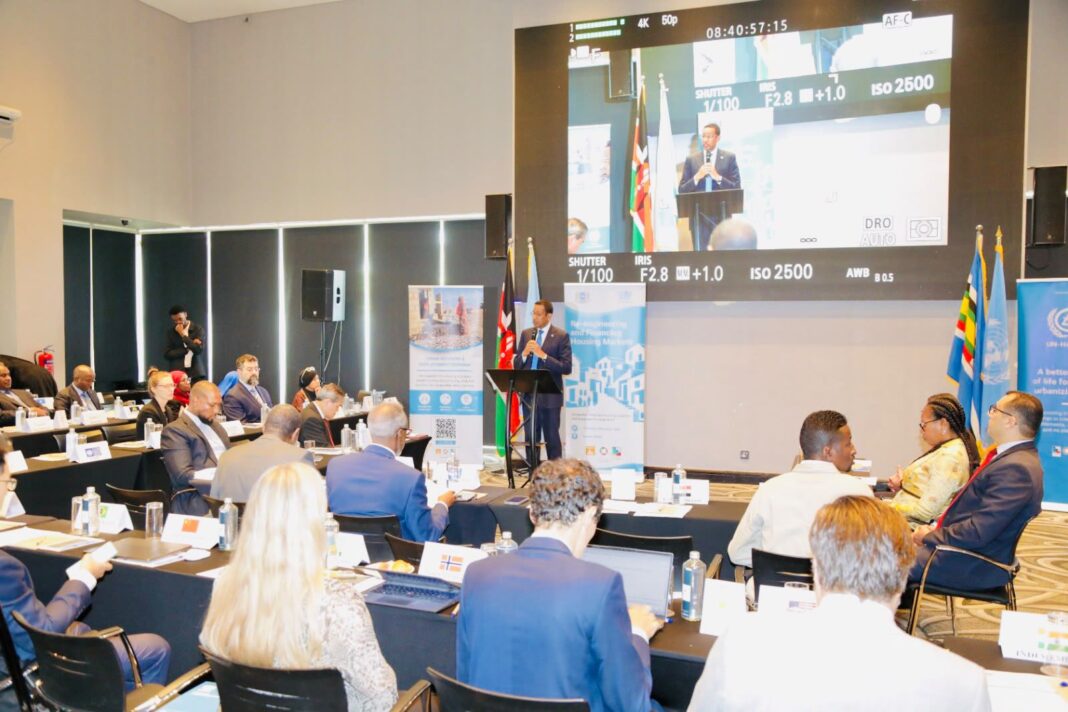

Somalia is seeking to accelerate the development of affordable housing through strategic investment partnerships, financial sector engagement and regional cooperation, as the country looks to address growing demand for decent and accessible homes.
The initiative took centre stage in Nairobi during a high-level housing breakfast convened by the Somali Embassy in Kenya in partnership with UN-Habitat. The meeting brought together government officials, development partners, investors, financial institutions, representatives from more than 30 embassies and members of the Somali diaspora to explore financing opportunities and practical approaches to delivering affordable homes.
The discussions focused on translating Somalia’s housing ambitions into bankable projects capable of attracting domestic and international investment while strengthening the country’s urban development agenda.
Jabril Ibrahim Abdulle, Ambassador of the Federal Republic of Somalia to Kenya, said the engagement demonstrated growing political commitment and a shared determination among stakeholders to transform housing policy into tangible development outcomes.
He emphasised the importance of building partnerships that bring together government, financial institutions, the private sector and development agencies to expand access to affordable homes for Somali families.
The meeting was also addressed by Hirsi Jama, State Minister in the Office of the Prime Minister of Somalia, who delivered the keynote address, while UN-Habitat Executive Director Anacláudia Rossbach highlighted the importance of coordinated action in addressing Africa’s housing challenges.
Somalia is seeking to draw lessons from affordable housing initiatives implemented across more than 30 countries, including Kenya’s Affordable Housing Programme, to shape its own approach to housing delivery.
Kenya’s experience provides potential lessons in public-private partnerships, housing finance, construction technology, land development and the mobilisation of private capital. However, adapting these models to Somalia’s economic, institutional and urban development circumstances will be critical to ensuring long-term sustainability.
The discussions also built on the Africa Affordable Housing Compact, launched during the Second Africa Urban Forum, which seeks to strengthen cooperation between governments, development institutions and private investors in addressing the continent’s housing shortage.
For Somalia, expanding affordable housing presents opportunities beyond meeting the demand for residential units. A structured housing development programme could stimulate investment in construction, building materials, infrastructure, financial services and property development, while creating employment opportunities for young people.
The sector could also provide opportunities for Somali businesses and diaspora investors to participate in rebuilding the country’s urban infrastructure and expanding its formal economy.
Financial mobilisation emerged as a central theme of the Nairobi engagement, with major development finance institutions, including Shelter Afrique, the World Bank, African Development Bank, Arab Bank for Economic Development in Africa (BADEA) and the International Finance Corporation (IFC), participating in the discussions.
Their involvement is significant given the financing requirements associated with affordable housing, particularly in markets where access to long-term mortgages, infrastructure funding and affordable construction finance remains limited.
Somali financial institutions, including Amal Bank, Premier Bank and IBS Bank, also participated, alongside members of Eastleigh’s business community, highlighting the potential role of domestic banks and private investors in supporting housing development.
Strengthening local financial institutions’ capacity to provide housing loans, develop innovative mortgage products and finance property developers could help create a more sustainable housing market.
Participants also recognised Somalia’s growing engagement in international housing policy, particularly its role as co-chair, alongside Azerbaijan, of the UN-Habitat intergovernmental working group on adequate housing.
The position provides Somalia with an opportunity to contribute to global discussions on housing affordability, urban development and access to adequate shelter while strengthening international cooperation.
As Somalia continues its recovery and reconstruction efforts, affordable housing is increasingly emerging as an important pillar of economic development.
The challenge now will be converting the political commitments and partnerships established in Nairobi into clear investment frameworks, viable housing projects and financing mechanisms that can deliver homes at prices accessible to ordinary Somali households.
For the government, development partners and private investors, the priority will be ensuring that housing initiatives are commercially sustainable, socially inclusive and supported by the infrastructure needed to build liveable communities.



