

Member States advance negotiations on pathogen access and benefit sharing ahead of UN GENERAL Assembly meeting on Pandemics

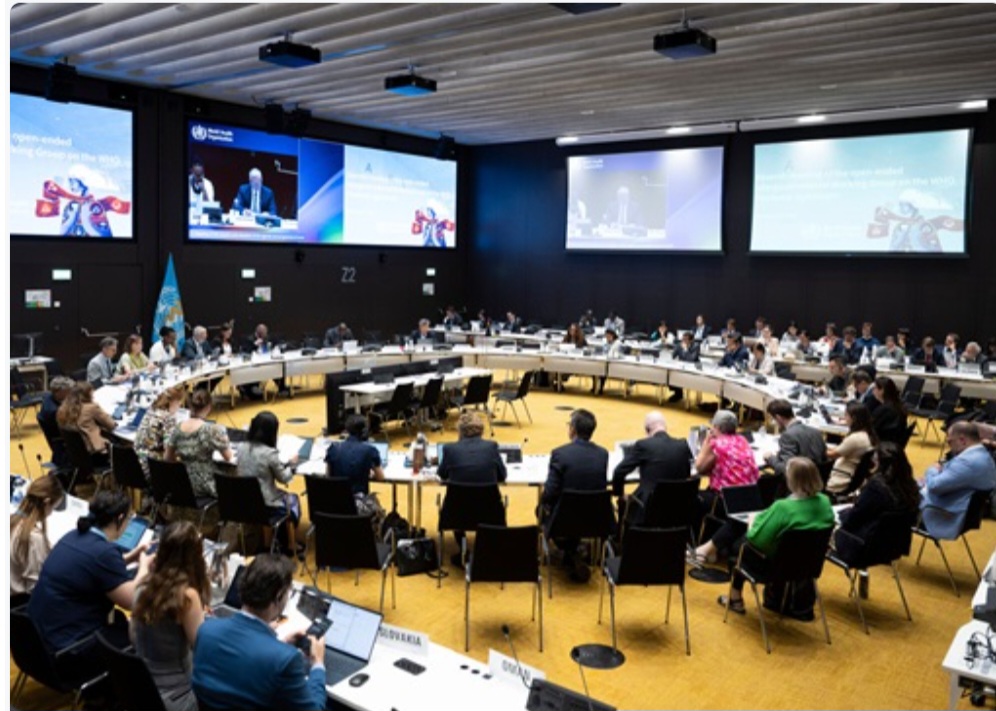
WHO Member States concluded the eighth meeting of the Intergovernmental Working Group (IGWG) on the WHO Pandemic Agreement today, advancing negotiations on a proposed pathogen access and benefit-sharing (PABS) system that would underpin a faster and more equitable response to future pandemics.


The five-day meeting brought together governments and stakeholders in Geneva, where negotiations continued on the PABS annex, focusing on an equitable, feasible and implementable system.


The PABS annex is a central component of the WHO Pandemic Agreement, adopted by the World Health Assembly in 2025. It aims to facilitate the rapid and timely sharing of materials and sequence information from pathogens with pandemic potential, and, on an equal footing, enable the rapid, timely, fair and equitable sharing of the vaccines, therapeutics and diagnostics developed from their use.


The meeting took place as governments prepare for the Second United Nations General Assembly High-Level Meeting on Pandemic Prevention, Preparedness and Response on 25 September 2026 in New York. The high-level meeting is expected to bring together heads of state and government to reinforce political commitment to fighting future pandemics. The political declaration that will be tabled for adoption at the meeting calls for, among other things, the timely completion of the PABS annex.


“We made a promise after COVID-19 that we would not leave the world as vulnerable to the next pandemic as it was to the last,” said Dr Tedros Adhanom Ghebreyesus, WHO Director-General. “The progress made this week brings us closer to keeping that promise. As leaders prepare to meet at the United Nations General Assembly, the message from Geneva is clear: protecting future generations requires commitment, cooperation and urgency. Finalizing the PABS annex is essential for strengthening the world’s collective defences against future pandemic threats.”


Finalizing the annex will pave the way for countries to sign and consider ratification of the Pandemic Agreement, strengthening global coordination and capacity to prevent, prepare for and respond to future pandemics.


“Member States have once again demonstrated their commitment to completing the PABS annex in order to strengthen equitable access to the tools and means needed to make the world safer from future pandemics,” said Ambassador Tovar da Silva Nunes of Brazil, co-Chairperson of the IGWG Bureau guiding the negotiations. “The progress achieved this week provides a strong direction for the weeks ahead and brings us closer to an equitable and effective system.”


At the meeting, Dr Ahmed Al Mandhari, Undersecretary for Planning and Health Regulation at the Ministry of Health of Oman, was elected as a Vice-Chair of the IGWG, joining fellow Vice-Chairs Ambassador Vuyile Dlamini of the Kingdom of Eswatini and Dr Viroj Tangcharoensathien of the Kingdom of Thailand.


 

Mercy Kachenge
Mercy Kachenge
Mercy Kachenge is a Kenyan multimedia journalist, communications professional and media consultant specializing in health, science, policy and development. She produces engaging, public-interest content across multiple media formats, translating complex issues, research and policy into clear and impactful stories.

Hot This Week

Ruto Unveils KSh5 Trillion Economic Transformation Plan, Promises Tax Relief and Massive Infrastructure Expansion

President William Ruto has unveiled an ambitious KSh5 trillion...

UNIDO unveils nine African start-ups tackling climate challenges in agriculture

VIENNA, Austria 18 November 2026 -/African Media Agency(AMA)/ –...

The Cost of Disability: When Seeking Tax Relief Becomes Another Burden for Kenyan Families

For Angela, the financial demands of raising two children...

Africa urged to mobilise domestic capital as Japan commits $583m development loan

Japan's financing boost to the African Development Fund highlights the need for African governments to unlock pension savings, strengthen local capital markets and attract private investment to finance the continent's development.

Afreximbank pushes trade finance to drive Africa’s industrial growth

The bank calls for stronger intra-African trade, improved financial compliance and investment in value-added manufacturing to accelerate economic integration under the AfCFTA.

Top Stories

UNIDO unveils nine African start-ups tackling climate challenges in agriculture

VIENNA, Austria 18 November 2026 -/African Media Agency(AMA)/ –...

The Cost of Disability: When Seeking Tax Relief Becomes Another Burden for Kenyan Families

For Angela, the financial demands of raising two children...

Africa urged to mobilise domestic capital as Japan commits $583m development loan

Japan's financing boost to the African Development Fund highlights the need for African governments to unlock pension savings, strengthen local capital markets and attract private investment to finance the continent's development.

Afreximbank pushes trade finance to drive Africa’s industrial growth

The bank calls for stronger intra-African trade, improved financial compliance and investment in value-added manufacturing to accelerate economic integration under the AfCFTA.

AfDB commits $150m to expand affordable SME financing in Kenya

Eight-year facility to strengthen Equity Bank’s lending capacity, helping small businesses access long-term credit, create jobs and expand across regional markets.

EAC’s 127 Million Youth Hold Key to Regional Economic Growth

East Africa’s youthful population presents a major economic opportunity, but investment in digital skills, technical training and entrepreneurship will be critical to turning demographic growth into jobs, productivity and regional competitiveness.

Lesotho targets $1 billion economic return from $173 million investment in women and girls

Investment programme aims to save 15,900 lives, prevent 344,000 unintended pregnancies and strengthen the country's health system by 2030.

Related Articles
