

Somalia is seeking to move beyond emergency humanitarian responses by placing housing, urban infrastructure, and livelihoods at the center of its longer-term recovery strategy, as the government works with UN-Habitat and development partners to develop an integrated national housing policy.
The approach reflects a growing recognition that Somalia’s displacement crisis cannot be addressed through temporary shelter and relief assistance alone. Years of conflict, droughts, floods, and economic hardship have pushed millions of people into displacement, placing growing pressure on cities and towns that must provide housing, water, sanitation, health services, education, and livelihoods.
UN-Habitat says Somalia has more than three million internally displaced people, with many living in informal and peri-urban settlements where access to basic services remains limited. The agency has increasingly promoted a shift from short-term humanitarian interventions towards durable solutions that combine housing, land rights, infrastructure, livelihoods, and local governance.
The latest push is being led through closer cooperation between the Somali government, UN-Habitat, development partners, financial institutions, and the private sector.
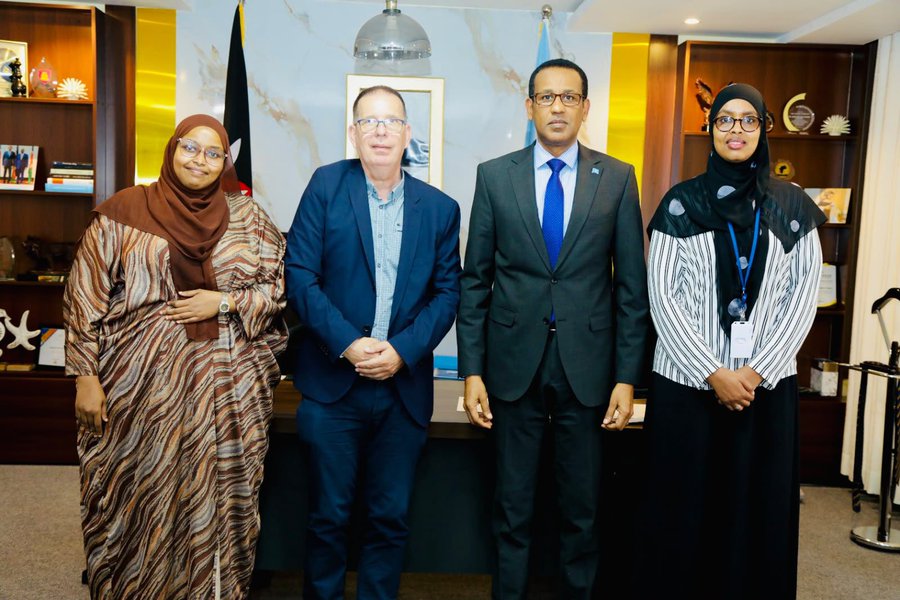
Somalia’s Ambassador to Kenya, Jabril Ibrahim Abdulle, said discussions with the UN-Habitat Somalia Country Office are focused on connecting housing with the country’s broader urban development and national recovery agenda.
“We discussed how housing can be better integrated into Somalia’s National Transformation Plan, the importance of durable solutions in addressing displacement and supporting sustainable recovery, and preparations for the upcoming Somali Housing Breakfast,” Abdulle said.
He said the planned Housing Breakfast would bring together government institutions, development partners, private-sector players, banks, and other stakeholders to build momentum towards an integrated housing policy.
“The Breakfast will provide an important platform to build momentum towards an integrated Housing Policy for Somalia under the Africa Affordable Housing Compact with UN-Habitat,” Abdulle said.
Somalia’s National Transformation Plan 2025–2029 provides the broader policy framework for this effort. The five-year plan, which succeeds the Ninth National Development Plan, is organised around transformational governance, sustainable economic transformation, social and human capital development, and environmental and climate resilience.
Housing is therefore increasingly being viewed not simply as a humanitarian requirement but as part of Somalia’s economic and social reconstruction.
UN-Habitat’s recent work in Somalia illustrates this transition. In Bosaso, permanent climate-resilient homes have been developed for internally displaced families alongside improved access to basic services, land security and livelihood opportunities. The agency says such projects are designed to help displaced communities move from fragile shelters towards more secure and sustainable living conditions.
In Baidoa and Kismayo, UN-Habitat programmes have similarly combined housing with urban regeneration, infrastructure upgrading, livelihood opportunities and support for local authorities. Previous initiatives have included plans for permanent housing, rehabilitation of existing homes, emergency shelters and improvements to water, sanitation and other community services.
The challenge remains substantial. Somalia’s cities are absorbing large numbers of displaced people, while limited urban planning capacity, insecure land tenure and inadequate infrastructure complicate efforts to provide affordable housing at scale. UN-Habitat’s urban planning work has consequently emphasised integrating displaced populations into wider city development rather than treating displacement settlements as isolated humanitarian spaces.
The housing agenda also comes as UN-Habitat places adequate and affordable housing at the centre of its global urban development strategy. Its 2026–2029 strategic plan identifies housing, land and basic services as critical foundations for poverty reduction, climate resilience and recovery from crises.
For Somalia, the emerging model could link humanitarian assistance with reconstruction by ensuring that investment in homes is accompanied by roads, water, sanitation, schools, healthcare, jobs and secure land tenure.
Abdulle said Somalia would continue facilitating collaboration among government and non-state actors to translate the discussions into action.
The objective, he said, is to advance “coordinated action for sustainable and affordable housing in Somalia,” signalling a broader effort to turn housing from an emergency response into a pillar of national recovery, urban development and long-term stability.



