
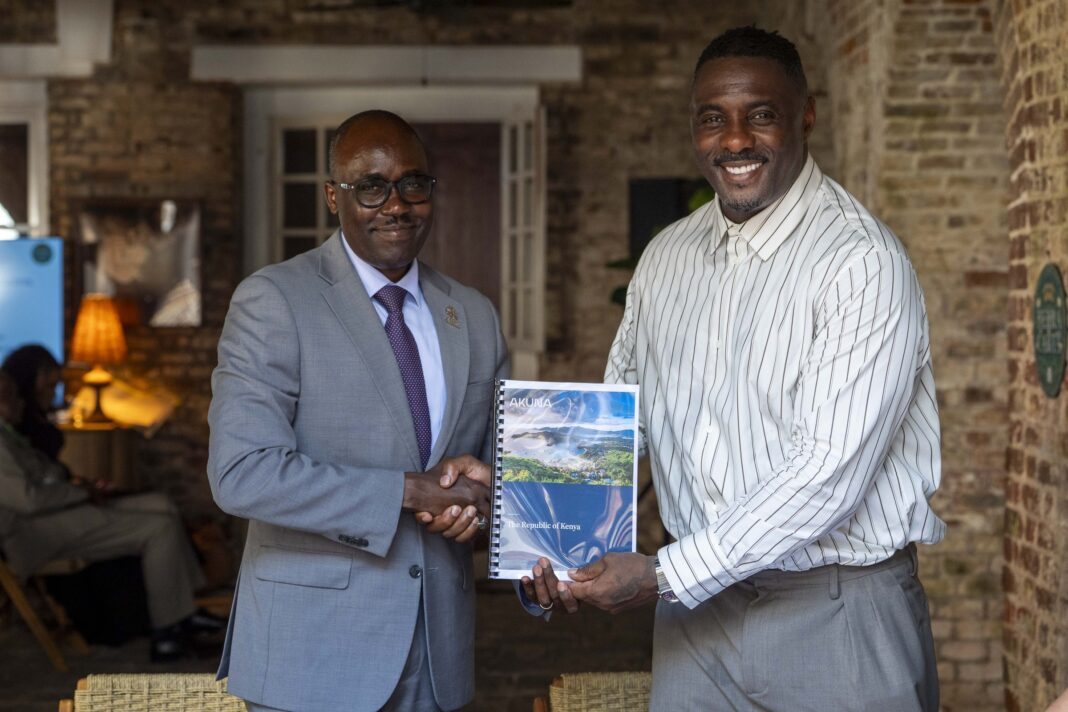

Kenya has signed a Statement of Intent with The Akuna Group to become a founding champion of the Commonwealth Creative Economy Partnership, an initiative designed to strengthen creative enterprises, expand market access and create sustainable livelihoods for young people across the Commonwealth.
The agreement, signed during the Commonwealth Heads of Government Meeting (CHOGM) 2026, places Kenya among the countries seeking to build stronger commercial links between creative talent, production capabilities, investment and global distribution networks.
Principal Secretary for Foreign Affairs Dr A. Korir Sing’Oei signed the agreement on behalf of Kenya, alongside Sierra Leone’s Chief Minister Dr David Moinina Sengeh and Sir Idris Elba, Chairman of The Akuna Group.
The signing ceremony took place in the presence of Sierra Leonean President Dr Julius Maada Bio, with Ghanaian Member of Parliament Joycelyn Tetteh conveying a message of goodwill.
For Kenya, the partnership presents an opportunity to strengthen the commercial foundations of its creative economy, particularly by helping young people transform their artistic and technical skills into viable businesses and income-generating enterprises.
The collaboration complements the government’s Talanta Hela initiative, which seeks to identify, nurture and monetise creative and sporting talent by connecting young people to professional opportunities and markets.
Dr Sing’Oei said the partnership would give “youth creative enterprises a route to market”, highlighting the importance of moving beyond talent development towards sustainable commercial opportunities.
The initiative comes as African countries increasingly seek to position their creative industries as contributors to economic growth, employment, entrepreneurship and international trade. Film, music, fashion, digital content, design and other cultural industries offer opportunities for young entrepreneurs to participate in domestic and international value chains.
Speaking during One Commonwealth Night, Sir Idris Elba said the partnership would focus on building connections that enable creatives to earn from their talents and retain ownership of their work.
“And that’s really what we’re trying to do through Akuna. Bring people together, build those connections, and help turn creativity into opportunity, so more people can make a living from their talent and own what they create,” he said.
A key component of the partnership is skills development in the film industry. The Akuna Group, in collaboration with Google and Curious Refuge, is developing the From Script to Screen with AI programme, supported by a US$1 million Google.org grant.
The initiative will train emerging filmmakers in Ghana, Kenya, Nigeria, Sierra Leone and South Africa, with a focus on strengthening their production capabilities and preparing them to participate in an evolving global film industry.
For Kenya’s creative sector, such programmes could help address skills gaps, expand access to emerging production technologies and improve the competitiveness of local filmmakers seeking international distribution opportunities.
Beyond training, the wider partnership seeks to address structural barriers that prevent creatives from fully benefiting from their work, including limited access to financing, fragmented markets and challenges in receiving payments across national borders.
Akuna Wallet Ltd’s admission into the Bank of Ghana’s one-year regulatory sandbox in January 2026 provides a supervised environment for exploring financial innovation relevant to cross-border earnings. The development forms part of the group’s broader interest in addressing payment challenges facing creative entrepreneurs operating internationally.
Ghanaian MP Joycelyn Tetteh welcomed the initiative, saying it would create opportunities for filmmakers, musicians, designers and storytellers to take their work to international audiences.
The partnership also reflects efforts to strengthen cultural and commercial connections between Africa and the Caribbean. Sir Idris held discussions with Barbados Prime Minister Mia Amor Mottley on a proposed initiative to connect African and Caribbean creatives through cultural exchanges, commissions and access to new audiences.
He also met Barbados Central Bank Governor Dr Kevin Greenidge to discuss the financial challenges associated with receiving earnings across borders.
In another engagement, discussions with UK Prime Minister Andy Burnham focused on vocational training, industry experience and employment pathways in the creative industries, drawing on Creative Futures and initiatives by The King’s Trust and the Elba Hope Foundation.
The Commonwealth Creative Economy Partnership is a voluntary, country-led initiative shaped by the priorities, policies and laws of participating governments.
For Kenya, its significance will ultimately depend on how effectively the agreement translates into opportunities for local creative businesses, including access to financing, professional training, intellectual property protection, production infrastructure and international distribution networks.
By connecting talent development with enterprise and market access, the initiative seeks to strengthen the role of the creative economy in generating employment, expanding exports and creating new sources of income for young people.



