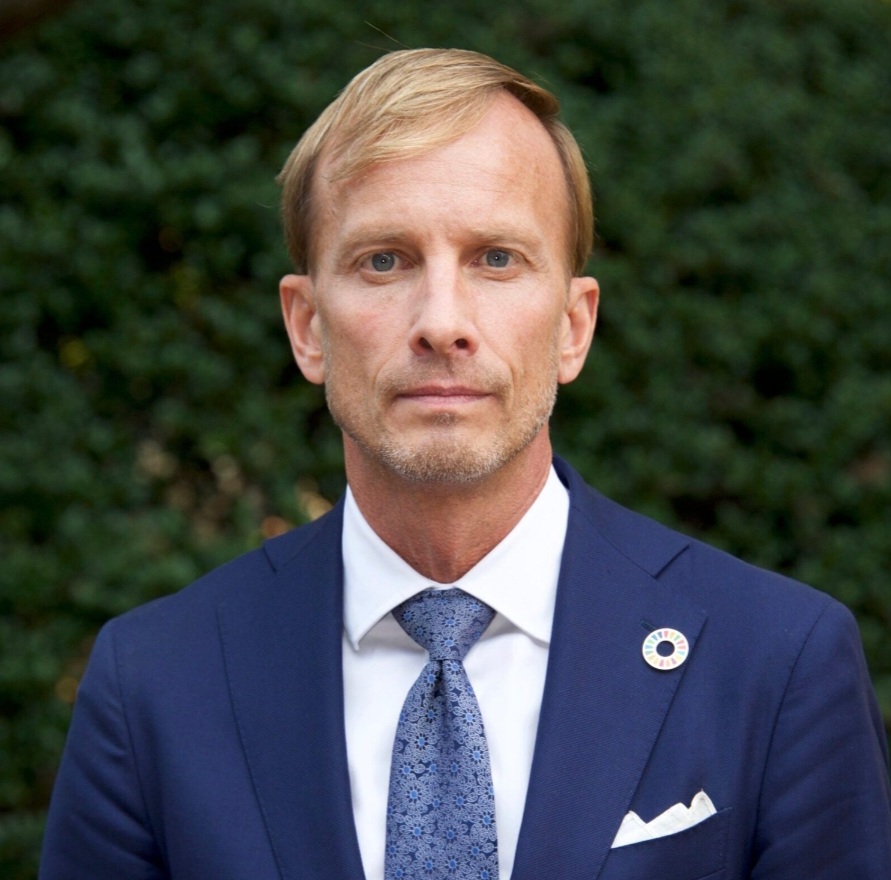
Dr Mark Dybul’s appointment comes amid growing pressure on external health financing, with Africa pushing for greater domestic investment, local pharmaceutical manufacturing and stronger control over health priorities.
Africa’s push for greater control over its health financing, pharmaceutical production and public health priorities is expected to shape its renewed partnership with the Global Fund following the appointment of Dr Mark Dybul as its next Executive Director.
The Africa Centres for Disease Control and Prevention (Africa CDC) has called for a new era of African ownership and health sovereignty, urging the incoming Global Fund chief to strengthen African institutions, support sustainable financing and expand the continent’s capacity to manufacture essential health products.
In a statement issued in Addis Ababa on November 9, 2026, Africa CDC Director General Dr Jean Kaseya said Dybul’s appointment comes at a critical moment for Africa, as external health financing faces growing pressure and reforms to the global health architecture become increasingly urgent.
The development raises questions about how African countries will sustain progress against HIV, tuberculosis and malaria while reducing their dependence on external funding.
Following a telephone conversation with Dybul on November 7, Kaseya congratulated him on his appointment and outlined Africa’s expectations for the next phase of cooperation with the Global Fund, particularly on African ownership, domestic financing and health sovereignty.
“Mark knows the Global Fund, and he knows Africa. His appointment comes at a defining moment for our continent and for global health,” Kaseya said.
He emphasised that African governments must take the lead in determining their health priorities, strengthening national institutions and building sustainable financing mechanisms.
The Global Fund has played a significant role in supporting the fight against HIV, tuberculosis and malaria across Africa. However, Africa CDC argues that the next phase of cooperation must move beyond financing disease-specific interventions towards strengthening the continent’s broader health systems.
A central part of this transition will be increasing domestic resource mobilisation and establishing predictable financing arrangements that allow countries to sustain essential health services.
Africa CDC says international investments should increasingly support national planning, budgeting, procurement and financial management systems rather than create parallel structures that place additional administrative burdens on governments.
The agency has also warned against transition arrangements that fail to consider the different economic and institutional capacities of African countries.
For health systems already dependent on external support, an abrupt reduction in funding could threaten the continuity of prevention, diagnosis and treatment services.
Beyond financing, Africa CDC wants the Global Fund to use its purchasing power to accelerate pharmaceutical and medical technology manufacturing on the continent.
The agency sees an opportunity to create predictable demand for quality-assured medicines, diagnostics and other essential health products manufactured in Africa.
Through stronger procurement commitments, technology transfer and investment in local production, the partnership could help African manufacturers access larger markets while reducing dependence on imported medical commodities.
Kaseya identified the African Pooled Procurement Mechanism (APPM) as an important platform for translating these ambitions into practical outcomes.
The mechanism provides an opportunity for African countries to strengthen collective purchasing arrangements and improve access to essential health products.
“We want African manufacturers to produce the medicines, diagnostics and technologies our people need,” Kaseya said, adding that the Global Fund’s investments and purchasing power could play a decisive role in advancing Africa’s health sovereignty agenda.
The proposed shift also comes as the continent continues to confront persistent infectious disease burdens.
Africa CDC stressed that sustained progress against HIV, tuberculosis and malaria will require continued investment in prevention, diagnosis and treatment, alongside stronger community health systems.
Frontline health workers, community organisations, laboratories and primary healthcare facilities remain critical to reaching populations most at risk.
The agency further called for scientific advances, including long-acting HIV prevention technologies, improved tuberculosis diagnostics and treatments, and next-generation malaria tools, to reach communities that need them.
This places access to innovation alongside financing and manufacturing as a key measure of the partnership’s future success.
The cooperation has an existing institutional foundation through a Memorandum of Understanding signed between Africa CDC and the Global Fund in May 2026.
The agreement provides a framework for collaboration in strengthening national health systems, domestic financing, regional procurement, local manufacturing and community health services.
Africa CDC has acknowledged the contribution of outgoing Global Fund Executive Director Peter Sands, whose tenure advanced the organisation’s partnership with African countries.
Dybul’s appointment therefore presents an opportunity to build on that relationship while responding to changing global health financing realities.
Africa CDC says it will work with the incoming executive director, the Global Fund Board and African Union Member States to translate the commitments into measurable results.
For the continent, the test will not simply be the amount of funding mobilised but whether African countries can increasingly finance their own health priorities, manufacture essential medical products and maintain reliable services for their populations.
Kaseya said the partnership’s success should ultimately be measured through lives saved, diseases prevented, stronger institutions and Africa’s growing capacity to protect the health of its people.