

Africa’s growing film industry is attracting strong audience interest across the continent and beyond, with new research identifying opportunities to expand African-owned streaming platforms, create jobs and strengthen the commercial value of the continent’s creative economy.
A six-country study covering Egypt, Kenya, Nigeria, Rwanda, Senegal and South Africa has found significant demand for African films, while highlighting the need for stronger distribution networks, increased investment and innovative digital platforms to connect filmmakers with audiences.
The findings come as Africa’s paid television and online streaming market is projected to reach $5.2 billion by 2030, presenting opportunities for African filmmakers, production companies, distributors and technology businesses to tap into a growing entertainment market.
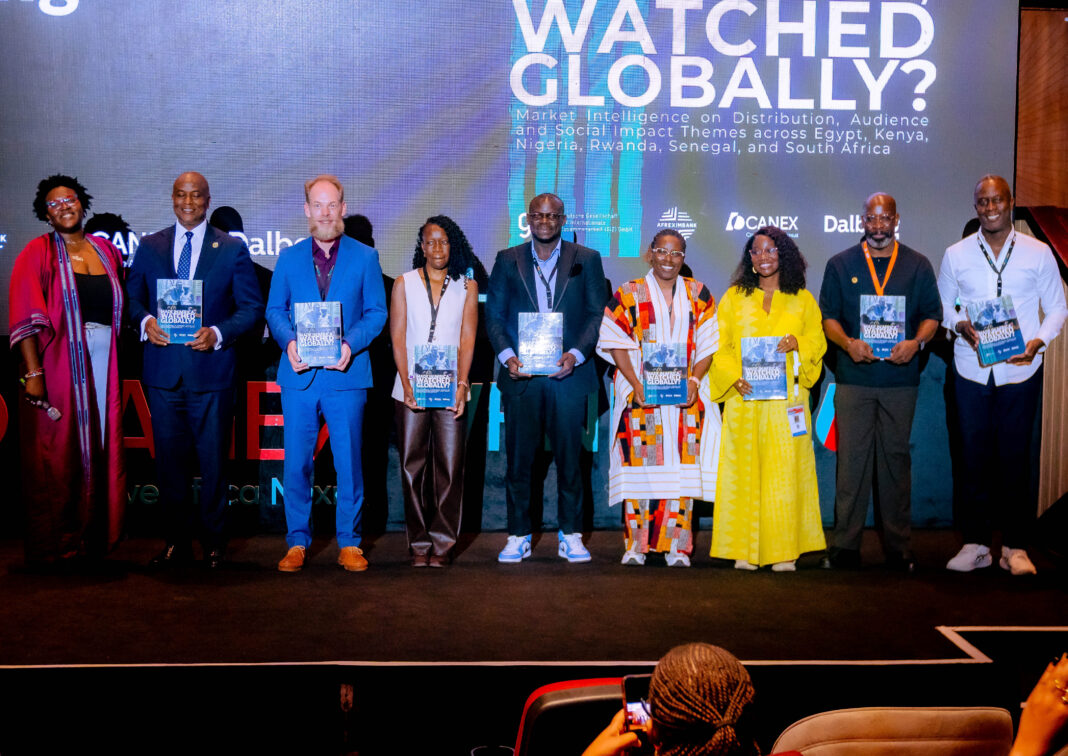
Titled Made in Africa, Watched Globally?, the study was commissioned by the German development agency Deutsche Gesellschaft für Internationale Zusammenarbeit (GIZ) and the African Export-Import Bank (Afreximbank), through its Creative Africa Nexus (CANEX) programme, and produced by Dalberg.
The research draws on 91 stakeholder interviews, a survey of 1,630 viewers across the six countries and five detailed case studies. It examines the commercial potential of African films, audience preferences, financing, distribution and the role of cinema in influencing social and cultural conversations.
The findings demonstrate that Africa’s creative industry has an opportunity to transform its storytelling heritage, cultural diversity and growing digital audience into a sustainable economic sector.
In Rwanda, 56 per cent of respondents identified a lack of interest in stories or themes as a barrier to watching local or African films, while in South Africa, 98 per cent considered acting quality important when selecting films, with 96 per cent placing similar importance on plot and technical quality.
The findings point to the importance of investing in compelling African narratives while strengthening production standards to compete in domestic, regional and international markets.
Digital platforms open new markets for African filmmakers
Digital distribution is emerging as an important avenue for African filmmakers seeking to overcome geographical barriers and reach audiences beyond traditional cinema markets.
YouTube has become a major distribution channel, with 87 per cent of Kenyan respondents and 98 per cent of Senegalese respondents who stream films reporting that they use the platform.
Senegalese digital entertainment company Marodi TV demonstrates the commercial possibilities of this model. The platform has attracted 8.67 million YouTube subscribers and generated 4.6 billion views through free, advertising-supported content.
In Kenya, platforms such as Viusasa have experimented with affordable access models, including 24-hour subscriptions costing between KSh10 and KSh20, allowing consumers to watch local productions without committing to expensive monthly subscriptions.
However, the study notes that building large online audiences does not automatically translate into sustainable earnings for filmmakers, particularly where advertising revenues remain limited.
It therefore recommends expanding alternative revenue models, including affordable subscriptions, advertising-supported streaming, mobile-money payments and partnerships between telecommunications companies and content distributors.
Improving access to films will also require investment in digital infrastructure and affordable internet services.
The research identifies distribution challenges across the continent, noting that Africa has approximately one cinema screen for every 787,000 people, compared with one for every 8,700 people in the United States.
Cinema infrastructure is also concentrated in major urban centres. About 90 per cent of Egypt’s cinema screens are located in Cairo and Alexandria, while more than 75 per cent of Kenya’s fewer than 50 cinema screens are in Nairobi.
The study identifies mobile streaming, offline downloads and lower-cost data packages as opportunities to expand access, particularly among young people and audiences outside major cities.
African-owned platforms and investment key to industry growth
Beyond production, the research calls for greater investment in African-owned distribution companies and streaming platforms capable of acquiring, marketing and licensing local films across national borders.
It identifies a financing gap in the industry, particularly for mid-budget productions and distribution businesses that connect filmmakers with domestic and regional audiences.
Changes in commissioning by international streaming companies and the closure of Showmax in April 2026 have further highlighted the importance of developing sustainable African-owned distribution channels.
The report recommends that public institutions, development finance institutions and private investors increase funding for local distribution businesses, marketing, subtitling, dubbing and regional film licensing.
It also identifies the African Continental Free Trade Area (AfCFTA) as an opportunity to strengthen cross-border distribution, allowing African productions to circulate more easily across national markets.
Such investments could expand commercial opportunities for filmmakers while supporting employment across acting, scriptwriting, cinematography, animation, sound production, digital marketing and content distribution.
Speaking on the role of financing in strengthening Africa’s film industry and unlocking commercial opportunities across borders, Osahon Akpata, Chief Executive Officer of CANEX Creations Incorporated, said the continent had already demonstrated its ability to produce compelling stories with international appeal.
“Africa’s film industry has demonstrated its ability to produce compelling stories that resonate with audiences around the world. The next priority is to ensure that this growing demand translates into sustainable businesses and greater economic returns for African creatives,” he said.
Akpata said investment was needed across the entire film value chain, alongside stronger African-owned enterprises capable of bringing local productions to regional and international markets.
Through CANEX, Afreximbank is seeking to bridge financing gaps, strengthen the commercial foundations of Africa’s creative industries and create opportunities for African businesses to compete in global markets.
He said the ambition was to build an industry where African creativity drives enterprise growth, generates employment and contributes to intra-African trade.
African films shaping social conversations
The study also highlights the contribution of African cinema beyond entertainment, particularly in promoting cultural identity, gender equality, governance and youth aspirations.
Kenyan documentary Searching for Amani, which premiered at the Tribeca Festival in 2024 and was selected for approximately 100 international film festivals, demonstrates the growing global visibility of African productions.
However, despite its international recognition, the filmmakers faced challenges financing community screenings in Kenya, illustrating the need to ensure that locally produced films also reach domestic audiences.
In Senegal, the documentary L’utilité et l’attachement, which examines unpaid compensation owed to communities displaced by a railway project, prompted presidential instructions to address the affected communities’ claims following a screening.
The example demonstrates how African filmmakers can use storytelling to bring public concerns into national conversations and encourage responses to social challenges.
The report recommends increased support for community screenings and public discussions, alongside financing models that protect filmmakers’ editorial independence.
Victor Chudal-Linden, Project Manager at GIZ, said evidence-based research would help industry players, policymakers and development partners understand audience preferences and address barriers limiting the growth of African cinema.
“Good decisions start with a clear picture – and a clear picture emerges from many data points,” he said, adding that the research provides an opportunity for stakeholders to work together to expand the reach of African stories.
The study was officially unveiled at the Creative Africa Nexus Weekend (CANEX WKND) 2026 in Lagos, Nigeria, bringing together film industry leaders, investors, telecommunications and payment providers, policymakers, GIZ, Afreximbank and Dalberg.
The discussions focused on expanding access to finance, strengthening distribution networks and developing industry data systems to support the growth of Africa’s creative economy.
With a growing digital audience, diverse storytelling traditions and an expanding pool of creative talent, the findings point to an opportunity for Africa to build a competitive film industry that not only exports its stories globally but also generates jobs, attracts investment and strengthens economic integration across the continent.



