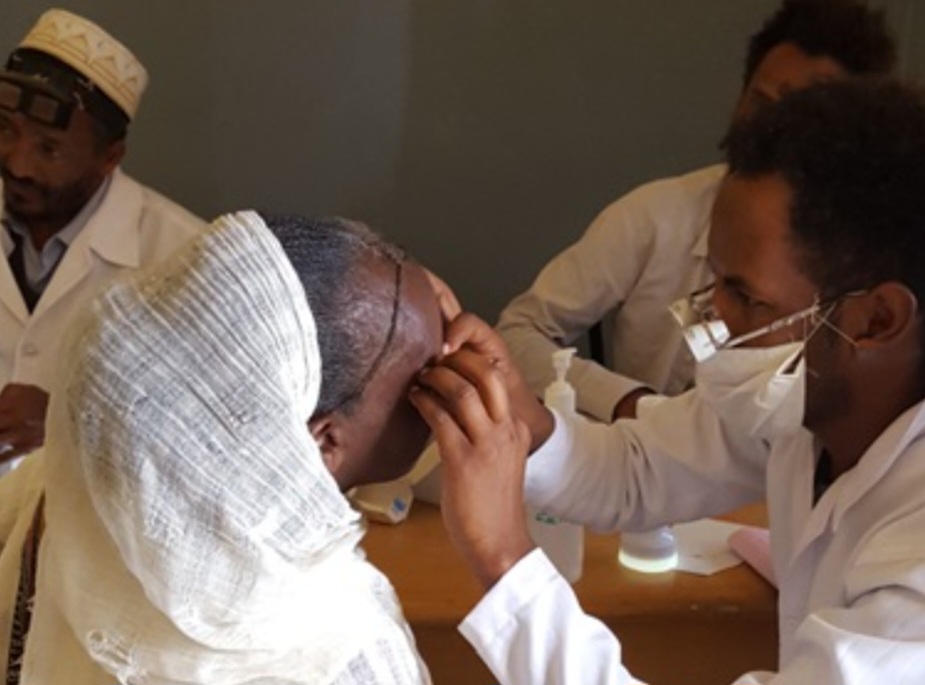

Eritrea has become the 11th country in the World Health Organization (WHO) African Region to eliminate trachoma as a public health problem, marking a significant step in efforts to combat neglected tropical diseases across the continent.
WHO announced on November 16 that it had officially validated the country’s achievement, making Eritrea the 34th country globally to reach the milestone.
The progress follows nearly two decades of interventions targeting a disease that remains a leading infectious cause of blindness, particularly among communities with limited access to clean water, sanitation and healthcare.
Eritrea’s journey began with baseline assessments conducted between 2006 and 2020 across different parts of the country. The findings informed the expansion of interventions in affected communities, including remote rural areas where inadequate sanitation and limited healthcare access contributed to disease transmission.
The country adopted WHO’s SAFE strategy, a comprehensive approach that combines surgery for advanced trachoma complications, antibiotics to treat infection, facial cleanliness to reduce transmission and environmental improvements, particularly access to safe water and sanitation.
The interventions were implemented across all 58 sub-zobas, Eritrea’s second-level administrative divisions, allowing health authorities to identify affected populations and direct resources to communities requiring support.
Digital data collection and mapping tools also helped health workers locate affected areas and coordinate interventions, including in hard-to-reach communities.
As part of the treatment programme, oral azithromycin was distributed to affected populations, with the medicine donated by Pfizer through the International Trachoma Initiative.
Eritrea also prioritised community participation, adopting locally driven sanitation initiatives that contributed to progress despite limited external financial support.
WHO Director-General Dr Tedros Adhanom Ghebreyesus congratulated the government and people of Eritrea, describing the achievement as the outcome of sustained national commitment and years of coordinated interventions.
WHO Regional Director for Africa Dr Mohamed Janabi said the milestone demonstrated the importance of political leadership, community participation and partnerships in eliminating neglected tropical diseases.
He noted that Eritrea’s progress offered encouragement to other African countries pursuing similar public health targets.
The achievement comes as trachoma continues to affect vulnerable populations in several parts of the world.
Caused by the bacterium Chlamydia trachomatis, the disease spreads through contact with infected eye and nasal discharge. Repeated infections can cause scarring of the inner eyelid, eventually turning the eyelashes inward and damaging the eye, potentially leading to irreversible blindness.
The disease is closely linked to poverty and inadequate access to basic services, including clean water, sanitation, hygiene and healthcare.
According to WHO, the global population requiring interventions against trachoma has declined from an estimated 1.5 billion people in 2002 to fewer than 100 million by November 2025, representing a reduction of approximately 94 per cent.
However, the challenge remains significant. As of March 2026, approximately 92 million people were living in areas where trachoma remained endemic and were at risk of blindness from the disease. At least 29 countries still considered trachoma a public health problem in some areas.
In 2025, nearly 98,829 people underwent surgery for advanced trachoma, while 47.4 million received antibiotics.
WHO’s validation of Eritrea followed an independent review of evidence submitted by the government, confirming that the country had met the required epidemiological thresholds and established systems to identify and manage future cases.
Eritrea will continue surveillance to detect new cases and sustain the progress achieved.
The country becomes the 66th globally and the 23rd in the WHO African Region to eliminate at least one neglected tropical disease.
Trachoma elimination forms part of WHO’s 2021–2030 roadmap for neglected tropical diseases, which sets targets for preventing, controlling, eliminating and eradicating diseases that disproportionately affect populations living in poverty and underserved communities.
While Eritrea’s validation marks an important public health achievement, WHO’s broader figures highlight the need for continued investment in water, sanitation, hygiene, community health programmes and disease surveillance to prevent the return of transmission and accelerate elimination efforts elsewhere.