
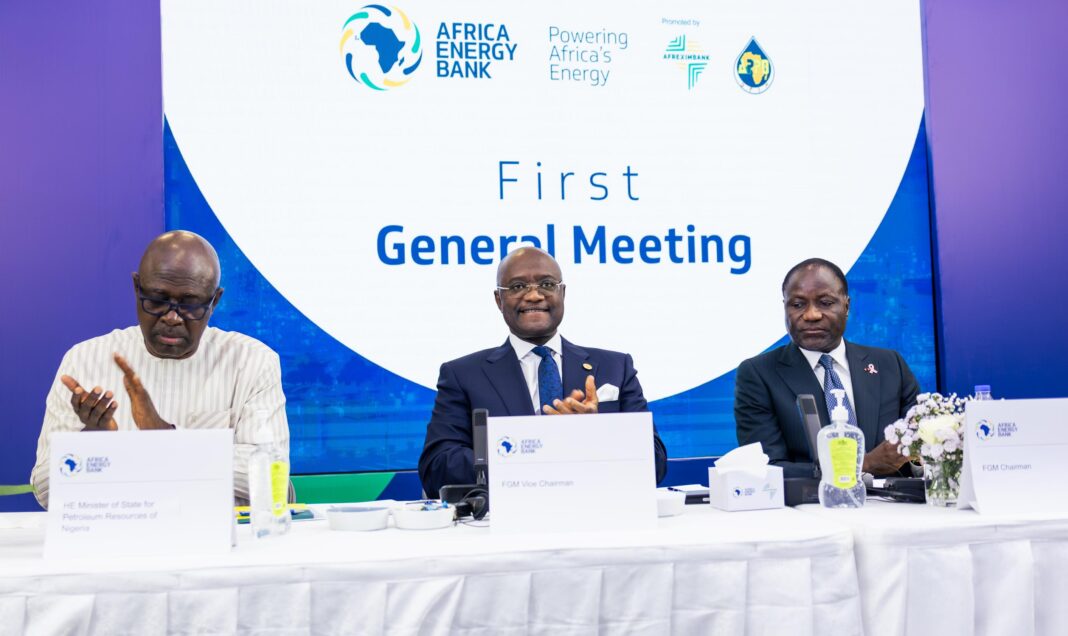

The African Export-Import Bank (Afreximbank) and the African Petroleum Producers’ Organisation (APPO) have formally established the Africa Energy Bank (AEB), marking a major step towards strengthening Africa’s capacity to finance its energy sector and reduce dependence on external funding.
The announcement was made during the Bank’s inaugural General Meeting held in Abuja, Nigeria, on October 31, 2026, bringing closer the continent’s ambition to establish an African-led financing institution dedicated to developing its energy resources.
With an authorised capital of $5 billion, the Africa Energy Bank is expected to mobilise financing for projects across the continent’s energy value chain, including oil and gas exploration and production, transportation, processing, refining and distribution.
Its establishment comes amid growing concerns over Africa’s ability to finance its energy infrastructure as traditional international lenders and financial institutions scale back funding for fossil fuel projects, despite the continued importance of oil and gas to many African economies.
Africa’s energy investment requirements are estimated at approximately $200 billion, highlighting a substantial financing gap that threatens the development of critical infrastructure needed to support industrialisation, electricity generation and economic expansion.
The new institution aims to address this challenge by mobilising capital from African governments, national oil companies, financial institutions and private investors to support commercially viable energy projects.
Beyond financing, the Bank is expected to strengthen Africa’s participation in its own energy industry by increasing access to capital for locally driven projects and supporting the development of domestic energy value chains.
A key priority will be reducing the continent’s dependence on imported petroleum products through investments in refining, processing, transportation and distribution infrastructure.
For many African countries, limited refining capacity has resulted in continued reliance on imported refined petroleum products, exposing domestic markets to international price fluctuations, foreign exchange pressures and supply chain disruptions.
The Africa Energy Bank is also expected to promote intra-African trade in energy products, creating opportunities for regional cooperation and supporting the objectives of the African Continental Free Trade Area (AfCFTA).
The institution is being established at a time when African economies face the dual challenge of expanding energy access while transitioning towards cleaner and more sustainable energy systems.
Its financing mandate is intended to support a just energy transition that recognises the different development needs of African countries, including those whose economies remain heavily dependent on petroleum resources.
The Bank will operate as an independent, supranational pan-African financial institution, with a mandate to mobilise domestic and international investment for energy development across the continent.
Its establishment also reflects a broader push by African institutions to develop alternative financing mechanisms that give the continent greater control over the development and exploitation of its natural resources.
Resolutions adopted during the inaugural General Meeting included the appointment of Mr Helmy Ghazi as the Bank’s first President and the formation of its inaugural Board of Directors.
The Board will comprise representatives from the public and private sectors, alongside leading policy institutions from across Africa, providing governance and strategic direction as the institution begins its operations.
The successful establishment of the Africa Energy Bank could reshape the continent’s energy financing landscape by providing an African-led platform to channel capital into projects that conventional international financing institutions have increasingly been reluctant to support.
For Africa, the ultimate test will be the Bank’s ability to translate its $5 billion authorised capital into actual investment commitments, accelerate project development and attract private sector participation.
Its effectiveness will be critical in determining whether the continent can bridge its energy financing deficit, strengthen domestic industrial capacity and turn its vast natural resources into broader economic opportunities.



