
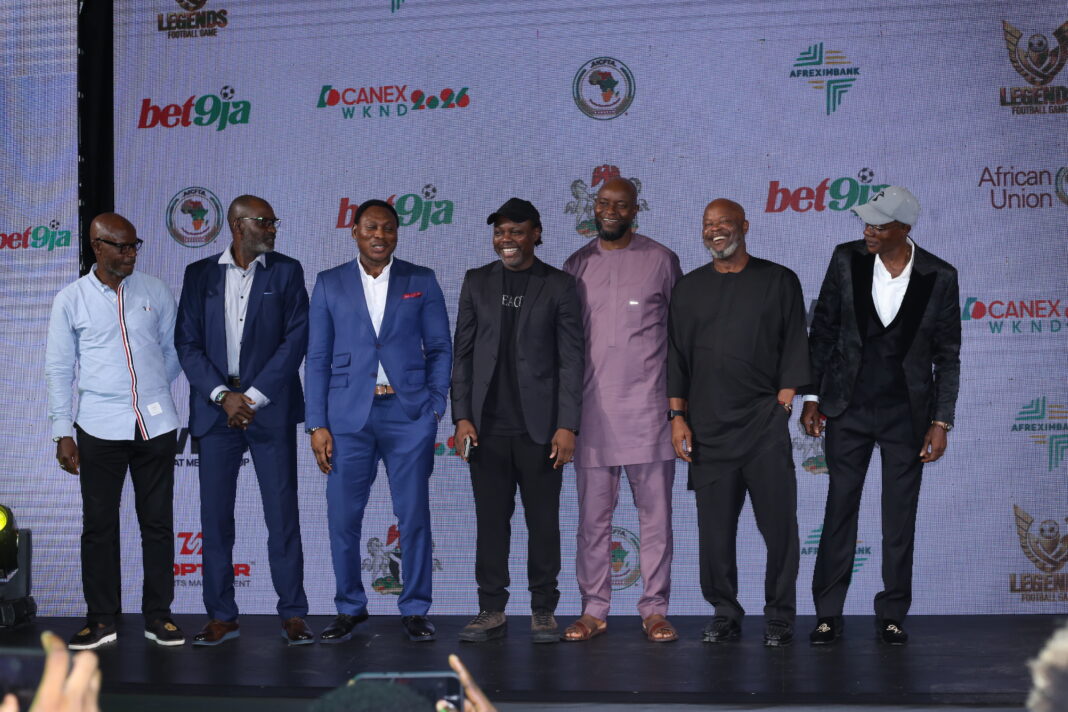

Africa’s sports industry is being presented with a fresh opportunity to move beyond the playing field and become a stronger driver of jobs, investment, tourism and the continent’s growing creative economy, following plans by the African Export-Import Bank (Afreximbank) and its Creative Africa Nexus (CANEX) programme to stage a landmark Legends Football Match in Lagos.
Afreximbank, through CANEX, has partnered with TopTier Sports Management and What Media Group to organise the event as a cornerstone of the CANEX WKND 2026 programme, highlighting the growing commercial relationship between sport, entertainment, culture and business across Africa.
Scheduled for November 8, 2026, at the Onikan Stadium in Lagos, the Legends Football Match will bring together football icons from Africa and beyond while celebrating one of the continent’s most memorable generations of footballers.
The match will mark 30 years since the achievements associated with Nigeria’s legendary mid-1990s Super Eagles generation, which captured the 1994 Africa Cup of Nations title, made a memorable impact at the 1994 FIFA World Cup and went on to win Olympic gold at the 1996 Atlanta Games.
However, beyond celebrating football history, the event is expected to ignite wider conversations about how Africa can build a more sustainable and commercially successful sports industry.
Africa produces some of the world’s most talented athletes, but the continent continues to face major challenges in converting sporting success into long-term economic opportunities. Weak sports infrastructure, limited investment, poor commercial structures and inadequate support for athletes after retirement remain significant obstacles.
Temwa Gondwe, Director of Creatives and Diaspora at Afreximbank, said the achievements of African sporting icons had helped reshape global perceptions of African talent.
“The intersection of sports, entertainment and culture is the heartbeat of Africa’s creative economy,” Gondwe said, describing the Legends Game as an opportunity not only to celebrate the past but also to discuss the future commercialisation and empowerment of African athletes and creatives globally.
The growing sports economy presents Africa with an opportunity to create employment far beyond athletes. Investment in stadiums, sports broadcasting, event management, sports marketing, digital content, tourism, merchandise, technology and athlete management could create thousands of jobs for young Africans.
Chichi Nwoko, Founder and Chief Executive of TopTier Sports Management and What Media Group, said there was an urgent need to build structures that allow African athletes to create lasting careers both during and after their playing days.
She said the partnership with Afreximbank seeks to address a major gap by creating infrastructure and opportunities that can help athletes transform sporting careers into long-term economic ventures.
For Africa’s sports industry to reach its full potential, governments, financial institutions, private investors and sporting organisations will need to work more closely. This includes investing in modern facilities, strengthening local leagues, improving sports education and developing stronger broadcasting and sponsorship markets.
There is also growing potential in digital sports platforms, where African leagues and athletes can directly reach global audiences through streaming, social media and other technology-driven platforms.
The Legends Football Match will also support the broader CANEX WKND 2026 ambition of positioning Lagos as a major destination for Africa’s creative industries.
Major sporting and entertainment events are increasingly becoming economic assets, capable of attracting tourists, investors, international media, and businesses.
As Africa seeks new engines of economic growth, the partnership between Afreximbank, CANEX and the private sector demonstrates how sport can evolve from a source of national pride into a more structured industry capable of generating jobs, building global brands and creating lasting wealth.
The Lagos Legends Football Match could therefore be more than a celebration of Africa’s footballing past. It could also serve as a platform for defining what the future of Africa’s sports economy should look like.



