
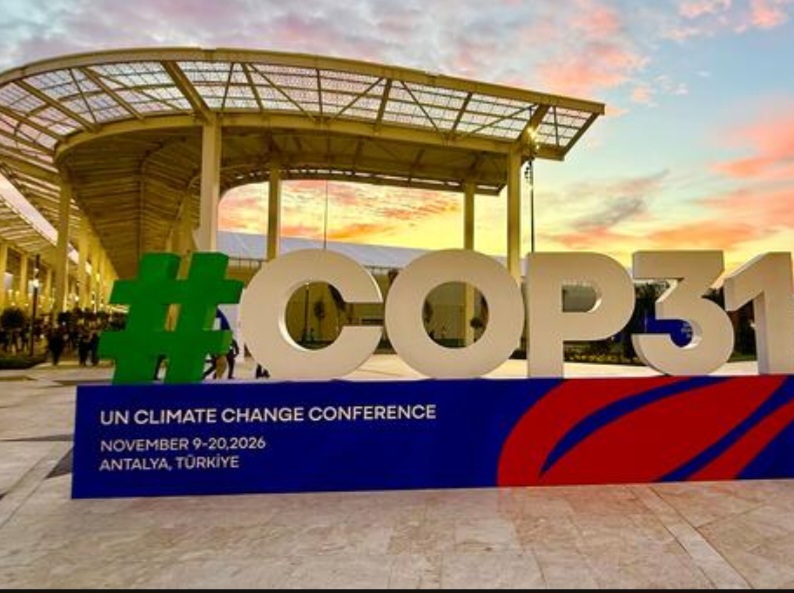

Developing countries should not be forced to finance a climate crisis they contributed little to creating, United Nations Secretary-General António Guterres has told world leaders at COP31, calling for a new global agreement that would make major fossil fuel polluters contribute more towards climate action.
Addressing leaders gathered in Antalya, Türkiye, on 11 November 2026, Guterres proposed a climate justice compact that would accelerate the transition away from fossil fuels, strengthen protection for vulnerable communities and increase access to affordable climate finance.
His proposal comes amid growing disagreements over adaptation funding, loss and damage support and the pace at which countries should reduce greenhouse gas emissions, exposing the persistent divide between wealthy industrialised economies and developing nations facing some of the most severe consequences of climate change.
“We cannot demand that countries transform their economies while denying them the means to do so,” Guterres said, arguing that the global energy transition must be accompanied by financial and technological support for countries with fewer resources.
The proposed compact identifies four areas requiring urgent international cooperation: accelerating the shift from fossil fuels while protecting workers and communities, strengthening early-warning systems and climate adaptation, delivering affordable climate finance, and addressing trade and technological barriers that slow international climate action.
For developing countries, the proposal raises a fundamental question about climate responsibility: how can governments protect their populations from increasingly severe climate impacts while financing development and transitioning their economies towards cleaner energy?
Guterres directed particular criticism at fossil fuel companies, accusing powerful industry interests of obstructing climate action and benefiting financially while vulnerable populations bear the consequences.
He contrasted the $95 billion earned by the world’s nine largest oil companies in a single quarter with approximately $600 million received by the international fund supporting countries recovering from climate-related loss and damage.
According to the UN chief, the latter amount represented just 14 hours of those companies’ profits. He urged governments to introduce taxes on windfall profits to help finance climate action.
“Polluters must pay,” he declared, receiving an ovation from delegates.
The debate over climate finance also featured prominently in remarks by Turkish President Recep Tayyip Erdoğan, whose country is co-hosting COP31 with Australia. He acknowledged that decades of international climate negotiations had produced insufficient results in implementation, calling for stronger support for developing countries.
Brazilian President Luiz Inácio Lula da Silva warned that geopolitical tensions, wars and trade disputes were increasingly pushing climate change down the international agenda.
He argued that governments were spending more time discussing weapons and tariffs than protecting future generations, while defending international cooperation as essential to addressing the climate crisis.
Lula also announced that Brazil would develop national roadmaps to reduce dependence on fossil fuels and end deforestation, building on commitments from COP30.
Beyond the high-level negotiations, methane emissions emerged as another major focus during COP31’s Zero Waste thematic day.
Guterres called on the United Nations Environment Programme (UNEP) to establish a global standard for near-zero methane emissions from oil and gas operations, highlighting the potential of reducing the gas to slow global warming.
Methane, released through fossil fuel operations, agriculture and decomposing waste, is responsible for nearly a third of global warming to date and traps more than 80 times as much heat as carbon dioxide over a 20-year period.
UNEP is already using satellites and artificial intelligence to identify major methane leaks and alert governments and companies.
Julia Ferini, who leads UNEP’s International Methane Emissions Observatory, said the system had helped reduce emissions in 45 cases across 13 countries.
One example involved a damaged gas pipeline in Iraq that had been leaking methane for two years. Repairing the corroded pipeline stopped emissions equivalent to those produced by approximately 350,000 cars.
However, despite more than 5,000 methane alerts issued since 2023, only about one in eight had received a response, highlighting the gap between detecting environmental threats and taking corrective action.
While governments debated international agreements, African entrepreneurs were also demonstrating how locally developed solutions could contribute to climate action.
In Botswana, biologist and entrepreneur Makwena Moesi is using more than half a million worms to address food waste through her company, Viva Organica.
The business collects organic waste from food retailers and converts it into fertiliser through vermicomposting, a process that uses worms to break down organic material while producing nutrients that improve soil health.
The initiative has already processed more than 1,000 tonnes of organic waste, demonstrating how waste management can create economic opportunities while reducing the amount of organic material sent to landfills.
Moesi argues that climate solutions must also deliver practical economic benefits, particularly for farmers whose immediate concerns include improving harvests, increasing food production and accessing affordable agricultural inputs.
Her experience illustrates the importance of making climate action economically viable for communities expected to implement it.
Meanwhile, COP31 negotiations remained unresolved on several critical issues, including predictable climate finance, emergency support for countries experiencing climate disasters, emissions reduction commitments and mechanisms for ensuring a just transition for workers and communities.
Nepal’s request for assistance following a glacial collapse also raised questions about how quickly loss and damage financing can reach countries facing climate-related emergencies.
As discussions continue, Guterres’ proposed climate justice compact places financial accountability at the centre of the global climate debate, challenging governments to move beyond commitments towards an international system that supports countries facing the greatest consequences of global warming.
The central test for COP31 will be whether world leaders can translate calls for climate justice into financing, technology and concrete action for the communities already experiencing the effects of a warming planet.



