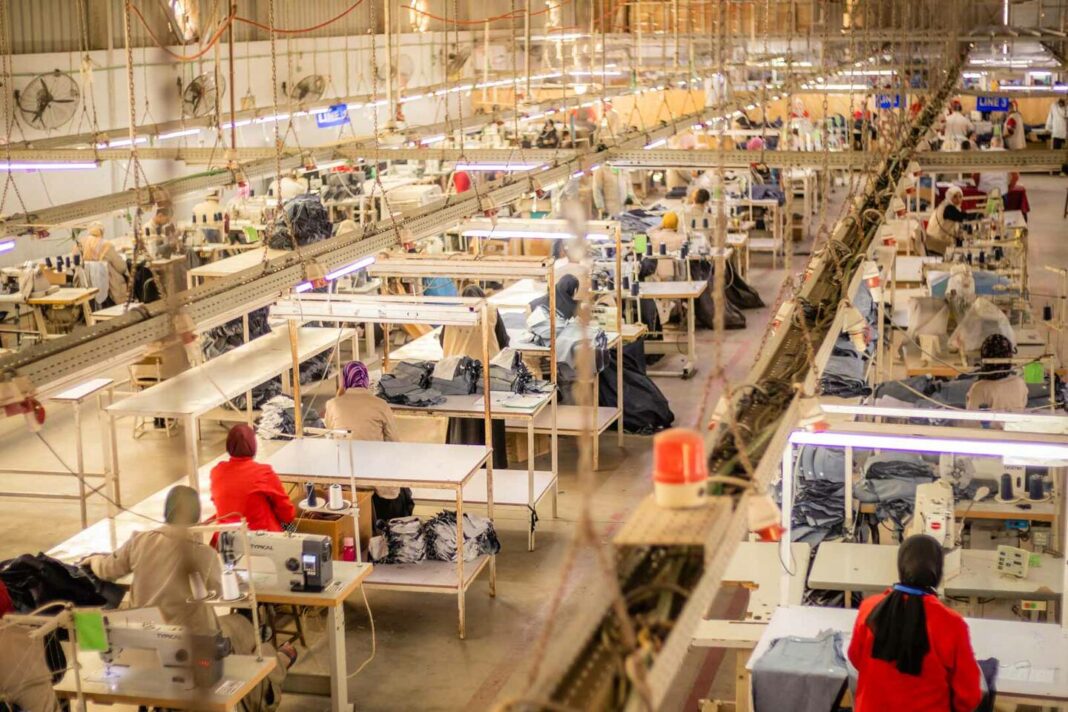

‘Power, Protect, Purchase’ initiative targets $34 billion GDP contribution through investment in Africa’s cotton-to-fashion value chain.
Africa Made It has launched a continental campaign to transform Africa’s fashion and textile industry by expanding local manufacturing, creating industrial jobs, and increasing the economic value captured from the continent’s cotton production.
The initiative, dubbed ‘Power, Protect and Purchase’, was unveiled at the Creative Africa Nexus (CANEX) Weekend 2026 in Lagos, Nigeria, with a target of unlocking an estimated $34 billion in annual GDP contribution through investments in the continent’s fibre-to-fashion value chain.
The campaign seeks to address a major structural challenge facing Africa’s fashion industry: despite its growing influence in global fashion, design and creative industries, the continent continues to export most of its raw cotton while importing finished garments and textiles.
Africa Made It, a continental movement bringing together pan-African organisations, advocacy groups and media platforms, is advocating for a shift towards domestic textile processing and garment manufacturing to retain more economic value within African economies.
Its three-pillar strategy focuses on securing affordable and reliable energy for textile factories, introducing trade policies that protect emerging domestic manufacturers from unfair competition, and encouraging African consumers to purchase locally manufactured clothing.
The campaign comes as African designers and fashion brands gain increasing international recognition, but the continent continues to face limited industrial capacity to translate its creative influence into large-scale manufacturing, exports and employment opportunities.
Research by Africa Practice indicates that the continent exports up to 98 per cent of its raw cotton, capturing only about two per cent of the potential value, while recording an annual trade deficit of approximately $35 billion in textiles and apparel.
According to the campaign’s projections, developing local spinning, weaving and garment-making capacity could generate nearly two million permanent industrial jobs and inject approximately $33 billion annually into domestic household incomes.
The expanded value chain is also projected to contribute about $34 billion to Africa’s GDP annually, highlighting the potential of fashion manufacturing as a driver of industrialisation, trade growth and economic diversification.
Beyond the headline economic figures, the initiative places particular emphasis on women’s economic participation. Women account for an estimated 70 to 90 per cent of garment factory workers across the continent, making the expansion of textile and apparel manufacturing an important avenue for formal employment and income generation.
Increased domestic demand for locally processed cotton would also create new markets for farmers, support rural livelihoods and strengthen linkages between agriculture, manufacturing, retail and the creative economy.
However, achieving the proposed transformation will require significant investment in industrial infrastructure, energy supply, technology, skills development and manufacturing capacity.
Africa Made It estimates that approximately $1.8 billion in capital investment will be required to address critical gaps in the garment manufacturing ecosystem and strengthen the missing links between cotton production and finished apparel.
The investment push is expected to support the development of processing facilities, improve production efficiency and enable African manufacturers to compete more effectively in regional and international markets.
For the fashion industry, the campaign presents an opportunity to connect Africa’s growing creative influence with a stronger industrial base.
While African designers have established distinctive identities through indigenous fabrics, traditional craftsmanship and contemporary designs, much of the manufacturing and commercial value associated with global fashion supply chains remains outside the continent.
Marie Wilke, Editor-in-Chief of Africa Made It magazine, said Africa’s growing influence in global fashion, music and media must be matched by investments in domestic manufacturing.
“African culture, design, and storytelling influence global fashion, music, and media like never before. Yet, without domestic manufacturing infrastructure, Africa’s creative authority yields very little economic return,” said Wilke.
She added that connecting cotton production directly to local processing would help retain intellectual property, commercial margins and industrial employment within African economies.
“Linking raw cotton harvest directly to local processing ensures that the intellectual property, commercial margins, and industrial jobs remain on the continent. It is time to wear our power,” she said.
The campaign also comes amid growing efforts to strengthen intra-African trade under the African Continental Free Trade Area (AfCFTA), which provides an opportunity for locally manufactured garments, fabrics and fashion products to access a wider continental market.
By linking farmers, textile manufacturers, fashion designers, retailers and consumers, Africa Made It aims to position the fashion industry as an important contributor to the continent’s industrial development.
The success of the initiative will depend on whether governments, investors and private-sector players can translate the campaign’s ambitions into competitive manufacturing capacity, supportive trade frameworks and sustained demand for African-made products.