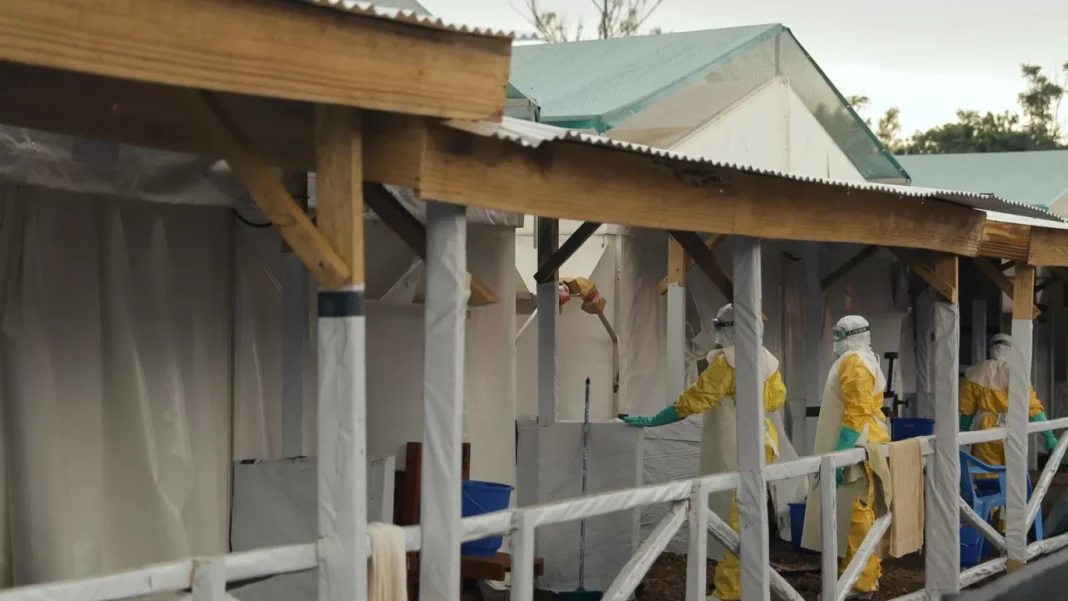

Six months into the Bundibugyo virus disease outbreak in the Democratic Republic of the Congo (DRC), efforts to contain the epidemic are facing renewed pressure as armed conflict, population displacement and limited access to remote communities continue to undermine the response.
Despite significant investments in healthcare infrastructure, expanded laboratory capacity and community-based interventions, the outbreak remains active, with hundreds of new infections reported weekly and transmission spreading across several provinces.
In a situation update released on 15 November 2026, the World Health Organization (WHO) warned that reaching communities beyond the effective reach of health services will be critical to stopping the outbreak, particularly in areas affected by insecurity and humanitarian crises.
More than 11,000 cases and 5,400 deaths have been reported since the outbreak began. Children remain disproportionately affected, accounting for more than a quarter of confirmed infections and a third of reported deaths.
The impact is particularly severe among children under five, with seven in every ten confirmed cases in this age group resulting in death.
Although response teams have managed to interrupt rapid transmission in several early outbreak hotspots, between 400 and 500 new infections continue to emerge every week. The disease has now reached 67 health zones across eight provinces.
WHO says persistent gaps in contact tracing and delayed identification of infections are complicating containment efforts. Approximately two-thirds of confirmed deaths have occurred within communities rather than healthcare facilities, suggesting that many patients are being identified too late to receive timely treatment.
The detection of imported cases in Kenya and Nigeria has also highlighted the possibility of further cross-border transmission, reinforcing the need for stronger regional surveillance and coordinated preparedness.
Response gains face mounting pressure
Over the past six months, the international and regional response has expanded considerably, bringing together the United Nations, Africa Centres for Disease Control and Prevention (Africa CDC), humanitarian organisations and national authorities under the leadership of the Congolese government.
WHO is coordinating the technical health response, while humanitarian partners are supporting logistics, access to affected populations, protection services and the continuity of essential healthcare.
Nearly 100 health and humanitarian organisations are operating in affected areas, including providing treatment for acute malnutrition.
Several early outbreak epicentres, including Mongbwalu, Nyankunde, Nizi, Rwampara and Butembo, have recorded successful interruption of rapid transmission. In Bunia, another major hotspot, new infections have fallen by half, while treatment centres are reporting reduced patient occupancy.
Diagnostic capacity has also expanded from just two laboratories at the beginning of the response to more than 24. Meanwhile, approximately 2,000 treatment beds have been established across 104 treatment and transit centres.
About 3,000 people have recovered from the disease, with a quarter enrolling in survivor support programmes.
At community level, more than 17,000 community health workers and 46,000 community actors have received training and supplies to strengthen surveillance, community engagement and safe response activities.
Efforts have also been made to prevent the outbreak from disrupting other essential health services, particularly maternal healthcare for women and children.
Across 59 treatment, isolation and transit facilities, nearly one million hot meals have been distributed, reaching more than 180,000 people affected by the outbreak and supporting containment activities.
Safe and dignified burial interventions have become another important component of the response. Nearly 90 per cent of registered deaths are now receiving safe and dignified burials, helping reduce the risk of further infections during funeral practices.
Cross-border cooperation has also improved through information-sharing, joint surveillance and coordination among neighbouring countries. Scientific research continues, including the evaluation of potential treatments and vaccine candidates.
However, WHO cautions that these gains remain vulnerable without sustained resources, security and access to affected populations.
Conflict is disrupting the fight against Ebola
Beyond the medical challenges, insecurity has emerged as one of the biggest threats to containing the epidemic.
Armed attacks, threats against healthcare personnel and restrictions on movement have repeatedly interrupted response activities, making it difficult for medical teams to reach communities, trace contacts and provide treatment.
A recent attack in Cantine-Aloya resulted in 66 civilian deaths, including three healthcare workers. Three health facilities were also looted.
The violence forced response teams to lose contact with more than 1,000 people being monitored as potential contacts, while three confirmed Ebola patients remain unaccounted for.
Another attack on the town was reported in the early hours of 11 November. WHO says more than 80 attacks against healthcare have been recorded since the outbreak was declared.
The attacks are not only endangering frontline personnel but also weakening the healthcare infrastructure needed to identify infections early and prevent further transmission.
WHO is calling for an end to hostilities to protect civilians, healthcare workers and humanitarian operations, warning that the progress achieved over the past six months could be reversed if insecurity continues.
Sustaining progress beyond emergency interventions
As the response enters its next phase, WHO is urging governments and international partners to move beyond emergency containment measures and address the wider conditions contributing to the spread of the disease.
Communities affected by Ebola continue to face interconnected challenges, including hunger, violence, displacement, inadequate water and sanitation services and weaknesses in existing healthcare systems.
The organisation argues that effective outbreak control must respond to these needs while ensuring that communities are actively involved in decisions affecting their health and safety.
Priority areas include food security, access to clean water and sanitation, child protection, mental health and psychosocial support, maternal and newborn healthcare, and services addressing the needs of women and girls.
WHO is also emphasising the importance of maintaining flexible international financing through 2027, alongside stronger political commitment, protection of healthcare facilities and uninterrupted humanitarian access.
While international assistance has helped shift the response from pursuing new infections towards controlling transmission in several areas, the organisation warns that the remaining affected communities require more targeted and sustained interventions.
Six months into the outbreak, the challenge is no longer simply expanding the number of treatment facilities or deploying more response personnel. It is ensuring that people living in insecure and geographically isolated communities can access those services before infections are detected too late.
Reaching these populations, WHO says, will be essential to saving lives, interrupting transmission and ultimately ending the outbreak.