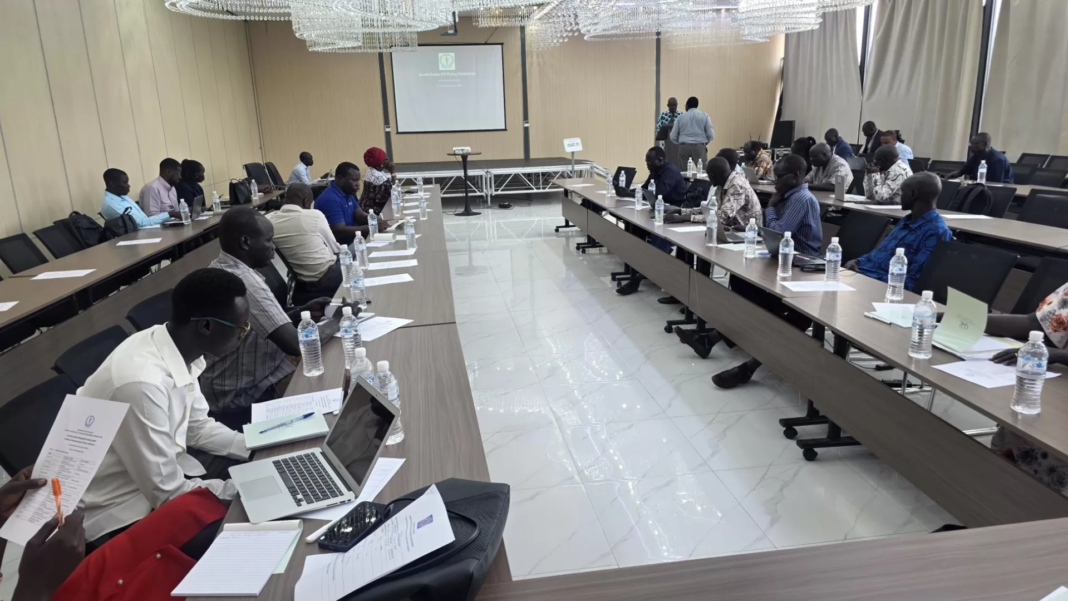

South Sudan is stepping up efforts to protect children and communities against vaccine-preventable diseases following the validation of new national immunisation policy guidelines aimed at expanding vaccination coverage, closing immunity gaps and strengthening the country’s healthcare system.
The National Expanded Programme on Immunization (EPI) Policy Guidelines provide a framework for improving access to safe, effective and sustainable vaccines, with a particular focus on reaching children who have missed routine vaccinations and communities underserved by healthcare services.
Developed by the Ministry of Health in collaboration with partners, with support from the World Health Organization (WHO), the policy marks a significant step towards reducing preventable childhood illnesses and deaths while strengthening public health protection across the country.
The new guidelines replace the 2009 National Immunization Policy and reflect changes in vaccine science, the introduction of new vaccines, digital health developments and emerging public health challenges.
They also align South Sudan’s immunisation programme with global commitments, including the Immunization Agenda 2030 (IA2030), the Sustainable Development Goals (SDGs) and Universal Health Coverage (UHC).
Despite progress in expanding vaccination services, South Sudan continues to face significant immunisation challenges, including a high number of zero-dose and under-immunised children, vaccine dropout rates and recurrent disease outbreaks.
Insecurity, population displacement, weak health infrastructure, shortages of skilled health workers and dependence on external financing have further complicated efforts to deliver vaccines to vulnerable populations.
These challenges leave many children exposed to preventable diseases, increasing the risk of outbreaks and placing additional pressure on an already strained healthcare system.
In recent years, the country has strengthened its immunisation programme through the introduction of additional vaccines, including malaria and measles vaccines, expansion of routine vaccination services, improved disease surveillance and investment in cold-chain systems to maintain vaccine quality.
However, health authorities say sustained investment and stronger coordination are necessary to ensure that vaccination services reach every child, including those living in remote, conflict-affected and displaced communities.
Dr George Awzenio Legge, Extended Programme on Immunization Manager at the Ministry of Health, said the new policy establishes a national framework for protecting people against vaccine-preventable diseases.
“We thank all the stakeholders who supported the development of this policy. It establishes a clear vision of a South Sudan where everyone, everywhere, at every age enjoys equitable access to safe, effective, high-quality and sustainable immunization services, free from vaccine-preventable diseases,” he said.
He added that the policy is guided by equity, national ownership, evidence-based decision-making, accountability, community participation and the integration of immunisation into primary healthcare.
Dr Mutale Nsakashalo, WHO South Sudan Cluster Lead for Health Programme, said vaccination remained one of the most effective public health interventions for saving lives and preventing disease.
“Immunization protects lives. South Sudan has made important progress in expanding vaccination services and introducing new vaccines. Yet many children still miss protection because of distance, disrupted services and limited resources,” she said.
Dr Nsakashalo said the policy should help close vaccination gaps by providing practical guidance on service delivery, vaccine management, coordination among partners and monitoring of immunisation results.
The guidelines identify several priorities, including strengthening immunisation governance and sustainable financing, expanding equitable vaccination services across all age groups and improving healthcare workers’ capacity.
They also seek to strengthen vaccine supply chains, disease surveillance and health information systems while encouraging community participation and public confidence in vaccination.
Improved community engagement will be particularly important in addressing barriers to immunisation, including limited awareness, geographical isolation and disruptions to healthcare delivery.
For South Sudan, expanding immunisation coverage is critical not only to reducing childhood mortality but also to preventing disease outbreaks, protecting vulnerable populations and building resilience in the national health system.
The validation of the policy provides a foundation for coordinated action by government institutions, development partners and communities to ensure that more children receive life-saving vaccines.
Its success will ultimately depend on sustained domestic financing, effective implementation and the ability to reach children who have historically been excluded from routine healthcare services.