
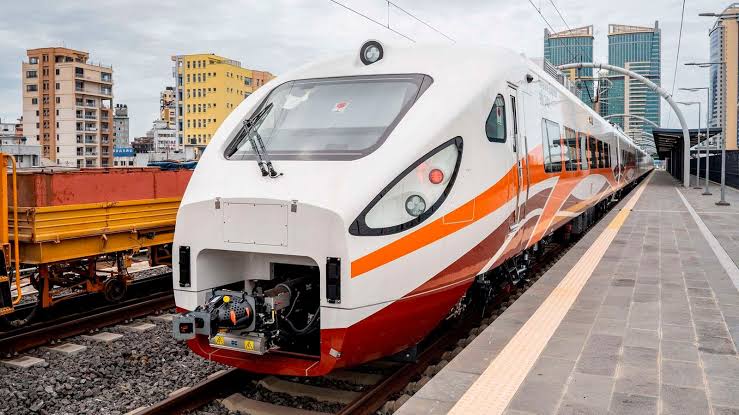

Tanzania’s ambitious Standard Gauge Railway (SGR) expansion is gathering momentum, with a $2.33 billion investment in western railway infrastructure expected to strengthen regional trade, reduce cargo transportation costs and establish the Port of Dar es Salaam as a major logistics gateway for landlocked Burundi and the eastern Democratic Republic of Congo (DRC).
The project, being developed through regional cooperation between Tanzania, Burundi and the DRC, is designed to extend the railway network from the Indian Ocean coast into the Great Lakes region, creating a more efficient transport corridor for businesses moving goods across East and Central Africa.
Once completed, the railway is expected to significantly reduce the time required to transport cargo from Dar es Salaam to the DRC border, cutting journeys that currently take several days on congested roads to less than 24 hours.
The development represents an important shift in regional transport infrastructure, particularly for landlocked economies that depend heavily on neighbouring countries’ ports to import fuel, machinery, construction materials, industrial inputs and consumer goods.
For Tanzania, the expansion is expected to strengthen Dar es Salaam’s competitiveness against other regional ports while increasing demand for freight handling, warehousing, logistics, shipping and related services.
The $2.33 billion financing package arranged by Standard Chartered is part of a wider railway investment programme, with funding for different sections coming from international banks, export credit agencies and development finance institutions. The financing covers the Makutupora–Isaka and Isaka–Mwanza sections, while the western extension towards Kigoma and Burundi is being advanced through separate project arrangements.
United Kingdom+2
The railway expansion is also expected to strengthen Tanzania’s position within the Central Corridor, a strategic trade route serving Burundi, Rwanda, eastern DRC and other economies in the Great Lakes region.
Western expansion opens new trade routes
The western railway expansion is taking shape through several construction sections intended to connect the country’s commercial centre and major port with inland economic hubs.
Lot 5, covering approximately 249 kilometres between Isaka and Mwanza, is being constructed by China Civil Engineering Construction Corporation (CCECC). Its completion will extend the railway to Lake Victoria, creating opportunities for cargo movement and regional trade through the lake’s transport network.
United Kingdom+1
Another important component is Lot 6, covering approximately 506 kilometres between Tabora and Kigoma. Construction was officially launched in July 2026, with the project expected to improve connectivity between western Tanzania and the Port of Dar es Salaam.
The railway is expected to reduce travel time between Dar es Salaam and Kigoma from more than 20 hours to approximately eight hours, while creating thousands of employment opportunities during construction and opening up commercial activities along the corridor.
The Citizen+1
A major engineering feature of the western expansion is the Malagarasi Bridge, which will allow the railway to cross challenging terrain and marshland. The infrastructure is essential to ensuring uninterrupted freight movement through an area where road transport faces geographical and logistical constraints.
Beyond Kigoma, the railway network is expected to create a connection with Burundi through a 282-kilometre electrified line running from Uvinza through Musongati to Gitega.
The Tanzania-Burundi railway agreement, signed in January 2025, involves Chinese railway engineering companies CREGC and CREDC, with the contract valued at approximately $2.154 billion. The project is expected to improve Burundi’s access to the Port of Dar es Salaam and support the movement of mineral exports, particularly from the Musongati mining area.
TRC+1
DRC connection could expand Central Corridor’s reach
For the DRC, the railway expansion presents an opportunity to diversify its international trade routes and reduce dependence on road transport and other regional logistics corridors.
The proposed connection through Kigoma is particularly significant because the Tanzanian port city sits on Lake Tanganyika, which provides a natural transport link to eastern DRC.
Once the railway reaches Kigoma, cargo could be transferred to lake vessels serving eastern Congolese destinations, including Kalemie. This would create an alternative route for importing industrial equipment, fuel, agricultural inputs and manufactured goods while providing Congolese exporters with improved access to international shipping through Dar es Salaam.
The three countries are also exploring a wider electrified railway connection linking Gitega, Bujumbura, Uvira and Kindu. At a ministerial meeting in Kinshasa on March 31, 2026, Tanzania, Burundi and the DRC reviewed progress on feasibility studies and preliminary engineering for the proposed regional railway.
The initiative demonstrates the growing interest among Great Lakes economies in developing interconnected transport infrastructure to facilitate cross-border commerce.
CENTRAL CORRIDOR+1
The DRC’s participation is particularly important given its mineral resources and the growing demand for efficient transportation infrastructure to support mining, manufacturing and agricultural production.
Improved railway and lake transport connections could help reduce the cost of moving minerals, including copper and other industrial commodities, to international markets while making imported machinery and production inputs more accessible to businesses in eastern Congo.
International financing and regional competitiveness
The scale of Tanzania’s railway ambitions is attracting international financial institutions and export credit agencies, reflecting the growing importance of transport infrastructure in regional economic integration.
Standard Chartered’s $2.33 billion syndicated financing package brings together commercial banks, development finance institutions and export credit agencies, including Sweden’s EKN and SEK, Poland’s KUKE and Italy’s SACE.
The arrangement demonstrates how international financing partnerships are supporting large-scale infrastructure development in African markets where governments require substantial long-term capital to build transport networks.
United Kingdom+1
The participation of Chinese construction companies also highlights the role of international contractors in expanding Africa’s railway infrastructure, particularly through engineering, construction and technology partnerships.
For Tanzania, the economic benefits extend beyond railway operations. Increased freight volumes could generate additional revenue for the Dar es Salaam port, stimulate investment in inland container depots and encourage the development of industrial parks, logistics centres and commercial facilities along the railway corridor.
Agricultural producers could also benefit from more reliable transportation to regional and international markets. Tanzania, Burundi and eastern DRC have significant agricultural potential, but high transportation costs and logistical bottlenecks have continued to constrain the competitiveness of their products.
Rail transport offers an opportunity to move larger volumes of agricultural commodities, fertilisers, cement, petroleum products and manufactured goods at potentially lower costs than long-distance road transportation.
However, the success of the investment will depend on more than completing railway tracks. The three governments will need to coordinate customs procedures, border operations, freight tariffs, railway regulations and cargo handling systems to ensure that goods move efficiently across national boundaries.
Connections between railway terminals, ports and lake transport services will also be essential to delivering the expected trade benefits.
Ultimately, Tanzania’s SGR expansion is evolving from a domestic transport investment into a regional economic corridor with the potential to reshape commercial relations across East and Central Africa.
By connecting Dar es Salaam with Mwanza, Kigoma, Burundi and prospective routes into eastern DRC, the project could strengthen the Central Corridor’s competitiveness, improve access to international markets and create new opportunities for businesses operating across the Great Lakes region.
For landlocked Burundi and the resource-rich eastern DRC, the railway could become an important gateway to global trade, while positioning Tanzania as one of the region’s leading logistics and maritime transport hubs.



