
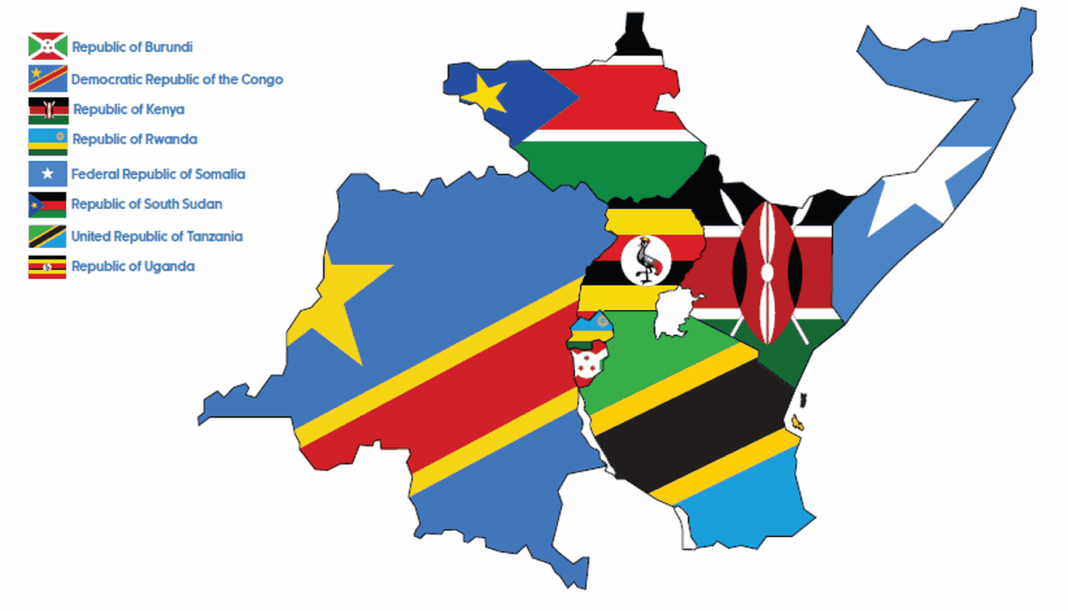

Uganda is projected to record the fastest economic growth in the East African Community (EAC) in 2027, with an estimated expansion of 9.9 per cent, highlighting the region’s growing economic potential as member states seek to attract investment, expand trade and strengthen regional integration.
The International Monetary Fund (IMF) projects Rwanda to grow by 7.2 per cent, followed by Tanzania at 5.9 per cent and the Democratic Republic of Congo (DRC) at 5.7 per cent.
Kenya and Burundi are both projected to grow by 4.7 per cent, while South Sudan is expected to record 3.9 per cent growth. Somalia has the lowest projected expansion among the eight EAC economies, at 2.7 per cent.
The figures place six of the eight EAC economies above the projected Sub-Saharan African growth benchmark of 4.5 per cent, suggesting that East Africa will remain an important growth centre on the continent in 2027.
According to the IMF’s October 2026 World Economic Outlook, Sub-Saharan Africa is expected to expand by 4.5 per cent in 2027, despite external economic pressures, high financing costs and uncertainty in international markets.
Uganda and Rwanda drive regional growth prospects
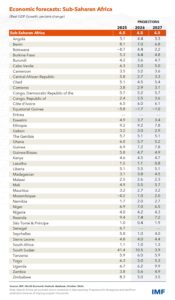
Uganda’s projected 9.9 per cent expansion places it at the top of the EAC growth outlook, representing an acceleration from the 6.2 per cent growth projected for 2026 in the IMF’s October estimates.
The country’s economic prospects are supported by investment activity, infrastructure development and expanding productive sectors. Sustaining this momentum will depend on attracting private-sector investment and strengthening the country’s productive capacity.
For businesses, stronger economic expansion could translate into increased demand for construction materials, transport services, consumer goods, financial products and industrial equipment.
Uganda’s position also presents opportunities for neighbouring economies, particularly Kenya and Tanzania, which have established commercial and transport links with the landlocked country.
Rwanda is expected to maintain its position among the region’s fastest-growing economies, with projected growth of 7.2 per cent in 2027, compared with 7.4 per cent in 2026.
Investment in infrastructure, tourism, financial services and technology has supported Rwanda’s economic transformation, while its continued expansion offers opportunities for regional businesses seeking access to an increasingly diversified market.
Tanzania and the DRC are also expected to register growth above 5 per cent, at 5.9 per cent and 5.7 per cent respectively.
Tanzania’s outlook is supported by infrastructure development, trade, services and investment in productive sectors. Its strategic position along the Indian Ocean also makes it an important gateway for international trade serving landlocked economies, including Burundi, Rwanda, Uganda and eastern DRC.
The DRC’s projected expansion highlights the economic significance of its natural resources, particularly minerals required in global manufacturing, battery production and the energy transition. Its mining industry presents opportunities for investment in logistics, electricity generation, transport infrastructure and mineral processing.
Kenya faces pressure to accelerate economic expansion
Kenya is projected to grow by 4.7 per cent in 2027, matching Burundi and remaining marginally above the Sub-Saharan African average.
The forecast places Kenya behind Uganda, Rwanda, Tanzania and the DRC, highlighting growing competition for investment and business opportunities within the regional bloc.
Kenya’s opportunities lie in strengthening manufacturing capacity, expanding agricultural exports, developing digital services and improving transport and logistics infrastructure.
Its established financial services industry and business networks also provide a platform for companies seeking to expand across EAC markets.
However, sustaining competitiveness will require addressing the cost of doing business, access to affordable credit, infrastructure financing and challenges facing small and medium-sized enterprises.
Burundi, also projected to grow by 4.7 per cent, could benefit from stronger regional trade, particularly through improved transport connections with Tanzania and other neighbouring economies.
South Sudan is forecast to expand by 3.9 per cent, while Somalia is expected to record 2.7 per cent growth. Their economic prospects will depend partly on political and security stability, infrastructure development and efforts to diversify productive sectors.
For South Sudan, improving oil production and reducing dependence on petroleum revenues will be important, while Somalia’s outlook will depend on security improvements, institutional development and increased private-sector investment.
Regional integration key to unlocking growth
The projections reinforce the importance of regional economic integration as EAC countries seek to expand markets beyond their national borders.
With four economies expected to grow above 5 per cent, businesses have opportunities to benefit from increasing demand across neighbouring markets.
Expanding railway networks, ports, transport corridors, energy infrastructure and digital payment systems could reduce the cost of moving goods and services across borders.
For manufacturers, agricultural exporters and logistics companies, a more integrated EAC market offers opportunities to establish regional supply chains, access new consumers and increase economies of scale.
The region’s growing population also provides a significant consumer market for investors in food processing, housing, healthcare, education, telecommunications and financial services.
However, economic growth projections do not automatically translate into higher household incomes or employment. Governments will need to ensure investment generates productive jobs, strengthens local industries and improves living standards.
The IMF has also cautioned that Sub-Saharan Africa faces risks from high interest payments, limited foreign-exchange reserves, declining development assistance and external economic shocks.
For the EAC, the 2027 projections present an opportunity to strengthen its position as one of Africa’s important economic growth regions. The challenge will be converting projected expansion into stronger intra-African trade, industrial development, employment and investment flows that benefit businesses and households across all eight member states.



