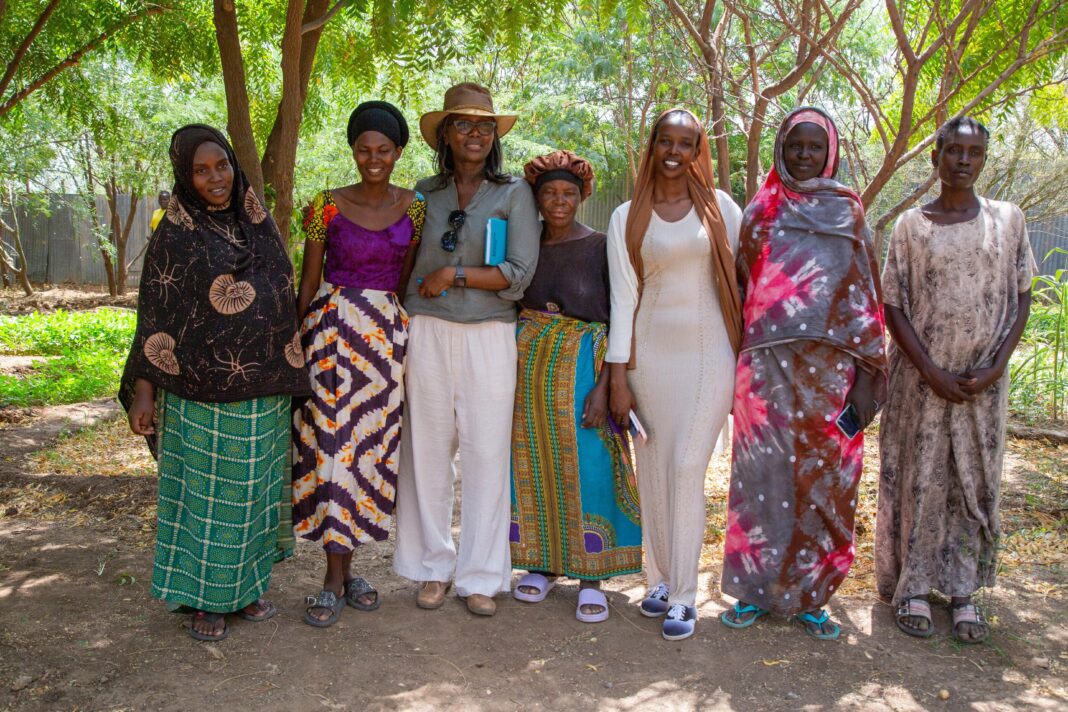

For many women farmers in Liberia, the struggle to grow a business has long extended beyond the farm. Limited access to credit, insecure land ownership, inadequate farming equipment and poor access to market information have kept many women trapped in small-scale agriculture, despite their central role in feeding families and supporting local economies.
But for a growing number of women, digital technology and improved access to financial services are beginning to change that reality.
Jacqueline Mulbah, a 45-year-old mother of three and a member of the Meni Nana Farming Cooperative in Liberia’s Bong County, is among the women whose lives have been transformed by access to digital financial services, credit and new market opportunities.
For years, Mulbah faced many of the same challenges confronting women farmers across rural Liberia. Without reliable access to finance and modern agricultural support, expanding her farm was difficult. Purchasing improved seeds, increasing production and reaching new markets often remained beyond her financial capacity.
That began to change in 2023 when she joined the Digital Inclusion for Women’s Economic Empowerment Project, an initiative implemented by UN Women in partnership with the Orange Foundation.
The programme was designed to address one of the biggest barriers facing rural women: exclusion from formal financial systems and limited access to digital technology.
Through the project, UN Women worked with the Central Bank of Liberia to connect Village Savings and Loan Associations to formal financial institutions. The initiative linked women to mobile money services through Orange Money and banking institutions, while also providing digital and financial literacy training and seed grants.
The project reached 450 women farmers drawn from 15 cooperatives in Bong and Nimba Counties, helping them gain greater access to financial services, digital tools and credit opportunities. It also strengthened the capacity of women’s cooperatives and provided training on disaster risk reduction, an increasingly important issue for farming communities facing climate-related challenges.
For Mulbah, the impact was immediate .Through the programme, she was able to access a loan that enabled her to purchase improved seeds and expand her farming activities—an opportunity that had previously seemed out of reach.
Today, she cultivates more than 10 hectares of land, mainly producing vegetables. Increased production has enabled her to earn more, improve the welfare of her family and invest in her children’s education.
“2023 was a turning point for many other women and me in Gbarnga City,” Mulbah says. “Today, I feel proud of myself. I can contribute to the well-being of my household, and I am also able to take part in community activities.”
Her progress is reflected in her income. Mulbah’s monthly earnings have increased from less than $150 to more than $350, giving her greater financial stability and the ability to meet her family’s needs more consistently.
But access to finance is only part of the transformation.
Like many other women participating in the programme, Mulbah has also embraced digital platforms to expand her business. She uses the Buy from Women e-commerce platform, developed by UN Women, to market and sell her agricultural produce.
The multilingual digital platform connects women entrepreneurs to markets, business information and financial services, helping them reach customers beyond their immediate communities and improve the profitability of their enterprises.
For rural women farmers, access to such platforms can be particularly significant. Limited market access often leaves farmers dependent on middlemen or local buyers, reducing their bargaining power and increasing the risk of post-harvest losses.
Digital platforms offer an alternative by connecting producers directly to wider markets and providing them with information that can help them make better business decisions.
For Mulbah, the platform has expanded her market reach and helped reduce post-harvest losses, creating a more stable and reliable source of income.
Her experience also demonstrates the wider potential of digital inclusion for Africa’s agricultural economy.
Across the continent, women play a major role in food production but often face greater barriers than men when accessing land, credit, technology and markets. Closing this gap could unlock significant economic opportunities, strengthen food security and increase household incomes.
In Liberia, initiatives that combine financial inclusion with digital skills and agricultural support are showing how these barriers can be reduced.
The impact is also being felt beyond individual households.
Women participating in the project are gaining greater confidence to invest in farming and small businesses, while stronger cooperatives are helping communities improve their ability to save, borrow and respond to economic challenges.
As women increase their incomes, the benefits can extend to their children, families and communities through improved spending on education, food and other household needs.
For Mulbah, however, the most important change has been her growing sense of independence.
“I feel more independent now,” she says. “When women are empowered economically, we are able to speak up, make decisions, and contribute meaningfully to our communities.”
Her journey from struggling to access credit to managing an expanded farm and selling produce through digital platforms illustrates the transformative potential of financial and technological inclusion.
Jacqueline Mulbah’s story is also a reminder that empowering women farmers requires more than simply providing agricultural inputs. Access to finance, digital skills, markets and reliable technology can give women the tools to build sustainable businesses and take greater control of their economic futures.
As Liberia continues to pursue inclusive economic development, investing in women’s financial and digital inclusion could prove critical not only in transforming individual lives but also in building stronger families, more resilient communities and a more inclusive agricultural economy.