

Kenya’s efforts to weather an increasingly unpredictable climate just got a major vote of confidence from the United Nations. The UN Environment Programme has poured US$32 million (roughly Ksh4 billion) into helping the country and the wider African region weave climate data into how it manages natural resources, restores ecosystems, and adapts to a changing environment.
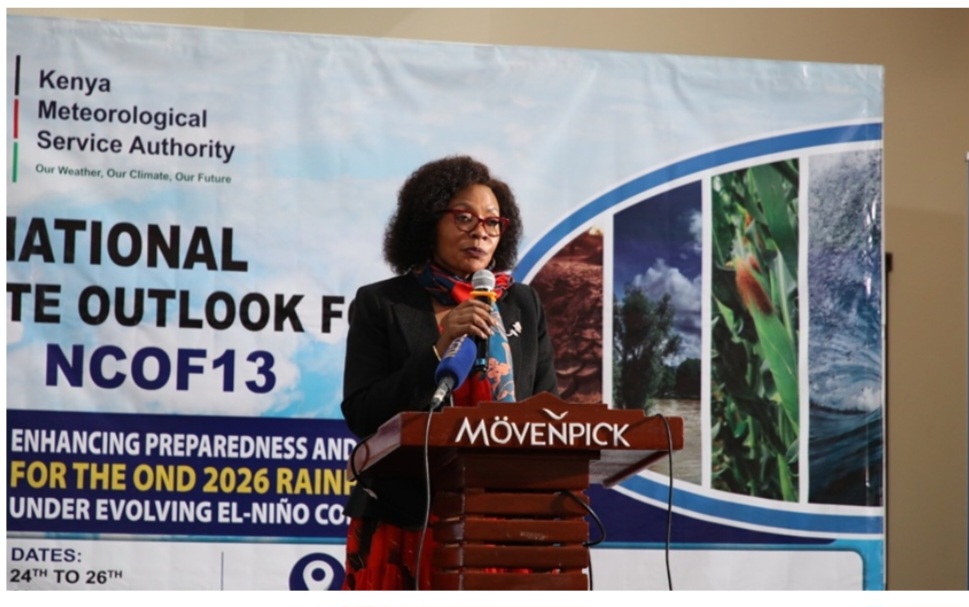
The announcement came from Dr. Margaret Oduk, who heads UNEP’s Liaison Office to the African Union Commission and the UN Economic Commission for Africa, speaking at the 13th National Climate Outlook Forum in Nairobi. This year’s gathering carried an urgent focus: getting the country ready for the October-to-December rains, which are expected to be shaped by a developing El Niño pattern.
Dr. Oduk’s central message was that nature itself is one of Kenya’s best defenses. Wetlands, forests, and watersheds, she argued, function as natural shock absorbers against the kind of heavy rainfall that can otherwise spiral into disaster.
That framing fit the moment. Kenya, like much of the continent, is grappling with climate patterns that are shifting faster and hitting harder disrupting food supplies, water access, infrastructure, public health, and livelihoods all at once. In that context, Dr. Oduk suggested, seasonal forecasts have stopped being a niche scientific product and become something closer to a survival tool , one that protects lives and safeguards years of hard-won development progress.
The upcoming rains illustrate the double-edged nature of the challenge. Combined with a positive Indian Ocean Dipole, the El Niño-influenced season could boost farm yields but it also raises real risks of flooding, landslides, damaged roads and buildings, and disease outbreaks. Dr. Oduk called on sectors to build action plans that capture the upside while guarding against the worst-case scenarios.
She also pledged UNEP’s continued partnership with Kenya’s Meteorological Service Authority and the Ministry of Environment to tighten the connection between forecasting and long-term environmental planning.
Beyond the immediate rainy season, Dr. Oduk pointed to Kenya as a model for how national systems can deliver on global commitments from the UN’s Early Warnings for All initiative to the Paris Agreement, the Sendai Framework, and the Sustainable Development Goals — by bringing forecasters and end-users together, learning from past seasons, and translating complex data into a clear public brief.
Her closing point circled back to accessibility: none of this works, she said, unless the science actually reaches the people who need it most armers, pastoralists, water managers, health workers, disaster response teams, and county-level planners in formats they can actually use and act on.



