

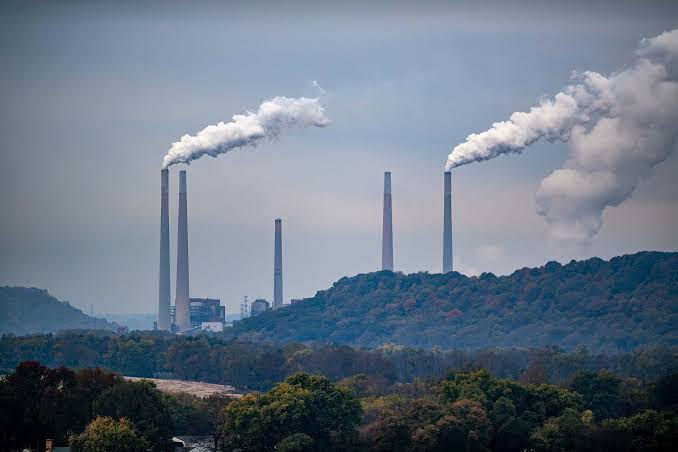
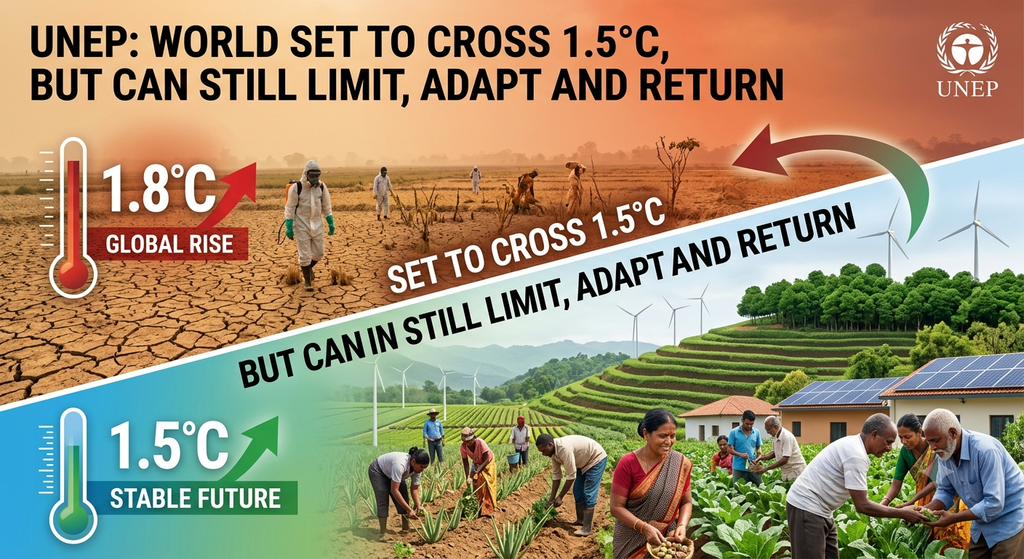
The world is entering a new phase in the climate crisis, with the 1.5°C warming threshold likely to be exceeded in the coming years. But the breach does not have to become permanent, according to a new report by the United Nations Environment Programme (UNEP), which says decisive action could limit the scale of the overshoot and eventually bring global temperatures back below the critical threshold.
UNEP’s Limiting Overshoot report, launched in Nairobi, projects that even the most ambitious emissions pathway would see global temperatures peak at about 1.8°C above pre-industrial levels. Less ambitious scenarios could push warming well beyond 2°C.
The findings point to a changing climate strategy. Rather than focusing solely on preventing a breach of 1.5°C, countries must now pursue what UNEP describes as an “overshoot, peak and decline” pathway — keeping temperatures above the threshold for as short a period as possible before bringing them down.
UN Secretary-General Antonio Guterres said increasingly severe climate events should be treated as an urgent warning.
“This summer’s scorching heat, raging wildfires and deadly floods are a warning of what lies ahead,” Guterres said, calling for an “overshoot of ambition” to ensure temperatures exceed 1.5°C by the smallest possible margin and for the shortest possible time.
Deep emissions cuts needed
UNEP says the first priority must remain rapid and sustained reductions in greenhouse gas emissions.
This will require countries to accelerate the transition away from fossil fuels, sharply reduce methane emissions and move towards net-zero emissions. In the longer term, the world will need to achieve net-negative emissions, meaning more greenhouse gases are removed from the atmosphere than are released.
Carbon dioxide removal (CDR) will play an important role in that process. Such approaches include restoring forests and other ecosystems, alongside technological methods of capturing and permanently storing carbon.
But UNEP cautions that carbon removal cannot substitute for cutting emissions at source. Strong safeguards and international governance will be necessary to ensure that removal programmes are environmentally sound, equitable and capable of operating at the scale required.
“Now is the time we must double down on climate action,” said UNEP Executive Director Inger Andersen, warning that every additional degree of warming increases the severity and duration of climate impacts.
Climate risks will intensify
The report warns that every fraction of a degree above 1.5°C will increase pressure on people, economies and ecosystems.
Among the risks are more frequent and intense heatwaves, floods, and other extreme weather events, alongside growing threats to food and water security, public health, infrastructure, biodiversity and economic stability.
Low-lying coastal communities and Small Island Developing States face particularly serious risks from rising seas.
UNEP also highlights potential climate tipping points, including destabilisation of major ice sheets, deterioration of the Amazon rainforest and disruption of the Atlantic Meridional Overturning Circulation (AMOC), a major ocean-current system that influences global climate patterns.
Some of these changes could happen suddenly, while others may unfold over decades or centuries. Once certain thresholds are crossed, however, reversing the resulting damage could become extremely difficult or impossible.
Adaptation cannot wait
As governments attempt to limit warming, UNEP says adaptation must advance at the same time.
Communities are already dealing with climate impacts, making investments in resilient infrastructure, agriculture, water systems, cities and ecosystems increasingly important.
However, the report stresses that adaptation has limits. Some losses cannot be prevented simply by building greater resilience, particularly if temperatures remain elevated for extended periods.
The transition from fossil fuels to renewable energy could nevertheless deliver benefits beyond climate protection, including cleaner air, better public health, lower energy costs and wider access to electricity.
Finance and fairness are critical
UNEP says achieving a successful overshoot-and-decline pathway will depend heavily on political leadership, international cooperation, climate finance and effective governance.
It also emphasises climate justice, arguing that countries with the greatest historical contribution to global warming should move faster and provide greater support to vulnerable nations.
For developing regions, including Africa, the availability of finance and technology will be particularly important as governments attempt to pursue both climate adaptation and economic development.
The report further calls for adaptation and mitigation to be designed together, including nature-based measures such as restoring ecosystems and expanding urban cooling initiatives.
A new climate frontier
Even if global temperatures eventually fall below 1.5°C, UNEP says the period of overshoot could leave lasting consequences. Some communities may be forced to relocate, while others could lose traditional livelihoods and face permanent changes to their living environments.
These consequences will raise difficult questions over compensation, justice, governance and who bears the costs of climate change.
The message from UNEP is therefore not that the 1.5°C target no longer matters, but that the world must prevent a temporary breach from becoming a long-term reality.
As COP31 approaches, Australia’s Climate Change and Energy Minister Chris Bowen said every fraction of warming matters, particularly for vulnerable Pacific communities.
COP31 President-Designate Murat Kurum similarly warned that exceeding 1.5°C should not be regarded as the world’s new climate normal.
For vulnerable regions such as the Lake Victoria basin, the report reinforces the need to strengthen local resilience, protect fisheries, safeguard water resources and diversify livelihoods.
The 1.5°C threshold may be breached, UNEP says, but the duration and scale of that overshoot remain choices that governments can influence.



