
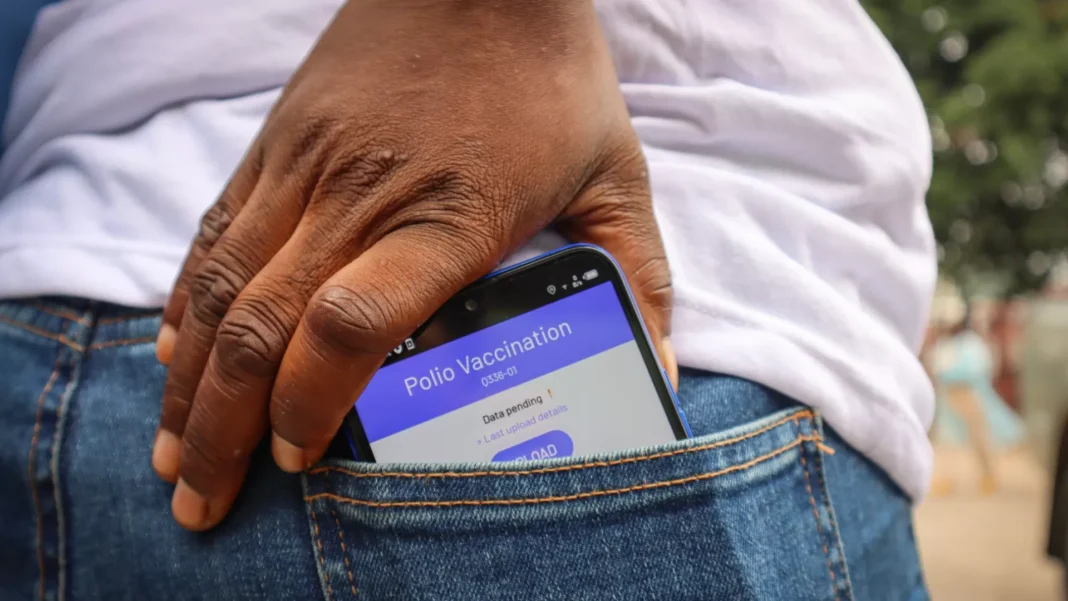

Every polio detection tells a bigger story than the presence of a virus. It raises questions about where surveillance systems may be missing cases, whether vaccination campaigns are reaching every child and how quickly health authorities can respond before an outbreak spreads.
Across Africa, answering these questions has traditionally required public health teams to navigate multiple databases, clean datasets, generate maps and compile reports before identifying where interventions are most urgently needed.
But as surveillance information grows across the continent, the time taken to turn that data into actionable intelligence is becoming an important part of the fight against polio.
The World Health Organization (WHO) Regional Office for Africa is now integrating artificial intelligence (AI) into its geographic information systems to help health professionals analyse surveillance and operational data more efficiently, identify potential gaps and strengthen outbreak response across 47 countries.
The innovation marks a shift in how public health teams interact with information, moving from manually searching databases towards asking questions in ordinary language and receiving relevant maps, charts, tables and written summaries.
Previously, producing a district-level map or country report could involve several technical steps, including locating datasets, cleaning information, combining records and generating visualisations.
During an outbreak, such processes could delay access to information needed to guide decisions.
Through AI-supported operational dashboards, programme officers can now request specific information without having to navigate multiple databases or depend entirely on technical analysts.
For instance, an officer can request a breakdown of circulating variant poliovirus type 2 (cVDPV2) detections by district in a particular country since January 2026. The system retrieves the relevant records and presents them in a visual format that allows teams to examine trends by geographical location, reporting period and virus type.
The Poliovirus Detection Dashboard also incorporates an AI-powered query function that generates written summaries from current and archived surveillance records, supported by relevant figures.
This could reduce the time spent extracting and compiling information, allowing epidemiologists and programme officers to concentrate more on interpreting findings, verifying information and identifying areas requiring follow-up.
Dr Kebba Touray, Head of WHO Africa’s Geographic Information Systems Centre, says AI-supported analysis is strengthening the monitoring of poliovirus detections, vaccination coverage and campaign quality.
By bringing together information from different interventions, the programme can identify potential surveillance gaps and areas where vaccination campaign performance requires closer attention.
The implications extend beyond detecting the virus.
Polio eradication depends on more than responding after infections are confirmed. Health authorities must also establish whether surveillance systems are sufficiently sensitive to detect circulation and whether vaccination campaigns are reaching children in communities where transmission could continue.
Weak surveillance can leave gaps in understanding where poliovirus is circulating, while suboptimal vaccination campaign performance can leave children insufficiently protected.
AI-supported analysis is therefore being extended to campaign monitoring, helping programme teams identify delayed supplementary immunization activities, understand reported reasons for those delays and examine operational bottlenecks.
This creates an opportunity to connect surveillance intelligence with the practical decisions needed to strengthen vaccination activities.
The WHO Africa GIS Centre receives weekly information from the region’s 47 countries, including poliovirus detections, laboratory results, vaccination campaign coverage and health facility visits.
Bringing these different datasets together is important because no single indicator can provide a complete picture of the progress towards polio eradication.
A district reporting no confirmed cases, for example, does not automatically establish that poliovirus is absent. Surveillance performance and the quality of reporting must also be considered when interpreting the available information.
This is where geographical information systems become particularly important.
By connecting health information to specific locations, GIS allows public health teams to understand not only what is happening but where it is happening and which communities may require additional attention.
The integration of AI adds another layer by making it easier to interrogate large volumes of information and identify patterns that might otherwise take longer to establish.
As the world marked GIS Day on November 18, WHO Africa highlighted how combining geographical intelligence with AI is changing the role of mapping in public health.
However, the organisation is clear that artificial intelligence does not replace epidemiological expertise or human verification.
The technology provides faster access to information, but health professionals remain responsible for interpreting findings, checking their accuracy and determining appropriate interventions.
This distinction is particularly important in disease surveillance, where decisions based on incomplete or incorrectly interpreted information could undermine outbreak response.
The development also raises broader questions about the capacity of African health systems to use digital technologies effectively.
Access to advanced analytical tools is only one part of strengthening surveillance. Countries must also maintain reliable reporting systems, quality laboratory networks, trained personnel and the ability to translate findings into timely public health action.
The usefulness of AI will ultimately depend on the quality of the information feeding these systems and the capacity of health authorities to respond to what the analysis reveals.
For Africa’s polio eradication programme, the ambition is to ensure that surveillance information does not remain trapped in databases or delayed in technical reporting processes.
Instead, it should reach the people responsible for identifying risks, directing vaccination activities and protecting children.
Behind every map, detection and data summary is a question of whether health systems can identify threats early enough to act.
AI may make that process faster, but the ultimate measure of its success will be whether better information translates into stronger surveillance, more effective vaccination campaigns and fewer children left vulnerable to polio.