
For generations, herbal medicines have remained part of how communities understand, prevent and manage illness. Their use is rooted in traditional knowledge passed between generations, often long before modern healthcare systems became widely accessible. Yet as traditional medicine gains renewed attention globally, a critical question remains: how can its integration into healthcare systems be strengthened without compromising the quality, safety and sustainability of the medicines people consume?
The World Health Organization (WHO) is taking a step towards addressing this challenge through efforts to establish internationally harmonised quality standards for traditional herbal medicines, an intervention that could reshape how these products are assessed, regulated and integrated into health systems.
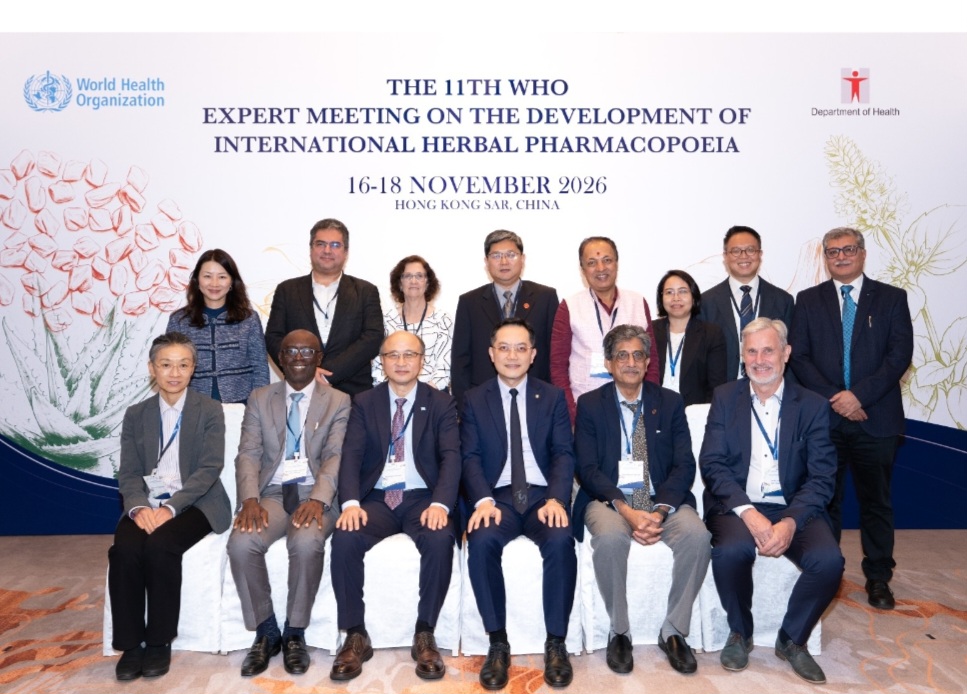
At an expert meeting held in Hong Kong SAR, China, from November 16 to 18, 2026, specialists drawn from all six WHO regions advanced discussions on the development of the first volume of international quality standards for traditional herbal medicines.
The proposed publication will contain 12 monographs covering priority herbal medicines, providing a scientific foundation for improving quality assurance and supporting regulatory systems across countries.
The initiative responds to a fundamental challenge facing traditional medicine: the need to establish greater consistency in the quality of herbal products while recognising the diversity of traditional practices and medicinal knowledge across communities.
Unlike medicines manufactured through standardised pharmaceutical processes, herbal products can vary depending on the plant species, growing conditions, harvesting methods, processing and storage. Such variations make quality assessment particularly important when herbal medicines are used for healthcare purposes.
For patients and healthcare providers, the ability to establish the identity, quality and consistency of medicinal plants is essential to making informed decisions about their use.
Dr Kim Sungchol, Unit Head of the Traditional Medicine Norms, Standards and Systems Integration Unit at the WHO Global Traditional Medicine Centre, emphasised that quality standards are fundamental to building confidence in traditional medicine.
Speaking on behalf of the centre’s Director, Dr Shyama Kuruvilla, he said WHO hopes the scientific publication will strengthen quality assurance, support regulatory capacity and promote greater convergence in standards.
The ambition is not simply to formalise traditional practices but to create a stronger scientific basis for their appropriate integration into healthcare systems.
The discussions also extended beyond laboratory standards to consider the environmental and cultural dimensions of herbal medicine.
A dedicated section in each of the 12 proposed monographs will address biodiversity, traditional knowledge and the sustainable use of herbal medicines.
This is particularly significant because medicinal plants are not merely pharmaceutical resources. They are also part of ecosystems and cultural knowledge systems that communities have preserved over generations.
As demand for herbal products grows, questions around sustainable harvesting, conservation and the protection of traditional knowledge become increasingly important.
Without attention to biodiversity, the expansion of herbal medicine markets could place pressure on the very plant resources that sustain traditional healthcare practices.
The WHO meeting therefore brings together two interconnected priorities: establishing scientifically credible quality standards and ensuring that the resources and knowledge underpinning traditional medicine are protected.
Mr Liu Jinfeng, Vice Minister of China’s National Health Commission and Commissioner of the National Administration of Traditional Chinese Medicine, described traditional medicine as an important component of health systems worldwide, complementing biomedicine and contributing to global health.
He emphasised the importance of scientific and evidence-based approaches, openness, collaboration and people-centred guidance in developing herbal medicine standards.
The discussions also reflect a wider international effort to move traditional medicine beyond recognition towards stronger regulatory and scientific frameworks.
The work contributes to the WHO Global Traditional Medicine Strategy 2025–2034, which seeks to strengthen quality assurance and regulatory systems while promoting the safe and evidence-informed use of traditional medicine.
For countries with established traditional medicine practices, the development presents an opportunity to strengthen national regulatory capacity and improve the scientific assessment of herbal products.
However, international standards will only make a meaningful difference if countries can translate them into practical regulatory systems, laboratory capacity, monitoring mechanisms and appropriate public information.
The three-day meeting was part of a series of consultations that WHO has conducted since November 2024 to develop the first volume of international herbal medicine quality standards.
WHO acknowledged the contributions of the Hong Kong Special Administrative Region Government’s Department of Health, its WHO Collaborating Centre for Traditional Medicine and India’s Pharmacopoeia Commission for Indian Medicine and Homoeopathy under the Ministry of Ayush.
Ultimately, the initiative raises a question that extends beyond the development of 12 scientific monographs: how can traditional medicine be recognised within modern healthcare without losing the cultural knowledge, environmental resources and community practices that give it meaning?
For WHO, establishing international quality standards is an important step towards building that confidence. But the real test will be whether scientific guidance translates into safer products, stronger national regulation and more informed choices for the people who depend on herbal medicines.