


Africa’s women’s football is gaining visibility, attracting investment and expanding its audience. The challenge now is to turn that momentum into sustainable growth beyond major tournaments.
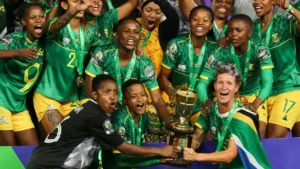
After the TotalEnergies CAF Women’s Africa Cup of Nations (WAFCON) concluded in Rabat, Casablanca and Fez, Morocco, the continent faces a defining question: can the excitement translate into stronger football structures, greater commercial investment and more opportunities for the next generation of players?
The tournament was more than a sporting contest. It highlighted the potential of women’s football to advance gender equality, promote inclusion and create economic opportunities across Africa.
For too long, women’s sport has been treated as charity or corporate social responsibility rather than a viable investment. That perception is changing. Growing attendances, expanding sponsorships and greater digital engagement demonstrate that women’s football is an emerging commercial opportunity Africa cannot afford to overlook.
Globally, revenues from women’s sports are projected to reach at least $3 billion in 2026, reflecting significant growth in the sector. Africa’s market potential, however, remains difficult to quantify. Investment still depends heavily on football associations, governments and a relatively small pool of sponsors, while substantial broadcasting and ticketing revenues remain elusive.
There are encouraging signs of progress. The Confederation of African Football (CAF) doubled WAFCON prize money to $5.8 million, including $2 million for the champions. Nigeria’s Women Football League Premiership secured a 10-year, ₦20 billion private-sector partnership, while South Africa’s women’s league obtained a R17 million naming-rights agreement.
The latest WAFCON also demonstrated the continent’s growing appetite for women’s football. The 16-team tournament recorded increased commercial interest, with television and sponsorship revenues reportedly rising by 40%. Matches reached audiences through more than 100 channels, while younger fans engaged with their teams on platforms such as TikTok and Instagram.
Yet visibility alone cannot sustain a football economy. African women players continue to move to Europe and the United States, where professional structures, salaries and development opportunities can be more attractive. Without reliable domestic broadcasting income, stronger club competitions and sustained local support, African leagues risk becoming talent pipelines for better-funded markets.
The gender gap also persists beyond the pitch. Women remain under-represented in football leadership, while coaching and administrative positions continue to be dominated by men. Although progress has been made in addressing disparities in pay and recognition, equality remains unfinished business.
Pioneers such as South Africa’s Desiree Ellis and Kenya’s Beldine Odemba demonstrate what women can achieve when given opportunities to lead. Their example must become the norm rather than the exception.
Mentorship is central to this transformation. Young players, coaches and administrators need structured programmes connecting them with experienced professionals who can provide guidance, technical knowledge and leadership opportunities. Developing future leaders requires investment not only in talent but also in training facilities, coaching education and governance.
Governments, football authorities and private investors must work together to build a sustainable ecosystem. Businesses can explore new revenue streams through digital broadcasting, sports content, merchandise and direct engagement with supporters. Partnerships with civil society organisations can also extend football’s impact beyond competition.
Organisations such as Tibu Africa, which empowers young people through sport, demonstrate how football can create opportunities and challenge social barriers. Such initiatives reinforce the importance of partnerships between government, business and civil society in ensuring that more girls can participate in sport.
Governments must establish transparent funding frameworks, promote fair treatment and create conditions that encourage private investment. Regional bodies can strengthen cooperation by sharing expertise, aligning standards and directing resources towards grassroots football.
The media also has a critical role. Greater coverage of women’s competitions, alongside more women in broadcasting, journalism and sports management, can challenge stereotypes, attract sponsors and inspire future generations.
Corporate partnerships must similarly deliver lasting value. TotalEnergies’ collaboration with CAF offers an opportunity to strengthen African football through grassroots development, greater visibility and community engagement. Such investment is most effective when it supports sustainable structures rather than delivering short-term exposure around major tournaments.
The economic potential extends beyond football itself. Stronger women’s leagues can create jobs, stimulate tourism, attract commercial partnerships and support related industries, from broadcasting to hospitality.
Africa now has an opportunity to shape the future of women’s football. Missing this moment would risk widening existing inequalities and allowing more talent to leave for opportunities elsewhere.
The final whistle at WAFCON may determine the tournament’s champions, but the real test begins afterwards. Africa must decide whether to build the systems that allow its women footballers to thrive or continue watching its talent seek opportunities abroad.
The trophy celebrates a winner. Sustained investment will determine whether women’s football becomes a lasting force for African development.
Written By: Isha Johansen is a former CAF Executive Committee member and the first West African woman to serve on the FIFA Council.



