

Kenya is strengthening its role in African defence cooperation by sharing expertise in digital transformation, cybersecurity and critical infrastructure protection with military and security institutions across the continent.
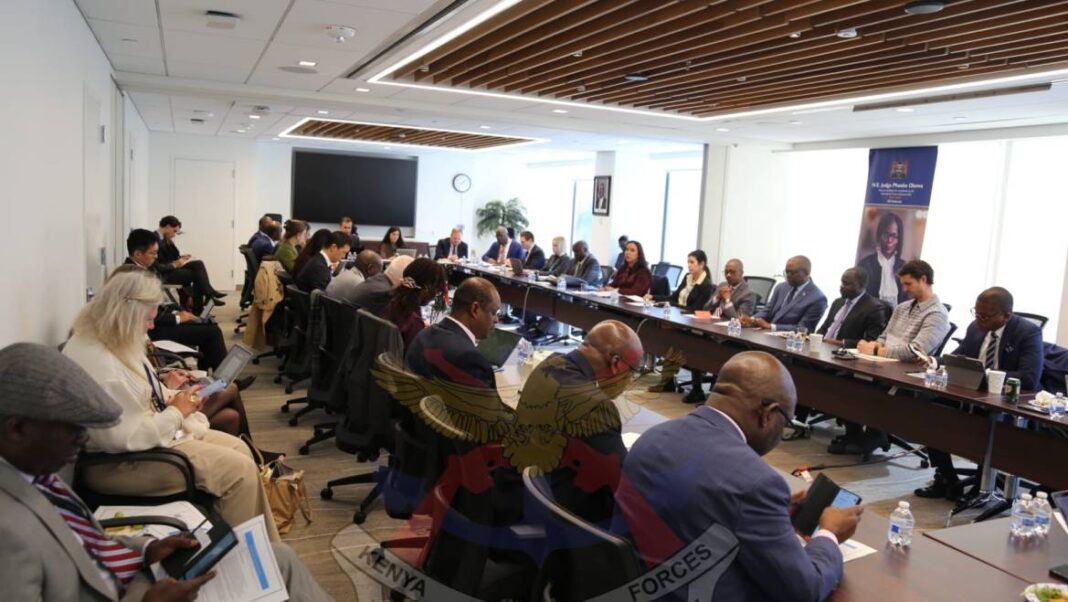
The engagement featured a delegation from the Malawi Defence Force Command and Staff College, led by its commandant, Major General Vincent Moyo, which held discussions with officials from Kenya’s State Department for ICT and the Digital Economy and representatives of the Kenya Defence Forces (KDF).
Principal Secretary for ICT and the Digital Economy, Eng. John Tanui, CBS, hosted the delegation, emphasising the importance of sustained partnerships in developing African capabilities to address emerging security challenges.
Tanui called for continued collaboration to build “bridges of knowledge, innovation, and strategic collaboration” to support a safer, more prosperous and digitally secure African continent.
The visit reflects an expanding understanding of defence cooperation in Africa, where military preparedness increasingly depends not only on conventional capabilities but also on secure communications, digital infrastructure, intelligence protection and technological expertise.
Cybersecurity becomes a defence priority
During the engagement, the delegation met Secretary of Administration J.N. Kinama, Director of ICT and Cyber Security Division Pius Cheruiyot, and Lieutenant Colonel Wilson Kigotho of the Kenya Defence Forces.
Discussions focused on digital transformation, cybersecurity, critical infrastructure protection and national resilience, highlighting the intersection between technology policy and defence planning.
The delegation received a briefing on the State Department for ICT and the Digital Economy, including its institutional structure, agencies and policy framework supporting Kenya’s digital economy.
Officials also outlined elements of Kenya’s digital transformation, including online government service-delivery platforms, national cybersecurity strategies and data-centre infrastructure.
These capabilities have growing significance for military institutions as governments digitise public services, expand electronic communications and rely increasingly on connected systems to manage essential infrastructure.
Cybersecurity threats targeting government networks, financial systems, telecommunications and energy infrastructure can have consequences extending beyond the civilian economy. For defence institutions, protecting sensitive information and maintaining secure communications are essential to operational readiness.
Kinama underscored this connection, noting that cybersecurity, artificial intelligence and smart technologies have transformed national security into a multidimensional field in which digital infrastructure and defence strategy are increasingly interconnected.
The discussions also examined cloud infrastructure, secure communications and data-driven decision-making as important components of national resilience.
Building African defence capabilities
The engagement comes as African countries seek to strengthen cooperation in responding to security challenges that increasingly cross national borders.
These include cybercrime, attacks on critical infrastructure, regional instability and the growing technological sophistication of security threats.
For Kenya, sharing knowledge with military institutions from other African countries provides an opportunity to deepen professional relationships while contributing to regional capacity-building efforts.
Such cooperation can support the development of common approaches to cybersecurity training, information protection and the responsible application of emerging technologies.
It also offers opportunities for African defence institutions to exchange experiences and develop expertise suited to their national circumstances, rather than relying exclusively on external technical support.
The Malawi Defence Force Command and Staff College delegation included participants representing Malawi, Kenya, Tanzania, Zambia and Zimbabwe.
The multinational composition provided a platform for exchanging perspectives on security, technology and institutional development among officers from different countries.
While the engagement focused primarily on digital systems and cybersecurity, its wider significance lies in the growing role of technological knowledge in modern defence cooperation.



