
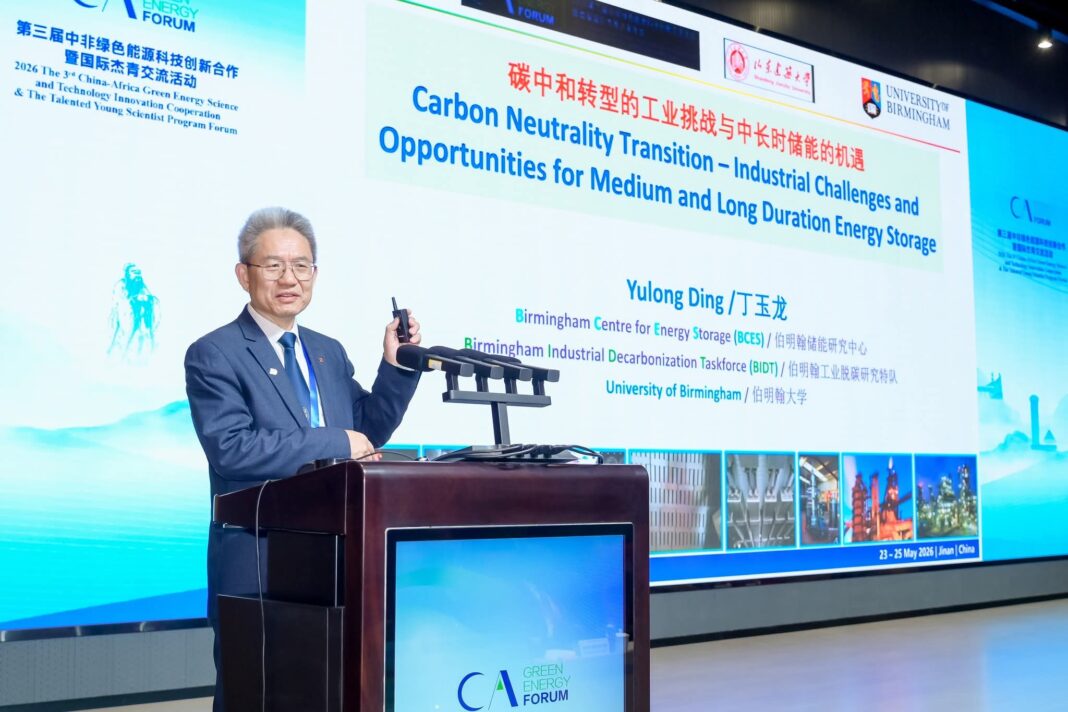

China and African countries are strengthening scientific collaboration in renewable energy, hydrogen technology and energy storage as researchers and universities deepen partnerships aimed at accelerating the continent’s green transition.
The third China-Africa Green Energy Science and Technology Innovation Cooperation and Talented Young Scientist Program Forum, held in Jinan from October 23 to 25, 2026, brought together nearly 200 registered participants from 33 countries and more than 70 universities and research institutions.
Jointly hosted by the China Association for International Exchange of Personnel and Shandong Jianzhu University, the forum provided a platform for Chinese and African researchers to exchange knowledge, establish institutional partnerships and explore practical applications of emerging clean-energy technologies.
A major outcome was the signing of cooperation agreements between Shandong Jianzhu University and African universities and academic organisations, including partners in Ghana, Kenya and Nigeria. The agreements are intended to promote joint research, academic exchanges and the development of scientific talent.
The partnerships come as African countries seek to expand electricity access, reduce dependence on fossil fuels and attract investment in renewable energy infrastructure. Stronger research links with Chinese institutions could help African universities develop technical expertise, train specialists and adapt emerging technologies to local energy needs.
Research partnerships target Africa’s energy transition
The forum examined developments in renewable energy, hydrogen technologies, energy storage, low-carbon buildings and artificial intelligence-enabled energy systems.
These areas have growing relevance for Africa, where countries are pursuing different pathways to meet rising electricity demand while limiting emissions and improving energy security.
Renewable energy technologies, particularly solar and wind, offer opportunities to expand power generation. However, integrating intermittent sources into national grids requires improvements in energy storage, transmission infrastructure and system management.
Collaboration in battery technologies and intelligent energy systems could help researchers address these challenges, including the need to improve grid reliability and make renewable electricity more accessible to households and businesses.
Hydrogen technology and low-carbon construction also featured on the forum’s agenda, reflecting the broader search for industrial solutions that can reduce emissions while supporting economic growth.
For African economies, translating research into commercial applications will be critical. Universities can contribute by testing technologies, training engineers and building links with companies capable of deploying innovations at scale.
China’s experience in renewable-energy manufacturing, infrastructure development and clean-technology research provides a potential foundation for such exchanges. African institutions, in turn, can contribute local knowledge and research on the continent’s diverse climatic, economic and energy conditions.
The effectiveness of the partnerships will depend on sustained funding, access to laboratories, technology transfer and opportunities for researchers to develop projects beyond academic exchanges.
Young scientists at the centre of cooperation
The forum also placed emphasis on developing the next generation of scientific researchers through the Talented Young Scientist Program Forum.
Early-career researchers shared their experiences of conducting research in China and discussed opportunities for international collaboration. Expert lectures, six parallel sessions and industry visits further connected academic discussions with developments in the energy sector.
For African researchers, such exchanges can provide access to specialised facilities, mentorship and international research networks. They can also help universities build long-term institutional relationships and develop skills needed to support national energy strategies.
The emphasis on young scientists is particularly significant as African countries seek to strengthen their scientific capacity and retain skilled professionals. Training researchers and creating opportunities for collaborative projects can help ensure that international partnerships generate lasting benefits at home.
Building a long-term China-Africa green partnership
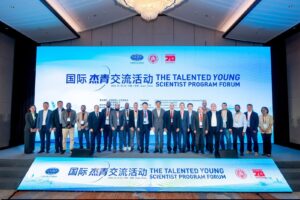
The forum was first held in Jinan in 2024 before moving to Johannesburg in 2025. Its return to China in 2026 reflects continuing efforts to connect research communities across China and Africa.
Beyond formal agreements, the next challenge will be converting scientific cooperation into measurable outcomes, including joint publications, locally adapted technologies, specialist training and partnerships between universities and industry.
For Africa, deeper cooperation with China could support efforts to diversify energy sources, strengthen research institutions and develop home-grown solutions to the continent’s energy challenges.
As governments pursue cleaner power systems and more sustainable industrial development, sustained collaboration between African and Chinese universities will be important in bridging the gap between scientific discovery and practical deployment.
The Jinan forum reinforced the role of research, innovation and talent development in advancing a green energy partnership that supports sustainable growth across both regions.



