
Five-day campaign against polio, measles, rubella and yellow fever mobilises more than 77,000 health workers, volunteers and community leaders.
Angola has launched a nationwide integrated vaccination campaign targeting more than 10 million children against four preventable diseases, in a major push to strengthen child health and protect communities from potentially deadly infections.
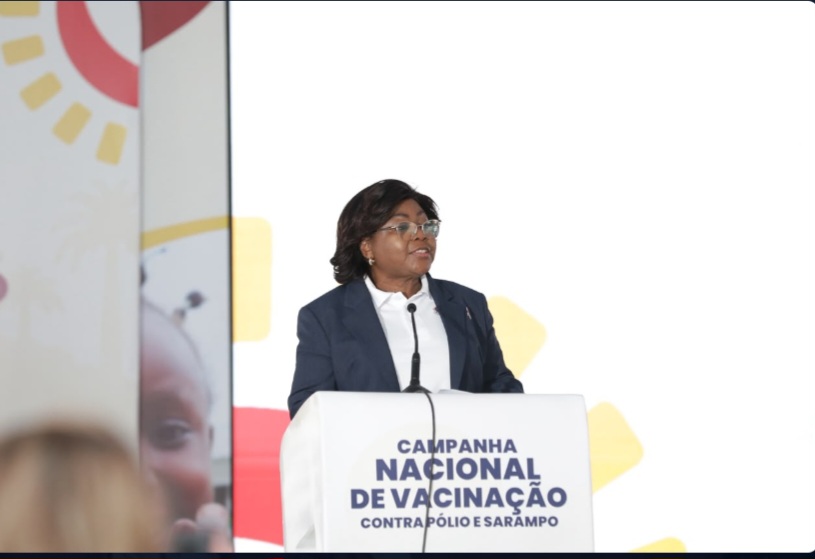
The campaign, launched in Luanda on October 23, 2026, by Vice-President Esperança Maria Eduardo Francisco da Costa, will run until October 27, bringing together more than 77,000 health professionals, volunteers, social mobilisers and community leaders.
According to the World Health Organization (WHO) Regional Office for Africa, the initiative will deploy more than 11,000 vaccination teams across urban centres, rural communities and hard-to-reach areas in all Angolan provinces.
The five-day exercise seeks to increase population immunity, prevent outbreaks and consolidate the country’s progress in controlling vaccine-preventable diseases.
Children will receive vaccines against polio, measles, rubella and yellow fever, while communities along the borders with the Democratic Republic of the Congo and Namibia will also receive injectable polio vaccines as part of coordinated regional efforts to interrupt disease transmission.
The scale of the campaign highlights the challenge facing health authorities in reaching every child, particularly those living in remote communities where distance, infrastructure and access to health services can complicate vaccination efforts.
Beyond the five-day campaign
While the campaign represents a major vaccination effort, Angolan authorities say protecting children will require sustained investment in routine immunisation beyond the five-day exercise.
Vice-President da Costa emphasised that the campaign should complement, rather than replace, regular vaccination services, urging continued efforts to ensure children remain protected throughout their early years.
“This campaign reinforces our commitment to vaccination, but the protection of our children does not end with a single campaign. It is essential to maintain and strengthen routine vaccination,” she said.
The government has been expanding its immunisation programme over several decades. Since the introduction of the Expanded Programme on Immunisation, Angola has increased the number of vaccines in its national schedule from five in 1979 to 13 in 2026.
The country has also expanded its capacity to store and preserve vaccines, including through the installation of solar-powered cold-chain equipment in remote areas. Such infrastructure is critical to maintaining vaccines at appropriate temperatures and extending immunisation services to communities that are difficult to reach.
Health Minister Sílvia Lutucuta said the government’s investment in vaccines through the General State Budget demonstrates its commitment to disease prevention and public health.
She described universal access to vaccination as an issue of equity and social justice, stressing that a child’s access to protection should not depend on where they live.
“Ensuring that all children are vaccinated, regardless of where they live, is everyone’s responsibility and a matter of equity and social justice,” Lutucuta said.
Regional cooperation in disease prevention
The campaign also underscores the importance of cross-border cooperation in controlling infectious diseases.
In areas bordering the Democratic Republic of the Congo and Namibia, Angola will coordinate the administration of injectable polio vaccines with similar initiatives in neighbouring countries. The approach aims to strengthen protection among border populations and support regional efforts to interrupt transmission.
The campaign is being led by Angola’s Ministry of Health, with support from WHO, the United Nations Children’s Fund (UNICEF), Gavi, the Vaccine Alliance, the Global Polio Eradication Initiative and other national and international partners.
Speaking on behalf of the United Nations, Resident Coordinator Amanda Khozi Mukwashi reaffirmed the UN system’s commitment to supporting the government’s efforts to safeguard children’s health.
She said the initiative would help prevent outbreaks, save lives and strengthen public health protection.
However, the campaign’s reach will ultimately depend on parents and guardians bringing eligible children for vaccination, alongside the continued availability of vaccines and accessible health services.
Under the slogan “Vaccines work. Vaccines save lives,” the government has urged families to visit vaccination centres and ensure their children’s vaccination records are up to date.
As the campaign progresses, its longer-term significance will lie not only in the number of children reached during the five days, but also in whether the expanded effort strengthens routine immunisation and ensures that children in remote and underserved communities are not left behind.