
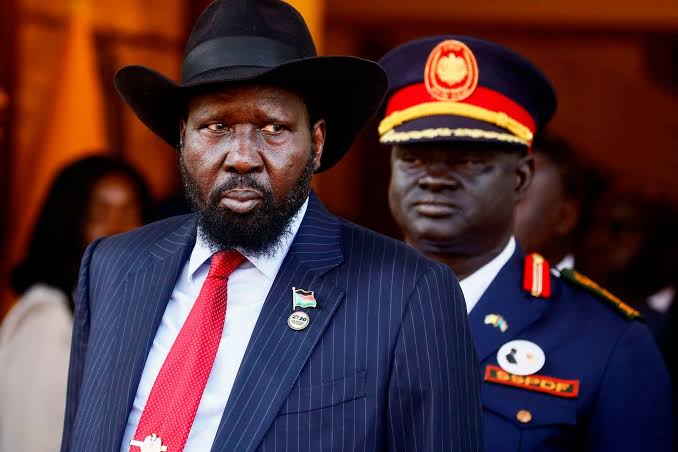

South Sudan is heading toward its first presidential election since independence, with President Salva Kiir Mayardit seeking another mandate under the ruling Sudan People’s Liberation Movement (SPLM), while four challengers have declared their intention to contest the presidency.
The National Elections Commission has set December 22, 2026 as the date for the general elections, following years of postponements linked to the implementation of the 2018 peace agreement, preparations for a permanent constitution and a national census.
Kiir was endorsed in July by the SPLM as its sole presidential candidate, putting him at the centre of a contest that will test the country’s political transition and the ability of opposition and independent candidates to mount nationwide campaigns.
The declared challengers are Tijwok Hadar Agwet, an independent candidate and former presidential adviser; Dr Issa Muzamil Sebit Makelele, leader of the National Patriotic Movement (NPM); Kornelio Kon Ngu, leader of the National United Democratic Front (NUDF); and Peter Mayen Majongdit, leader of the People’s Liberal Party (PLP).
The field could expand as political parties complete their nominations.
Kiir has been president since South Sudan gained independence in 2011 and leads the SPLM, the political movement that dominated the liberation struggle and has remained the principal force in government.
The SPLM formally endorsed him in July as its presidential candidate.His candidacy comes as the country seeks to end its prolonged transitional period and establish an elected government. Kiir has also signed amendments to the National Elections Act removing completion of a permanent constitution and a national census as conditions for holding the elections.
The amendments allow the electoral process to proceed while those processes remain unfinished and provide for the incumbent executive leadership to remain in office with constitutional powers until an elected president assumes office.
Tijwok Hadar Agwet: Independent challenger
Agwet, a former presidential adviser on religious affairs, is running as an independent. He was involved in negotiations with the Cobra Faction led by David Yau Yau that contributed to the creation of the Greater Pibor Administrative Area.
He was also a founding member of the opposition SPLM-IO before announcing his departure from the movement in 2026.
Agwet has identified peace, national unity and public services among his priorities and criticised what he describes as ethnic patronage in government appointments. His experience within government and links to the opposition give him a distinctive background in the race.
Dr Issa Muzamil: NPM candidate
Dr Issa Muzamil Sebit Makelele, chairman of the National Patriotic Movement, is a lawyer and former chairperson of the South Sudan Bar Association.
The NPM governing council endorsed him as its presidential candidate, with the announcement made by the party’s secretary-general on September 23.
The Political Parties Council lists the NPM as a registered party led by Muzamil under the motto “One Nation, One Future.”
Muzamil has called for neutrality by government officials and argued that state resources should not be used for political campaigning, placing electoral conduct, legal institutions and constitutionalism among issues likely to feature in his campaign.
Kornelio Kon: Parliamentary challenger
Kornelio Kon Ngu, chairman of the NUDF and a senior parliamentary figure, announced his presidential bid in August during a summit of the National Alliance of Political Parties.
Kon previously served as third deputy speaker of the Transitional National Legislative Assembly. His party is registered under the motto “Freedom, Justice, Equality.”
He has criticised the concentration of infrastructure, public services and economic opportunities in Juba, arguing that development disparities between the capital and other parts of the country need to be addressed.
Peter Mayen: Former minister returns
Peter Mayen Majongdit, leader of the PLP, served as Minister of Humanitarian Affairs and Disaster Management from 2020 to 2022.
He has previously sought the presidency and continued to advocate for elections during the extended transitional period. In March 2026, he called for the December elections to proceed without another postponement and urged an independent electoral process, voter registration and civic education.
The election comes after repeated postponements since independence, leaving South Sudan governed through transitional arrangements rather than a post-independence elected national government.
Questions remain over the electoral environment. Earlier this month, Kiir removed the chairperson of the National Elections Commission and appointed a replacement, prompting criticism over the timing and legality of the decision.
With Kiir backed by the established SPLM structure and four challengers emerging from independent, legal, parliamentary and opposition-party backgrounds, the coming months will focus on campaign organisation, electoral participation and whether the candidates can build nationwide political support.
The December vote is consequently becoming a test of South Sudan’s transition from prolonged transitional rule toward competitive national politics.



