
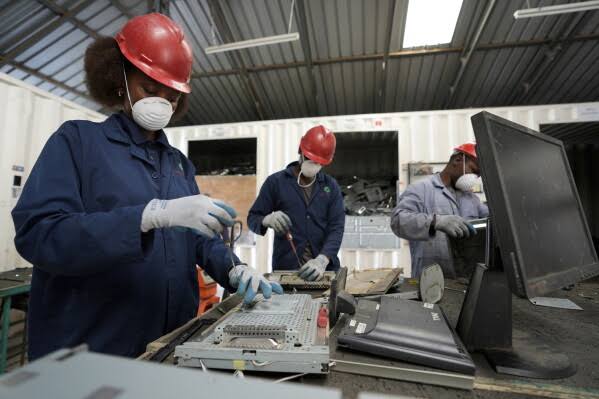

Kenya’s Growing Pile of Electronic Waste Presents a New Economic Challenge
Kenya’s growing appetite for smartphones, computers, televisions and other electronic devices is creating an environmental challenge that is becoming increasingly difficult to ignore. As households upgrade their gadgets and businesses replace outdated equipment, discarded electronics are accumulating in a waste stream that requires specialised handling, proper collection and safe recycling.
The scale of the problem is reflected in the 2026 Economic Survey published by the Kenya National Bureau of Statistics (KNBS). The report estimates that Kenya generated 55,956 metric tonnes of electronic waste in 2025, representing an increase of 4.5 per cent from the previous year. The figures highlight a challenge that extends beyond rubbish collection to include public health, environmental management, business investment and the future of the country’s digital economy.
Yet electronic waste, commonly known as e-waste, also contains materials that can be recovered and returned to productive use. A national assessment prepared by the United Nations Institute for Training and Research and KNBS estimates that the metal fractions contained in Kenya’s electronic waste were worth approximately US$48 million to US$50 million in 2025.
This creates an important question for policymakers and entrepreneurs: can Kenya build a recycling industry that protects communities while turning discarded technology into an economic resource? The opportunity is significant, but realising it will require more than encouraging people to dispose of old phones responsibly. Kenya needs accessible collection points, investment in recycling infrastructure, stronger enforcement of environmental standards and closer cooperation between manufacturers, retailers, repair businesses and waste handlers.
Why Electronic Waste Is Increasing in Kenya
Electronic waste includes discarded electrical and electronic equipment such as mobile phones, laptops, printers, televisions, refrigerators, washing machines, cables and certain types of batteries and electronic accessories. Unlike ordinary household rubbish, these products contain a mixture of plastics, glass, metals and electronic components that may require specialised treatment.
Kenya’s expanding digital economy is one reason the issue deserves greater attention. Mobile connectivity, online services, digital payments and computer-based business operations have become part of everyday life. Households and organisations regularly purchase electronic equipment to improve communication, productivity and access to information.
However, many devices have a limited useful life. Some stop working because of damaged components, battery failure or software incompatibility. Others are replaced because newer models offer better performance or because repairs are considered too expensive. When these products reach the end of their useful life, their owners must decide whether to repair, resell, donate, store or discard them. In many homes, old electronics remain unused in cupboards and drawers. Others enter informal waste channels where their final destination may be difficult to establish.
The problem is not simply the number of devices entering the market. It is also whether Kenya has enough reliable systems to collect and process them safely. The 2026 KNBS Economic Survey shows that small electronic equipment is an important part of the waste stream. It recorded 21,942 metric tonnes of waste from small equipment in 2025, an increase of 11.2 per cent compared with 2024. This category matters because many of the products involved are common household items. Their small size can make them easy to discard without considering the environmental consequences.
What Happens When Old Electronics Are Disposed of Improperly?
Electronic equipment can contain valuable metals alongside substances that require careful management. The risks depend on the product, its age, the components involved and the way it is dismantled or processed. When electronic waste is burned in the open to recover metal, harmful smoke and residues may be released. Breaking devices apart without suitable equipment can expose workers to sharp materials, dust and potentially hazardous components. Poorly managed disposal can also allow contaminants to enter surrounding soil or water.
These risks make e-waste management a public health issue as well as an environmental concern. Workers handling discarded equipment need suitable protective equipment, training and safe working conditions. Communities living near informal processing or disposal sites also need protection from unsafe practices.
There is an additional concern involving information security. Old phones, computers and storage devices may contain personal photographs, passwords, financial information, business documents and other sensitive records. Selling or giving away a device without properly removing its data can expose its previous owner to fraud or privacy violations. For that reason, responsible recycling should include secure data destruction where necessary. Businesses disposing of computers and servers need procedures for protecting confidential information before equipment enters the recycling chain. Kenya’s e-waste challenge therefore connects environmental policy with cybersecurity, consumer protection and responsible business management.
Can E-Waste Recycling Create Jobs for Young Kenyans?
A well-developed recycling sector could support employment across several stages of the electronic equipment lifecycle. Collection, transportation, sorting, testing, repair, refurbishment, dismantling and materials recovery all require labour, equipment and organisation. Repair businesses are particularly important because not every discarded device needs to be destroyed. Some electronics can be repaired at a reasonable cost and returned to use. Others can be refurbished and sold to buyers who cannot afford brand-new equipment.
This creates opportunities for technicians, electronics engineers, entrepreneurs and vocational training institutions. Young people with skills in diagnostics, soldering, battery testing, computer repair and equipment maintenance could find opportunities in a sector that combines technical knowledge with environmental responsibility.
Collection businesses could also develop partnerships with offices, schools, universities, retailers and residential estates. Rather than waiting for electronic waste to reach informal dumping sites, operators could organise scheduled collections and deliver equipment to approved recycling or refurbishment facilities.
However, these opportunities should not be confused with guaranteed employment figures. The number and quality of jobs created will depend on demand for recovered materials, investment in processing facilities, regulatory compliance and the ability of businesses to operate sustainably. Training will be essential. Workers must understand how to identify different types of equipment, separate reusable products from damaged components, handle batteries safely and comply with applicable environmental requirements. County governments and technical institutions could support this transition through practical training programmes and partnerships with established recyclers.
The Business Opportunity Hidden Inside Discarded Electronics
The financial value of recovered materials offers a reason for investors to examine the sector more closely. According to the National E-waste Monitor 2026, Kenya’s electronic waste contained metal fractions estimated to be worth US$48 million to US$50 million in 2025.
That figure represents the estimated value of the metals contained in the waste, not money already earned by recycling companies. Recovering those materials requires collection, sorting, processing and quality control. Some materials may also be difficult or uneconomical to recover using locally available technology.
Nevertheless, the estimate illustrates why electronic waste should not automatically be treated as worthless rubbish. Potential business models include collection services for institutions, certified data destruction, device refurbishment, spare-parts recovery and the supply of properly sorted materials to authorised processors. Businesses could also offer collection programmes to companies replacing computers, printers and communication equipment.
Retailers and manufacturers may have an opportunity to build take-back systems that allow customers to return old devices when purchasing replacements. Such arrangements could help companies demonstrate environmental responsibility while improving the traceability of products at the end of their useful lives.
The sector also presents opportunities for digital innovation. Collection operators could use online booking systems, digital tracking and inventory tools to record where equipment comes from, how it is handled and where recovered materials are delivered. Still, entering the industry requires careful planning. Entrepreneurs must investigate licensing requirements, environmental obligations, operating costs, equipment needs and the availability of legitimate buyers for recovered materials. Unsafe dismantling or unregulated processing can expose businesses to legal and financial risks.
Why Informal Collectors Must Be Part of the Solution
Electronic waste management does not begin and end with large recycling plants. In many communities, informal collectors, repair technicians, second-hand electronics traders and small dismantlers already play a role in recovering discarded equipment. Ignoring these actors could undermine efforts to improve the sector. They often understand local collection networks and know where discarded devices are likely to be found. However, their work may take place without adequate protective equipment, reliable prices or access to safe processing facilities.
The National E-waste Monitor 2026 recognises the importance of connecting informal collectors, repairers, refurbishers and dismantlers with formal collection and producer-responsibility systems. This approach could help improve working conditions while making more electronic waste traceable. Cooperatives, collection partnerships and training programmes could enable small operators to supply larger recycling facilities without losing their role in the market.
The challenge is to formalise operations in a way that improves safety and environmental standards without unnecessarily excluding people whose livelihoods depend on collecting and repairing electronics. A successful system should reward safe practices, encourage legitimate business relationships and make it easier for collectors to deliver materials to authorised destinations.
What Government and Manufacturers Need to Do
Kenya’s electronic waste problem requires coordinated action from public authorities, private companies and consumers. Collection infrastructure is essential, but it must be supported by rules that make responsibilities clear. Extended producer responsibility is one important policy mechanism. It places defined responsibilities on producers for managing products at the end of their useful lives. When implemented effectively, such systems can encourage manufacturers and importers to support collection, recovery and recycling programmes.
Kenya’s Sustainable Waste Management Act, 2022, provides a broader legal framework for sustainable waste management, while the country’s extended producer responsibility regulations establish additional obligations for producers and other relevant actors. Businesses should consult the current official legal texts and applicable guidance to determine the requirements that apply to their products and operations.
Public awareness is equally important. Consumers need clear information about where to return old devices, how to protect their data and why electronics should not be mixed indiscriminately with ordinary household waste. County governments can help by identifying suitable collection locations, supporting public education and coordinating with authorised waste handlers. Schools and universities could introduce electronic waste collection days, while employers could establish secure disposal procedures for obsolete equipment.
Manufacturers and retailers could make take-back programmes easier to use. If responsible disposal requires customers to travel long distances or pay unclear fees, many may continue storing devices at home or handing them to unverified collectors.
The Road Ahead for Kenya’s Circular Electronics Economy
Kenya’s electronic waste figures reveal a growing challenge, but they also present an opportunity to rethink how the country uses resources. Instead of following a pattern in which devices are purchased, discarded and replaced, businesses could develop systems that extend product lifespans, recover materials and reduce unnecessary waste. A circular economy depends on keeping products and materials in productive use for as long as practical. In electronics, this can mean repairing a damaged phone, refurbishing a computer, reusing suitable components and recycling materials that can no longer serve their original purpose.
The transition will not happen overnight. Kenya will need investment in infrastructure, reliable data, consumer participation, effective regulation and safe working conditions. Recovered materials must also meet quality requirements and find viable markets if recycling businesses are to remain financially sustainable. For entrepreneurs, the message is not that every discarded device is a guaranteed source of profit. It is that a growing waste stream deserves serious commercial investigation and responsible management. For consumers, the immediate lesson is simpler: an unused electronic device should not automatically end up in ordinary rubbish. Repair, resale, donation and approved recycling may offer safer and more useful alternatives.
Kenya has already demonstrated how technology can transform communication and commerce. The next challenge is ensuring that the physical products supporting that transformation are managed responsibly when their useful lives come to an end.



