

Nairobi’s long-promised transformation into a modern transport and commercial district is approaching a critical turning point, but the biggest obstacle is no longer the absence of architectural plans or construction contractors. It is securing the money to build it.
Kenya Railways is targeting early 2027 to conclude financing arrangements for the redevelopment of Nairobi Central Station and its surrounding public spaces, a major component of the Nairobi Railway City programme that seeks to reshape how people move, work and conduct business in the capital.
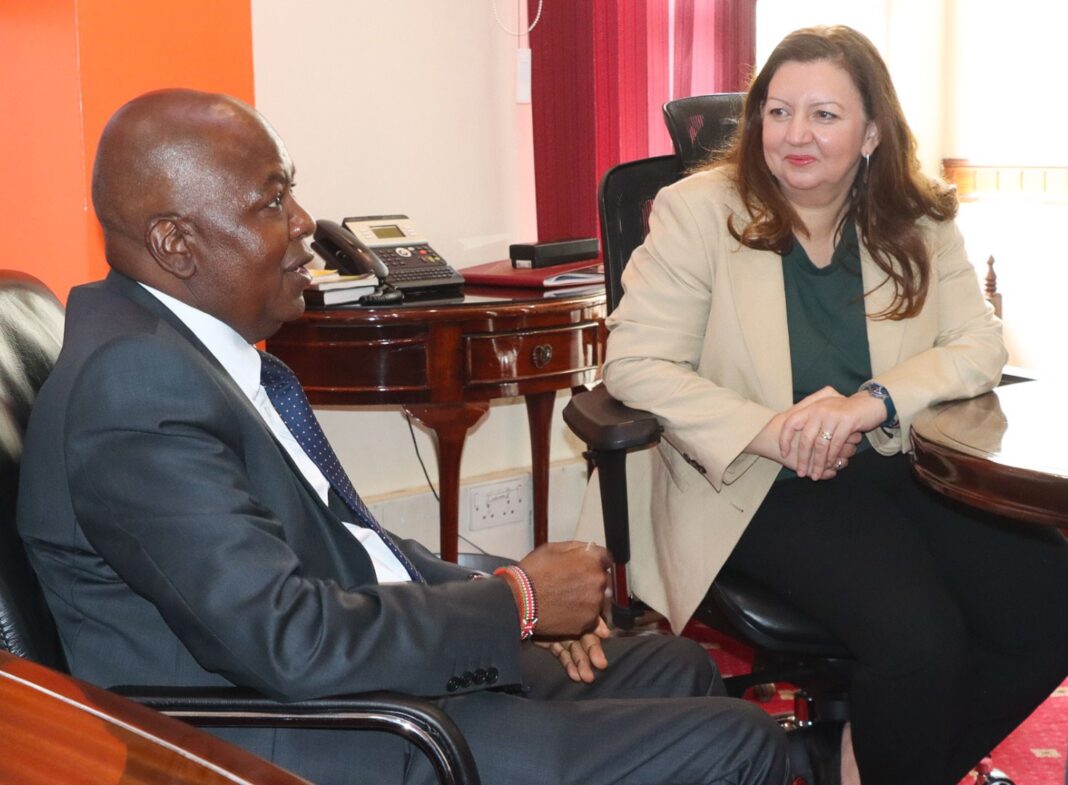
The financing question took centre stage on November 19 when Kenya Railways hosted Kirsty McNeill, the United Kingdom’s Minister of State for International Development and Africa, for discussions on the future of the project and continued cooperation between the two governments.
Although procurement of the Engineering, Procurement and Construction contractor and the Supervising Engineer has been completed, the financing arrangements remain outstanding, leaving the project at a stage where the next major decisions will determine when construction can proceed.
Kenya Railways Managing Director Philip J. Mainga said the corporation was working with the National Treasury and other government institutions to complete the financing process, with financial close targeted for early 2027.
“Nairobi Railway City is a transformative programme for Kenya. Our immediate priority is to conclude the financing arrangements for Nairobi Central Station and move into construction,” Mainga said.
The distinction between completing procurement and securing financing is important. Having a contractor and supervising engineer in place represents progress, but it does not mean construction is ready to begin.
The proposed development is part of a wider ambition to turn underutilised railway land in the heart of Nairobi into an integrated transport and commercial district.
The central station is expected to bring together commuter rail, bus rapid transit, public service vehicles and non-motorised transport, creating a more connected transport interchange.
Kenya’s urban mobility challenge gives the project particular significance. Government projections indicate that the modernised station is expected to accommodate approximately 400,000 daily passengers by 2030, rising to 600,000 by 2045. These projections underline the pressure on Nairobi’s transport infrastructure as the city grows.
But the question is whether the investment required to deliver this ambition can be mobilised within the proposed timeline.
The UK’s involvement is particularly significant in this financing discussion. Beyond its diplomatic support, Britain has provided technical assistance towards planning, commercial structuring and preparation of the wider programme.
In a written response to the UK Parliament in August 2025, the British government disclosed that it had allocated £2 million for technical assistance to help Kenya structure, phase, manage and deliver the 438-acre Railway City programme. It also indicated that Kenya was considering potentially accessing £150 million through UK Export Finance to support construction of the new central station.
This distinction matters because technical assistance and construction financing serve different purposes. Support in developing plans and structuring projects does not automatically translate into money available for construction.
During the November meeting, McNeill reaffirmed Britain’s commitment to working with Kenya, describing Railway City as an opportunity to attract investment, stimulate economic growth and transform urban mobility.
Kenya Railways Board Chairman Abdi Bare Duale acknowledged the contribution of British technical assistance but noted that the programme had reached a decisive stage.
He said decisions taken over the coming months would determine how quickly the project moves from preparation into full implementation.
Beyond the central station, Kenya Railways is preparing to break ground on the Meetings, Incentives, Conferences and Exhibitions (MICE) Core development in the coming weeks.
The proposed development will include a multipurpose arena and supporting commercial facilities intended to accommodate conferences, exhibitions, sporting activities and entertainment.
Its ambitions extend beyond transport infrastructure. By introducing commercial and event facilities into the railway precinct, the programme seeks to create additional economic activity, employment opportunities and markets for local enterprises.
It also positions Nairobi to compete more strongly as a regional destination for international conferences and exhibitions.
However, the MICE development and the Central Station are distinct components of the wider programme. Progress on one should not be mistaken for completion of the financing arrangements required for the other.
The broader vision is to make transport infrastructure the foundation of urban regeneration rather than treating railway stations as isolated passenger facilities.
For Nairobi, this could mean a city centre where commuters can move between different transport services more easily while accessing commercial facilities and improved public spaces.
The challenge will be ensuring that the transformation delivers benefits beyond property development and large commercial investments.
An important measure of success will be whether ordinary commuters experience shorter and more convenient journeys, whether small businesses gain access to new economic opportunities and whether the redesigned public spaces remain accessible to the wider public.
The programme also raises questions about how investment will be mobilised for its different components, the respective financial responsibilities of the Kenyan and British governments, and the extent to which private investors will participate.
These questions become increasingly important as the project moves towards implementation.
For now, Kenya Railways is seeking to move beyond planning and procurement towards construction, with early 2027 emerging as the target for completing the outstanding financing arrangements.
Whether that timeline holds will determine how soon Nairobi’s railway precinct begins to reflect the ambitious transformation envisioned by the two governments.
The real test of Railway City will therefore not be the scale of its proposed buildings or the promises made during diplomatic engagements, but whether the financing is secured and the resulting infrastructure improves how Nairobi works for the people who use it every day.



