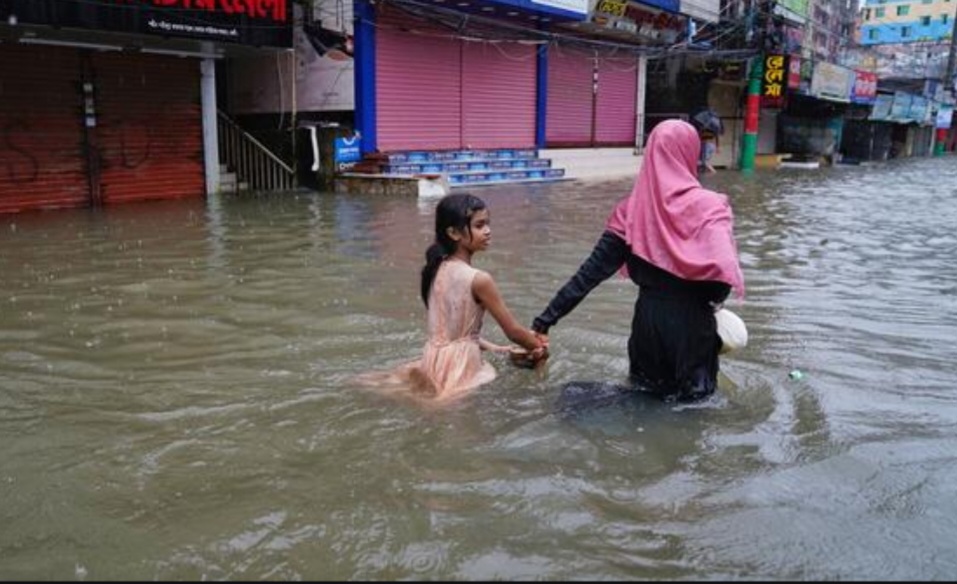

As world leaders prepare to meet in Türkiye, unequal access to clean energy and mounting financing barriers threaten to leave developing countries behind in the fight against climate change.
For millions of people living through floods, extreme heat and prolonged drought, climate change is no longer a distant environmental warning. It is a growing disruption to their homes, livelihoods, food security and access to essential services.
Yet as the impacts intensify, a troubling contradiction is emerging in the global climate response: the world is developing solutions faster than ever, but the countries and communities that need them most are struggling to afford them.
This financing gap will be among the critical questions facing world leaders when they gather in Antalya, Türkiye, from November 9 to 20 for the 31st United Nations Climate Change Conference, commonly known as COP31.
With more than 190 countries expected to participate, the summit comes at a critical moment. Scientists have warned that the world is on course to temporarily exceed the 1.5°C warming threshold established under the Paris Agreement, increasing pressure on governments to accelerate emissions reductions and strengthen protection for vulnerable populations.
But the challenge is no longer simply identifying cleaner alternatives. It is ensuring that the benefits of the transition reach countries whose economies, infrastructure and public services are already under pressure.
Speaking ahead of the conference, Selwin Hart, the UN Special Adviser on Climate Action and Just Transition, says the world has made significant technological advances but must now remove the financial and structural barriers preventing developing economies from implementing climate solutions.
The inequality is particularly visible in clean energy investment.
Emerging and developing economies outside China, which are home to nearly two-thirds of the global population, received only 18 per cent of global clean energy investment in 2025.
Africa illustrates the scale of the imbalance. Despite its considerable solar, wind and other renewable energy potential, the continent continues to attract only a small share of global clean energy financing. Approximately 600 million people across Africa still lack access to electricity.
For communities without reliable electricity, the energy transition is not simply about replacing fossil fuels with renewable alternatives. It is also about expanding access to power for households, schools, hospitals, businesses and other essential services.
The barriers are largely financial.
According to Hart, financing renewable energy projects in developing economies can cost several times more than financing similar projects in wealthier countries, even when the technology is identical.
This makes it harder for countries with limited fiscal space to attract investors, expand electricity networks and scale up renewable energy projects.
The problem is particularly acute for governments already dealing with high debt burdens. Money needed for climate adaptation, clean energy and resilient infrastructure competes with spending on healthcare, education and other essential public services.
Hart argues that developing countries need financing arrangements that allow them to pursue climate action without accumulating additional debt.
“We need solutions on finance that will not increase debt,” he stresses.
The question of who pays for climate action is therefore expected to feature prominently in Antalya.
Developing countries are seeking stronger commitments from wealthier nations to fulfil their climate finance obligations, while negotiations continue over funding responsibilities, access to resources and how international financial flows can better support climate action.
But financing is only one part of the challenge.
Countries must also agree on how to protect populations already experiencing the consequences of climate change, particularly through stronger adaptation programmes.
For communities facing recurrent flooding, drought and extreme temperatures, adaptation means more than responding after disasters occur. It involves investing in resilient infrastructure, strengthening early warning systems, protecting water supplies and supporting livelihoods that are increasingly exposed to changing weather patterns.
COP31 will continue negotiations on how progress in climate adaptation should be measured, alongside demands from developing countries for increased financial support.
The summit will also address the just transition, an approach intended to ensure that moving towards cleaner economies does not deepen existing inequalities or leave workers and vulnerable communities behind.
Countries agreed last year to establish a mechanism to support this transition, but further decisions are needed on how it will operate.
Emissions reduction will remain another major priority, with governments facing pressure to strengthen existing commitments and accelerate the move away from fossil fuels, which remain the principal source of global warming emissions.
Despite these challenges, the technological advances of recent years offer reasons for optimism.
Electric vehicles, solar power and battery storage have expanded rapidly, demonstrating that alternatives to fossil fuel-dependent systems are becoming increasingly available.
In 2025, electric vehicles accounted for one in four new cars sold globally, compared with fewer than one in 100 a decade earlier. Their share is expected to reach 28 per cent in 2026.
The world also added more than 600 gigawatts of solar power capacity in 2025, accounting for over three-quarters of new renewable electricity capacity.
Meanwhile, global battery storage capacity has grown to 11 times its 2021 level. An additional 108 gigawatts of storage capacity was installed in 2025 alone, enabling more electricity generated from renewable sources to be stored and used when needed.
These developments demonstrate that technological limitations are becoming less of an obstacle to the energy transition.
However, their benefits will remain uneven unless developing countries can access affordable financing, modern electricity networks and the infrastructure needed to deploy them.
COP31 will also launch the second global stocktake, the Paris Agreement’s formal process for assessing collective progress towards its long-term climate goals.
The assessment will provide an opportunity to examine how far countries have moved towards their commitments and where implementation is falling short.
Hart cautions against expecting the annual climate negotiations to produce a single agreement capable of resolving the crisis.
Instead, he points to the importance of practical implementation, national commitments and cooperation among governments, development banks, businesses and civil society.
Türkiye will host and preside over the conference, while Australia will lead the negotiations in close cooperation with Pacific Island countries.
The Turkish presidency is placing emphasis on implementation across clean energy, food security, resilient cities, greener industries, oceans and waste reduction.
For Hart, the priority is to move climate discussions beyond promises towards actions that can be delivered on the ground.
The summit comes as scientists warn that the world is likely to temporarily exceed the 1.5°C warming threshold. However, this does not mean efforts to limit global warming have become meaningless.
How far temperatures rise and how long they remain elevated will depend on decisions made by governments, businesses and societies in the coming years.
Hart describes this prospect as a reason for greater urgency rather than surrender, arguing that faster emissions reductions and increased investment in vulnerable communities can still limit the damage.
For developing countries, however, ambition must be matched by the financial means to act.
The climate crisis is exposing an uncomfortable global inequality: communities contributing least to historical greenhouse gas emissions often have fewer resources to protect themselves, while countries with greater financial capacity are better positioned to invest in resilience and cleaner technologies.
As delegates prepare for COP31, the central question is therefore not whether the world has the technology to respond to climate change. It is whether governments and international financial institutions can make those solutions accessible to the people and countries being left behind.
For families rebuilding after floods, farmers facing prolonged drought and millions of Africans still without electricity, the success of COP31 will ultimately be measured not by the promises made in conference halls, but by whether climate action reaches their communities.
Source: UN News, “COP31 explained: What’s at stake at this year’s UN climate summit?”, 4 November 2026. Based on an interview with Selwin Hart, UN Special Adviser on Climate Action and Just Transition.