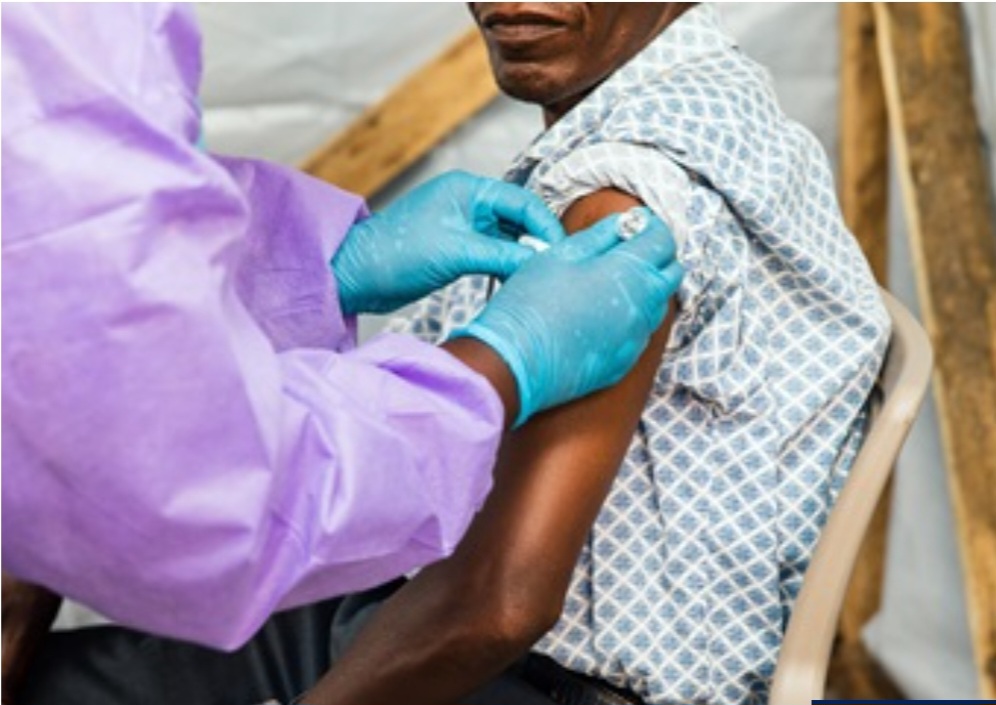

Two experimental Ebola vaccine candidates developed by Oxford University and Moderna are set to enter clinical evaluation in the Democratic Republic of the Congo (DRC), marking a significant step in efforts to develop protection against the Bundibugyo virus responsible for the country’s ongoing outbreak.
The recommendation by expert groups convened by the World Health Organization (WHO) introduces vaccines specifically designed to target Bundibugyo virus into research conducted during an active outbreak of the disease for the first time.
The candidates, ChAdOx1, developed by the University of Oxford in partnership with the Serum Institute of India, and Moderna’s mRNA-1469, have been recommended for further clinical evaluation by WHO’s independent Technical Advisory Group on Candidate Vaccines Prioritization.
Their inclusion in the ongoing Tumaini clinical trial will follow national approvals, with researchers expected to generate evidence on their potential to protect against the virus.
The development is particularly important because Ebola vaccines already in use against the Zaire ebolavirus cannot automatically be assumed to provide protection against other Ebola virus species, including Bundibugyo.
The Ervebo vaccine, which demonstrated efficacy during the West African Ebola outbreak, is also being evaluated in the Tumaini trial to establish its effectiveness against Bundibugyo virus.
WHO Director-General Dr Tedros Adhanom Ghebreyesus said the progress demonstrated the importance of scientific collaboration and investment in vaccine research.
“The fact that these vaccines are ready to enter clinical trials is a testament to the power of science and partnership,” he said.
He cautioned, however, that vaccines alone would not end the outbreak, describing them as a potential additional tool in controlling disease transmission.
The Tumaini trial uses a ring-vaccination approach, targeting contacts of people with confirmed Bundibugyo virus disease. This involves identifying individuals who have been exposed to confirmed cases and organising vaccination research around those contacts.
The approach builds on experience from the West African Ebola outbreak, when a landmark clinical trial in Guinea established the efficacy of Ervebo against Zaire ebolavirus.
According to WHO, four vaccination rings have already been established in the current trial, with additional rings being prepared. They include contacts of people who became ill or died from Ebola.
The research is being led by the DRC’s Institut National de Recherche Biomédicale, working with the University of Antwerp and other international partners, including WHO, Epicentre, Médecins Sans Frontières and the Africa Centres for Disease Control and Prevention.
The Coalition for Epidemic Preparedness Innovations has also supported the development of the candidate vaccines.
Beyond vaccine development, researchers are investigating potential treatments that could improve survival among people infected with Bundibugyo virus.
The WHO-sponsored PARTNERS trial, launched in July 2026, is evaluating the monoclonal antibody MBP134 and the antiviral drug remdesivir, both separately and in combination, to establish whether they can improve patient outcomes.
Maftivimab is also expected to be added to the treatment trial, while a separate post-exposure prophylaxis study is investigating obeldevisir as a potential intervention for people who have been exposed to the virus.
The parallel research efforts reflect the need for multiple approaches to controlling Ebola outbreaks, including preventing infection, identifying cases early and improving treatment for infected patients.
WHO is supporting the studies through its Research and Development Blueprint and Health Emergencies Programme, providing technical guidance, research coordination and operational support to ensure that clinical investigations meet scientific and ethical standards.
Initial findings from the treatment trials are expected in the coming months, while results from the vaccine trial are anticipated in early 2027.
For the DRC, where the current outbreak has renewed attention on the limitations of existing Ebola countermeasures, the studies could provide important evidence for strengthening future outbreak preparedness.
However, the two new vaccine candidates remain experimental. Their recommendation for clinical evaluation does not establish that they are safe and effective for public use, and their ability to prevent Bundibugyo virus disease will depend on the results of the trials.
The research therefore represents an important step in closing a gap in Ebola preparedness, with scientists seeking to establish whether vaccines and emerging treatments can offer additional protection against a virus that continues to challenge public health response systems.