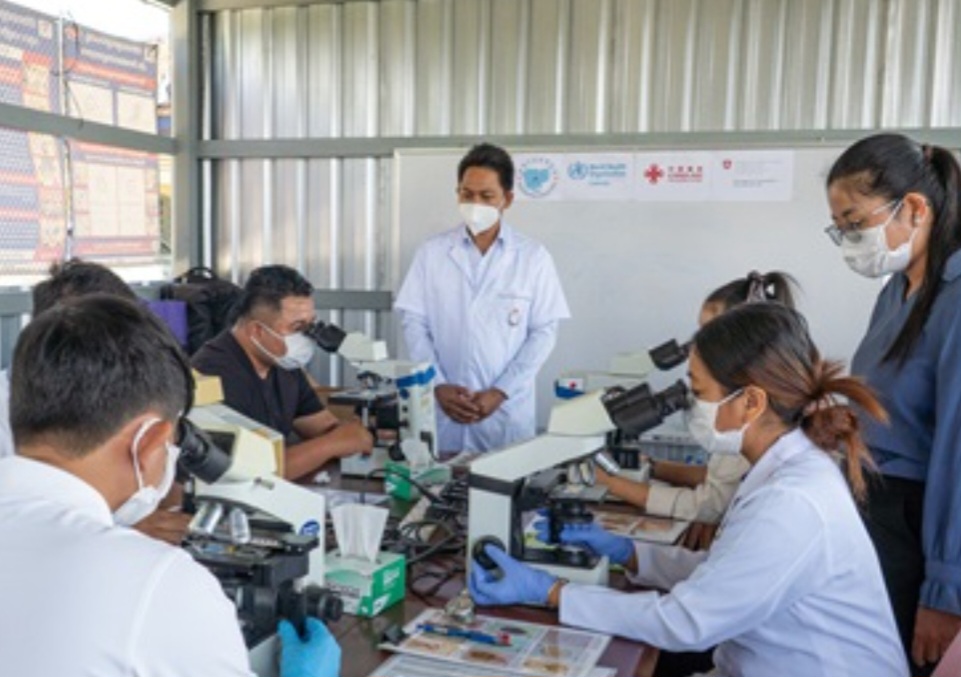

WHO warns that funding cuts, rising infections and gaps in healthcare delivery threaten efforts to eliminate neglected tropical diseases by 2030.
For decades, neglected tropical diseases have persisted in communities where poverty, limited access to healthcare and inadequate sanitation make prevention and treatment difficult. Although millions of people have benefited from global control programmes, the fight against these diseases is far from over.
A new World Health Organization (WHO) report reveals a striking contradiction: more countries are eliminating neglected tropical diseases, yet the financial support needed to sustain that progress is shrinking.
By June 2026, 63 countries had eliminated at least one neglected tropical disease, up from 42 at the end of 2020. The number of people requiring interventions had also fallen to 1.41 billion in 2024, representing a 36 per cent reduction since 2010.
These achievements demonstrate what sustained public health interventions, scientific innovation and international cooperation can accomplish.
But WHO’s 2026 Global Report on Neglected Tropical Diseases warns that the gains remain vulnerable, particularly as resources available for disease-control programmes continue to fall.
Funding for neglected tropical diseases is now 30 per cent below pre-COVID-19 levels, with dedicated financing for some interventions having almost disappeared.
The consequences are already being felt in programmes responsible for delivering medicines, monitoring infections and preventing transmission.
WHO reports that funding disruptions have affected mass treatment campaigns, case management, surveillance and vector control. Donated medicines are also at risk of expiring when programmes cannot distribute them as planned.
The vulnerability is compounded by the concentration of international development assistance. Between 2018 and 2024, nearly 80 per cent of international assistance for NTDs came from a small number of donors.
This dependence exposes disease-control programmes to sudden changes in donor priorities and financial commitments, potentially undermining years of investment.
WHO Director-General Dr Tedros Adhanom Ghebreyesus says countries and partners must increase their commitment rather than retreat from the progress already achieved.
“Elimination of neglected tropical diseases is one of the standout success stories of global health,” he said, warning that hard-won achievements could easily be lost.
He called for increased domestic financing, continued external support and the integration of NTD services into primary healthcare.
The urgency is reinforced by diseases that continue to expand despite progress elsewhere.
Dengue infections reached a record 15.1 million cases in 2024, while deaths from vector-borne neglected tropical diseases increased. Yaws eradication efforts are also falling behind schedule.
The uneven progress suggests that eliminating one disease does not automatically strengthen a country’s ability to control others.
Only three disease-specific indicators achieved their 2025 milestones, exposing significant gaps between global ambitions and implementation.
Another challenge is the limited availability of comprehensive and timely health information. WHO identifies weaknesses in disease reporting, including insufficient data disaggregated by gender, which make it difficult to establish whether interventions are reaching everyone who needs them.
This matters because neglected tropical diseases do not affect all communities equally. Their burden is concentrated among populations experiencing poverty and limited access to essential services.
For these households, an interruption in treatment or prevention services can deepen existing health and economic inequalities.
However, the report also identifies scientific advances that could change the trajectory of disease control.
New tools include WHO-prequalified child-friendly praziquantel for schistosomiasis, generic miltefosine for leishmaniasis and a dengue vaccine. Two chikungunya vaccines and new medicines for onchocerciasis and human African trypanosomiasis have also received regulatory approval.
The challenge is ensuring that these innovations move beyond scientific achievement to reach the communities most affected.
WHO argues that countries must rethink how neglected tropical diseases are financed and managed rather than relying heavily on external assistance.
Integrating NTD interventions into national health strategies, essential health service packages and universal health coverage could help make prevention and treatment part of routine healthcare delivery.
Countries are also being encouraged to combine interventions targeting several diseases through shared services, reducing duplication and improving the use of limited resources.
One encouraging development is the adoption of WHO’s recommended skin NTD strategy, which has already exceeded its 2030 target for country uptake.
The organisation is further calling on donors to broaden their support across different NTD interventions and recipient countries to diversify financing sources.
Disease-control programmes must also account for the effects of conflict and climate change, which can disrupt healthcare access and complicate prevention efforts.
The stakes are particularly high with five years remaining before the 2030 deadline.
The global NTD road map aims to reduce by 90 per cent the number of people requiring interventions, cut NTD-related disability and premature deaths by 75 per cent, enable 100 countries to eliminate at least one neglected tropical disease, and eradicate Guinea worm disease and yaws.
Achieving these targets will require more than the availability of vaccines, medicines and improved diagnostics. It will depend on whether governments can sustain the systems that deliver them.
The latest WHO findings therefore raise a fundamental question for global health: can the world turn its progress against neglected tropical diseases into lasting protection for the communities that have carried the greatest burden of these infections?
The answer will depend on whether political commitments and financial investments remain as strong as the scientific advances driving the fight.