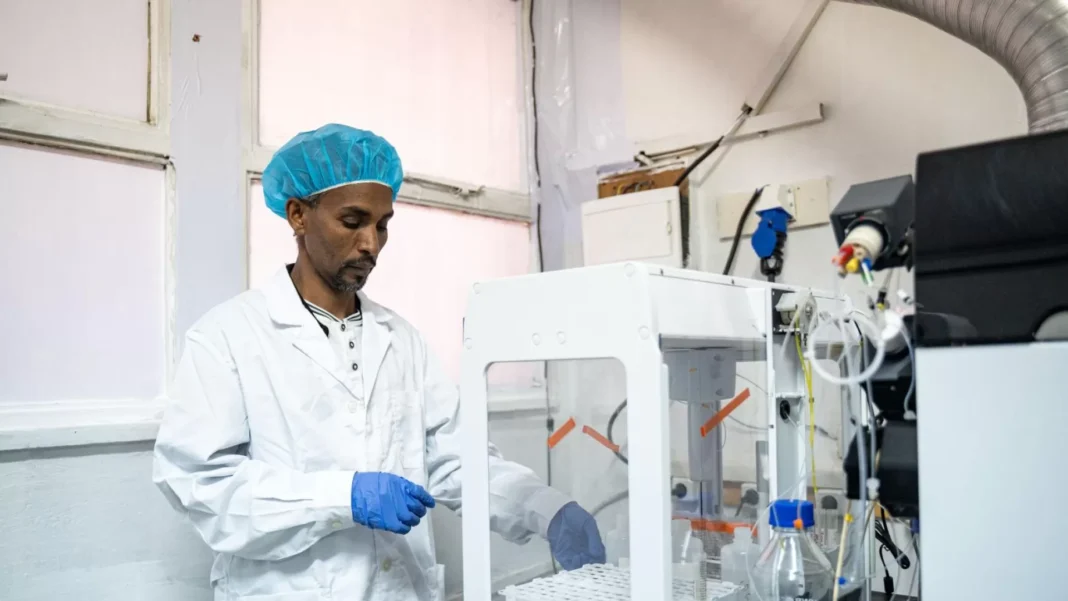

For years, Africa has been an important setting for clinical research into diseases that disproportionately affect its populations. Yet the question of who sets research priorities, controls the evidence and determines how discoveries are translated into healthcare policy remains central to the continent’s pursuit of health sovereignty.
A renewed partnership between the World Health Organization (WHO) and the European & Developing Countries Clinical Trials Partnership (EDCTP) Association is seeking to address that challenge by strengthening the institutions and regulatory systems that shape how medical research is conducted and used across Africa.
The two organisations signed a Memorandum of Understanding (MoU) on 19 November 2026, establishing a framework for closer cooperation on clinical research, medical product regulation and evidence-based policymaking in the WHO African Region.
But beyond the agreement, the partnership raises a bigger question: can African countries build the capacity not only to participate in scientific discoveries but also to determine which health problems receive research attention, how new interventions are assessed and how findings influence national health decisions?
The agreement identifies four priorities: strengthening national research systems and technical expertise, improving clinical trial infrastructure and safety surveillance, advancing regulatory systems for medical products, and connecting research institutions with national disease control programmes.
That last priority is particularly important. Scientific discoveries do not automatically become better healthcare. Research findings must reach the institutions responsible for designing treatment guidelines, allocating resources and implementing disease-control programmes.
Without that connection, evidence can remain within academic publications and research institutions instead of informing decisions that affect patients and communities.
WHO Regional Director for Africa Professor Mohamed Yakub Janabi said the renewed agreement builds on two decades of collaboration that have expanded clinical trial capacity, implementation research and regulatory and ethical systems.
He described the new framework as a step towards a future in which Africa does not merely participate in global health research but helps shape it.
The ambition reflects a persistent challenge in global health: research capacity is not simply about having laboratories, scientists or institutions capable of conducting clinical trials. It also requires countries to establish their own priorities, maintain ethical oversight, assess the safety of medical products and ensure that evidence informs national policies.
For African countries, strengthening these systems is particularly relevant when responding to infectious diseases and other health threats that require timely scientific evidence, effective surveillance and access to appropriate medical interventions.
A stronger clinical research ecosystem can help countries generate evidence relevant to their populations rather than relying entirely on findings produced elsewhere. However, the ability to conduct research must be matched by the ability to regulate the products that emerge from it.
The WHO–EDCTP agreement therefore places regulatory harmonisation alongside research capacity as a central part of its agenda.
Medical products must pass through regulatory systems that assess their quality, safety and effectiveness before they can be authorised for use. Where regulatory processes are fragmented or national agencies have limited technical capacity, the evaluation of new interventions can become more difficult and time-consuming.
The partnership intends to optimise and harmonise regulatory systems to accelerate market authorisation for new medical interventions.
EDCTP Association Executive Director Abdoulie Barry pointed to earlier collaboration that supported a cross-national reliance system and the African Vaccine Regulators Forum (AVAREF), which has helped strengthen cooperation and standards in vaccine regulation.
Such mechanisms matter because regulatory decisions in one country can benefit from assessments and expertise developed elsewhere, while maintaining the responsibility of national authorities to protect public health.
The partnership has also supported national health research systems through regular National Health Research Systems (NHRS) surveys and small grants intended to encourage research by national disease control programmes.
These efforts recognise that research cannot be sustained through international partnerships alone. Countries need institutions with the resources, expertise and governance structures to identify priorities and maintain scientific work beyond individual projects.
The renewed cooperation also seeks to strengthen collaboration between research institutions and national disease control programmes. This could help narrow the distance between the production of scientific evidence and the practical decisions made by ministries of health.
For example, disease-control programmes need reliable evidence to guide interventions, assess their effectiveness and respond to changing public health needs. Stronger links with researchers can help ensure that these decisions are informed by locally relevant findings.
The agreement also places country leadership and ownership at the centre of clinical research and product development. This is significant because research priorities should reflect the health needs identified by countries themselves, rather than being shaped solely by the interests of external funders or research partners.
The collaboration is not starting from scratch. WHO AFRO and the EDCTP Association have worked together for approximately two decades, and the renewed framework extends their cooperative agreement for another five years, covering 2026–2030. It will also support the implementation of Global Health EDCTP3 until its conclusion in 2031.
The next challenge will be turning the commitments into measurable improvements in national research capacity, regulatory performance and the use of evidence in healthcare decisions.
For communities, the value of stronger research institutions will ultimately be judged by whether scientific advances translate into better prevention, diagnosis and treatment, and whether the resulting interventions become accessible through national health systems.
Africa’s research ambitions cannot be measured only by the number of clinical trials conducted on the continent or the number of international partnerships signed. They must also be measured by the strength of African institutions, the influence of national priorities and the ability of governments to use research findings to improve healthcare.
The WHO–EDCTP agreement offers a framework for advancing that ambition. Whether it delivers a more independent and responsive research ecosystem will depend on how effectively countries turn the commitments into investment, institutional capacity and policies that benefit their populations.