
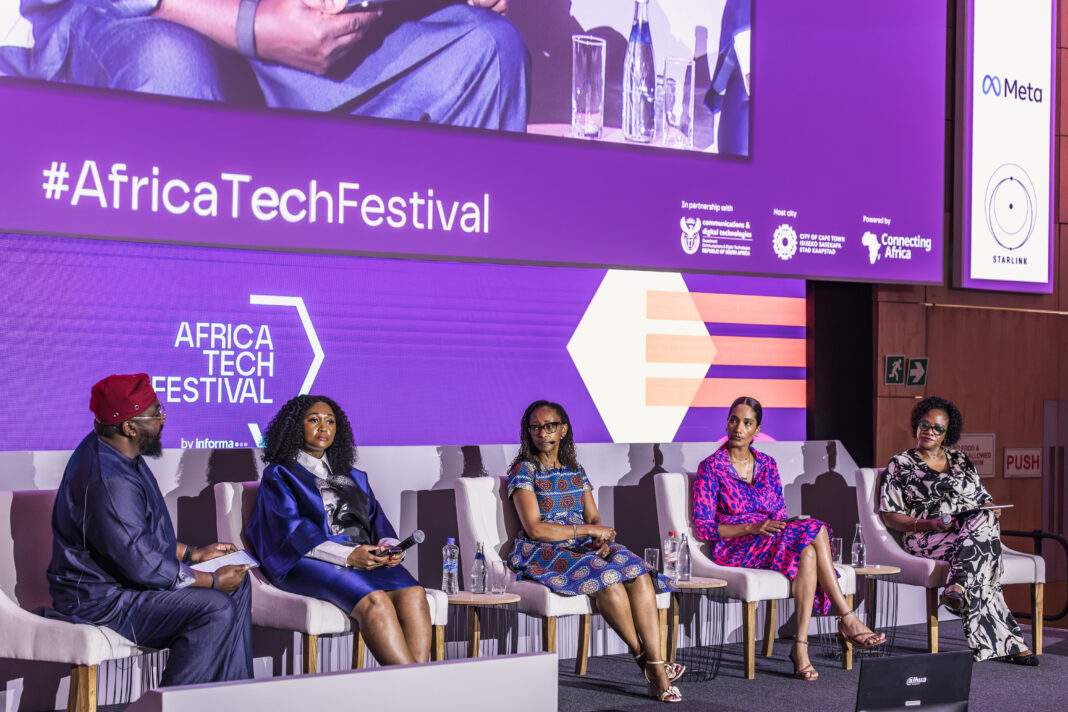

Artificial intelligence, digital skills, business accountability and access to finance dominated discussions as the 29th Africa Tech Festival concluded in Cape Town, highlighting the opportunities and challenges facing Africa’s growing digital economy.
Industry leaders used the final day of the three-day event to examine how businesses can deploy artificial intelligence (AI), strengthen digital infrastructure, develop new revenue streams and prepare young people for an increasingly technology-driven workplace.
More than 15,000 delegates attended the festival at the Cape Town International Convention Centre, bringing together technology companies, investors, policymakers and entrepreneurs to discuss the continent’s digital transformation.
Frederik Zietsman, Group Chief Executive Officer of Takealot, highlighted customer trust and investment in logistics infrastructure as critical factors in building sustainable e-commerce businesses.
Speaking in a discussion with Tomiwa Aladekomo, CEO of Big Cabal Media, Zietsman said online retailers must establish reliable relationships with consumers while investing in systems that support efficient deliveries.
“It starts and ends with trust. Because if you don’t have trust, then ultimately, you fail,” he said.
He cited Takealot’s investment in its delivery infrastructure and a network of approximately 20,000 personal shoppers as part of efforts to extend online retail services to underserved communities in South Africa.
African businesses’ role in the global AI economy was another major focus, with Cassava Technologies President and Group CEO Hardy Pemhiwa calling for greater access to innovation and opportunities for locally developed solutions to reach wider markets.
Pemhiwa said artificial intelligence could help overcome barriers that have historically limited innovation, including language constraints and traditional education systems.
“I really would love to see an Africa where innovation is not limited by traditional education,” he said.
Martin Manniche, CEO of AXON Networks, highlighted the importance of automation and cloud-native technologies in modernising telecommunications infrastructure to support increasingly sophisticated digital services.
Digital skills and the future of work
The impact of AI on employment and workforce development also featured prominently, with industry leaders warning that Africa must rethink how young people acquire skills and enter the labour market.
Charles Murito, Google’s Regional Director for Government Affairs and Public Policy in Sub-Saharan Africa; Tiara Pathon, Microsoft’s AI Skills Director; and Ziyad Cassim, Group CEO of UVU Africa, discussed the need to move beyond conventional training models towards practical participation in the digital economy.
Murito challenged stakeholders to consider how young people could transition from job seekers into creators of economic value through entrepreneurship and technology-driven opportunities.
Pathon called for a shift in how organisations approach digital training, arguing that learners should actively participate in creating solutions rather than remain passive recipients of education.
“Organisations like ours need to stop treating learners as beneficiaries of learning, and see them as participants and creators,” she said.
Cassim warned that limited access to entry-level employment could undermine efforts to prepare Africa’s young population for the future economy.
“The biggest risk we’re seeing right now is young people losing that first opportunity to work,” he said, urging employers to create opportunities for young people to gain practical workplace experience.
AI accountability and SME financing
As businesses and governments increasingly adopt AI-powered systems, questions around accountability, consumer protection and the consequences of automated decisions are becoming more pressing.
Lawrence Matemba, Chief Policy Analyst and Deputy Director-General in the South African Presidency, and Geoff Okao, UNICEF’s Chief Digital Officer and Deputy Director for Digital Impact, examined who should bear responsibility when automated systems cause harm.
Matemba argued that organisations delivering services must remain accountable for failures, insisting that citizens should be central to the design and implementation of digital services.
Okao warned that institutional risk-management procedures alone were insufficient to protect individuals affected by technology-related failures.
“A risk register does not by default protect the person who’s harmed,” he said, calling for stronger safeguards centred on the interests of affected communities.
Access to capital for small and medium-sized enterprises (SMEs) was also discussed, particularly the role of financial technology in addressing funding gaps.
Executives from Makko Brothers Credit Limited, Nomba, Edge Growth and Absa Corporate and Investment Bank explored alternative lending models, transaction-based credit assessments and new approaches to improving access to working capital.
The discussions highlighted the growing role of digital financial services in helping businesses access financing and participate in the wider economy.
The festival’s 29th edition brought together stakeholders across nine content stages, covering digital sovereignty, infrastructure investment, AI governance, entrepreneurship, workforce development and business growth.
David Monaghan, Vice President of Africa Tech Festival, said the event had provided an important platform for governments, investors and technology companies to exchange ideas and develop partnerships.
Africa Tech Festival will return to Cape Town from November 16–18, 2027, for its 30th edition.



