
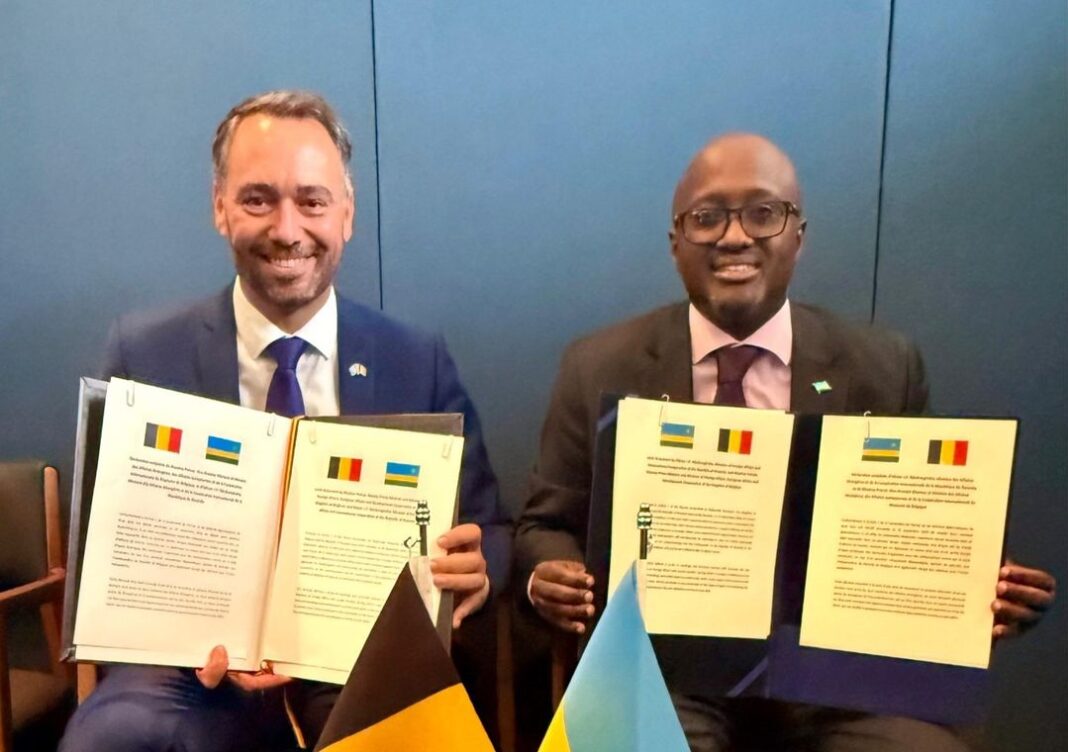

Rwanda and Belgium have agreed to restore diplomatic relations, ending an 18-month diplomatic rupture that exposed deep disagreements over the conflict in eastern Democratic Republic of Congo (DRC), Rwanda’s relations with the West and the legacy of Belgium’s colonial role in the Great Lakes region.
The two countries reached the agreement on September 22, 2026, on the margins of the 81st United Nations General Assembly in New York, with Foreign Ministers Olivier Nduhungirehe of Rwanda and Maxime Prévot of Belgium agreeing to reopen their respective embassies.
The development was welcomed by African Union Commission Chairperson Mahmoud Ali Youssouf, who said the restoration demonstrated the importance of sustained dialogue, constructive engagement and open diplomatic channels in resolving differences.
The African Union also acknowledged the role of Qatar in bringing the two sides back to the negotiating table.
What broke Rwanda-Belgium relations?
The diplomatic crisis erupted on March 17, 2025, when Rwanda announced that it was severing diplomatic relations with Belgium and ordered Belgian diplomats to leave the country within 48 hours.
Kigali accused Brussels of taking sides in the conflict in eastern DRC and of mobilising international pressure against Rwanda. The Rwandan government also invoked Belgium’s colonial history in Rwanda and accused Brussels of contributing to negative international perceptions of Kigali.
The immediate dispute was closely connected to the war in eastern DRC, where the Rwanda-backed M23 rebellion had captured significant territory. Belgium had been among the European countries pressing for international action against Rwanda over its alleged support for M23.
The European Union subsequently imposed sanctions on Rwandan officials and military figures over the conflict. Rwanda rejected the accusations and argued that Belgium was pursuing a biased approach towards Kigali.
Belgium rejected Rwanda’s decision to cut ties, describing it as disproportionate, and responded by declaring Rwandan diplomats persona non grata. Brussels maintained that diplomatic dialogue was necessary to address disagreements, particularly those surrounding eastern DRC.
The dispute therefore went beyond a conventional bilateral disagreement. It brought together the sensitive issues of the DRC conflict, European sanctions, Rwanda’s security interests and the unresolved historical relationship between Rwanda and its former colonial power.
Qatar opens a diplomatic door
The path towards reconciliation began through discreet diplomacy.According to the joint Rwanda-Belgium statement, Qatar facilitated the first meeting between the two foreign ministers in Doha in June 2025. That meeting opened a channel for subsequent contacts and negotiations between Kigali and Brussels.
The significance of Qatar’s role is that the restoration did not emerge from the disappearance of all disagreements. Instead, both sides appear to have accepted that their differences could be managed through direct diplomatic engagement.
The two governments said their foreign ministers held a series of informal meetings and contacts over subsequent months, addressing areas of disagreement and misunderstanding.
What is new?
The September 2026 agreement establishes a new framework for Rwanda-Belgium relations.The two countries have agreed to reopen their embassies in the near future. Initially, the missions will be headed by chargé d’affaires rather than full ambassadors, supported by small diplomatic and technical teams. Ambassadorial appointments will follow later.
An important new element is Rwanda’s diplomatic representation in Brussels. Kigali and Brussels agreed that Rwanda’s ambassador to Belgium will also be accredited to the European Union, potentially giving Kigali a more direct diplomatic channel with EU institutions.
More importantly, the two sides have agreed on principles intended to prevent another breakdown: non-interference, mutual respect, open dialogue and constructive engagement.
However, the restoration does not mean that Rwanda and Belgium have resolved all their disagreements.
Belgium continues to maintain positions on the sovereignty and territorial integrity of the DRC, while the conflict in eastern Congo remains a major source of disagreement between Kigali and Brussels.
The difference this time is that both governments have chosen to keep diplomatic channels open even where their positions diverge.
A wider African diplomatic significance
For Rwanda, the restoration represents a reopening of an important European diplomatic channel at a time when Kigali remains deeply engaged in the geopolitical contest surrounding eastern DRC.
For Belgium, the renewed relationship provides a direct diplomatic channel with Kigali rather than relying primarily on European and multilateral pressure.
The episode also highlights the growing role of middle-power diplomacy in Africa. Qatar’s facilitation demonstrates how countries outside the immediate Great Lakes region can become important intermediaries when traditional bilateral channels collapse.
The AU’s response reflects the broader continental preference for dialogue and negotiated management of disputes between African states and their international partners.
The Rwanda-Belgium case therefore enters a new phase: the disagreement has not disappeared, but the diplomatic relationship has been restored as the mechanism through which those disagreements can be managed.
Qatar has welcomed the agreement, saying the restoration of relations and reopening of embassies could create new opportunities for cooperation and contribute to regional and international peace and stability.



