
The World Health Organization (WHO) has outlined new targets for long-acting injectable medicines for tuberculosis (TB), seeking to reduce the burden of months-long treatment while maintaining safety, effectiveness and patient choice.
In new guidance published on 28 October 2026, WHO released target regimen profiles to guide the development of long-acting injectables for preventing TB infection from progressing to disease and treating active TB.
Current TB prevention and treatment largely rely on oral medicines taken daily over several months, making it difficult for some patients to maintain treatment adherence.
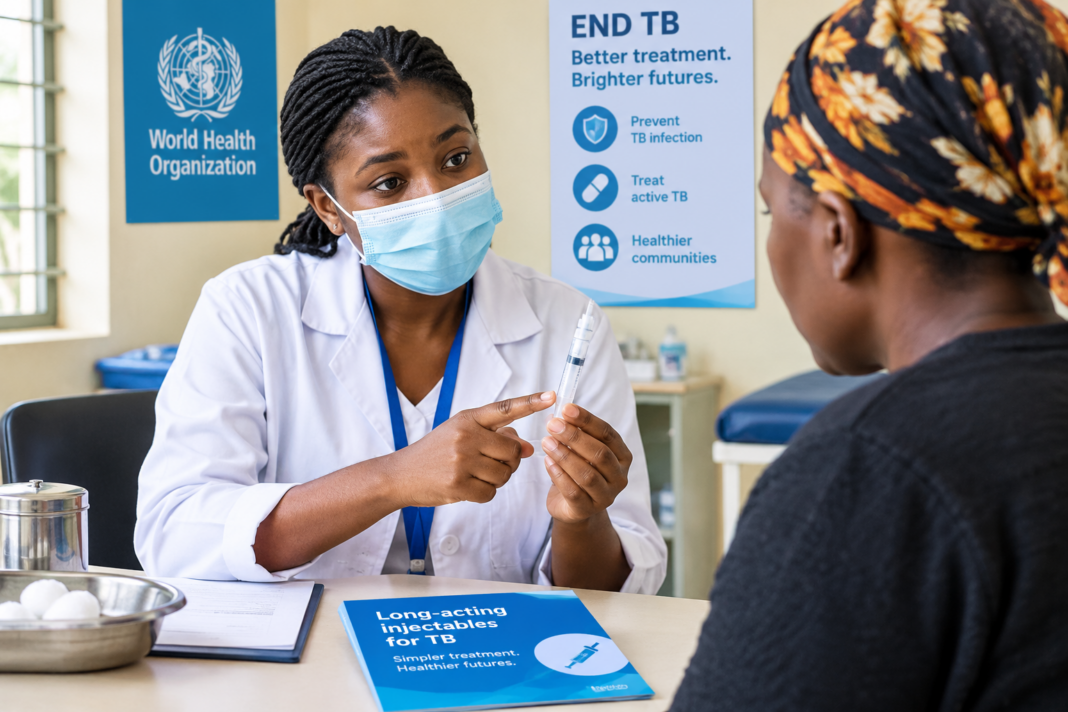
Long-acting injectables could offer an alternative by reducing the frequency of medication administration and easing pressure on health systems responsible for delivering treatment.
“Long-acting injectables could make TB prevention and treatment much simpler for the people who need them,” said Dr Tereza Kasaeva, Director of WHO’s Department for HIV, Tuberculosis, Hepatitis and Sexually Transmitted Infections.
She said the profiles would help developers establish the requirements new treatments must meet to deliver practical benefits without compromising efficacy, safety or patient choice.
Under the proposed targets, a complete course of preventive treatment should ideally be delivered through a single injection during one healthcare encounter.
For active TB disease, WHO envisions a treatment regimen lasting no more than four months, administered through three or fewer dosing encounters.
The profiles also recommend that the injections be administered by trained health workers at the lowest feasible level of the health system, making them potentially easier to deliver beyond specialised facilities.
Other requirements include small injection volumes, medicines that do not require cold-chain storage, and safety and effectiveness at least comparable to existing oral regimens.
WHO said the profiles are intended to guide pharmaceutical companies, academic institutions, researchers, product developers, donors and civil society organisations as potential long-acting TB medicines move towards clinical development.
The profiles distinguish between minimum requirements a candidate regimen must meet to justify further development and optimal targets representing desirable, realistically achievable outcomes.
They also address clinical trial design, treatment burden, scalability, equitable access, transparent pricing and affordability, recognising that a medicine’s value depends not only on its clinical performance but also on whether health systems and patients can access it.
The recommendations were developed by a WHO-convened scientific group comprising clinical trial specialists, pharmacologists, regulators, national TB programme officers, people with lived experience of TB and civil society representatives.
Its work drew on a landscape analysis, public consultation conducted in April and May 2026, community and provider surveys, focus group discussions and a multicountry discrete choice experiment.
However, the new profiles are development targets rather than evidence that the proposed injectable regimens are already available for routine patient care.
WHO emphasised that research into improved oral treatments must continue alongside injectable development to ensure that people who prefer not to receive injections retain treatment options.
The organisation also stressed that implementation should preserve patient choice as new treatment approaches emerge.
The guidance marks a step towards shaping future TB medicines around both clinical outcomes and the practical realities of completing treatment, although the eventual benefits will depend on the development, testing and equitable delivery of effective products.