From sustainable health financing and tobacco taxation to protecting reproductive health services, WHO is calling on lawmakers to use legislation, budgets and oversight to safeguard public health.
The World Health Organization (WHO) has called on parliamentarians to take a stronger role in shaping health policy, financing essential services and ensuring that international health commitments translate into tangible benefits for communities.
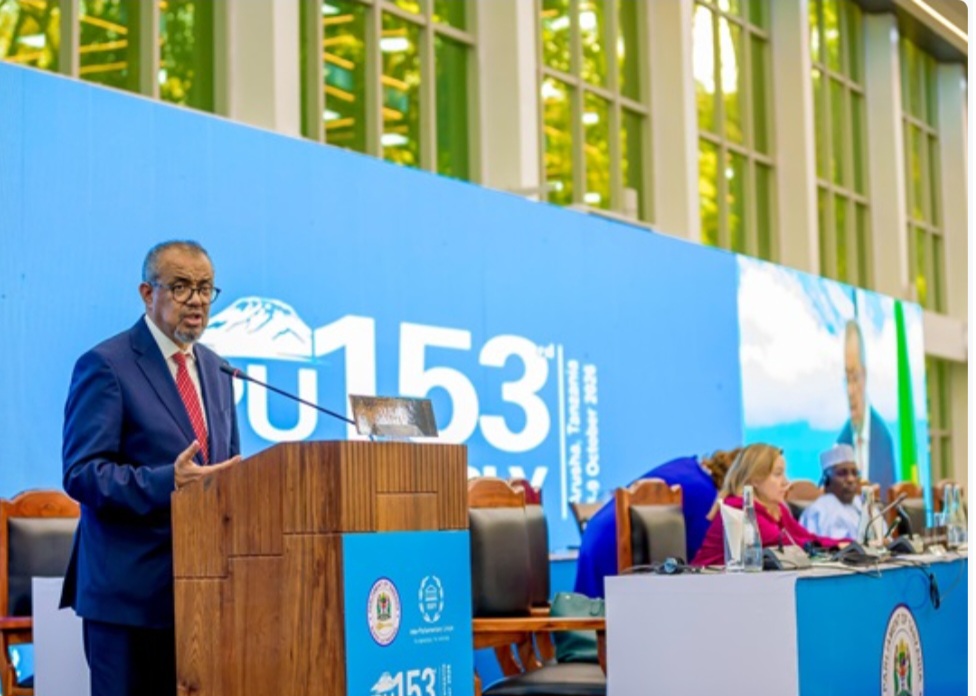
The call came during the 153rd Inter-Parliamentary Union (IPU) Assembly, held in Arusha, Tanzania, from 5 to 9 October 2026, where WHO engaged lawmakers on priorities ranging from universal health coverage and pandemic preparedness to health taxation and sexual and reproductive health rights.
Addressing the Assembly’s General Debate, WHO Director-General Dr Tedros Adhanom Ghebreyesus said parliamentarians have a critical responsibility to turn political commitments into national action through legislation, budgetary decisions and oversight.
He identified four areas requiring stronger parliamentary leadership: expanding universal health coverage, increasing sustainable domestic financing for health, supporting the completion and implementation of the WHO Pandemic Agreement, and ensuring that artificial intelligence and digital technologies improve health without exposing people to harm.
The engagement comes as countries face competing demands on public resources and growing pressure to maintain essential healthcare services.
WHO argued that parliaments can help protect health priorities by ensuring they are reflected in national laws, adequately financed and subject to effective oversight.
Dr Tedros also stressed the importance of international cooperation, warning that health remains an essential area for countries to work together despite growing pressure on multilateralism.
“Health can, and must, remain a bridge that brings us together,” he said.
Health taxes offer a double dividend
One of the Assembly’s key engagements focused on the potential of health taxes to reduce harmful consumption while generating revenue for public services.
At a joint WHO-IPU workshop, parliamentarians and health experts examined how taxes on tobacco, alcohol and sugar-sweetened beverages could contribute to healthier populations and more sustainable health financing.
The discussions brought together the WHO Director-General, the WHO Representative in Tanzania, technical experts and parliamentarians from the Pan-African Parliament, Mauritania, Norway, Poland and Tanzania.
Participants examined WHO’s 3 by 35 Initiative, which calls on countries to increase the real prices of tobacco, alcohol and sugar-sweetened beverages by at least 50% by 2035 through health taxation.
The initiative seeks to discourage consumption of products associated with preventable diseases while mobilising additional resources for public health.
WHO emphasised that parliamentarians have a role beyond approving tax legislation. They also influence national budgets, oversee implementation and determine whether reforms receive sustained political support.
Tanzania’s experience provided an example of how parliamentary engagement can support health financing reforms.
WHO’s technical assistance and fiscal modelling helped inform parliamentary budget discussions on tobacco taxation and strengthen cooperation between health, finance and other government authorities.
Dr Tedros said health taxes could deliver two benefits by discouraging consumption of harmful products and generating revenue that can be invested in stronger health systems.
The discussions highlighted the importance of evidence-based taxation policies and sustained political commitment in achieving these outcomes.
Protecting essential services amid funding pressures
WHO also raised concerns about the impact of reductions in development assistance on essential health services, particularly sexual and reproductive health and rights (SRHR).
During discussions with the IPU Committee on Health, WHO and its Human Reproduction Programme highlighted the consequences of funding cuts for maternal healthcare, family planning and HIV prevention and treatment.
According to WHO, 1,778 health facilities providing sexual and reproductive health and gender-based violence services suspended operations in 2026.
The closures underscore the vulnerability of essential services when external financing declines, particularly in settings where domestic resources may be insufficient to maintain service delivery.
WHO called for stronger parliamentary leadership to protect progress in sexual and reproductive health and ensure that these services are integrated into universal health coverage.
The organisation also highlighted its joint parliamentary brief with the IPU, Committing to Sexual and Reproductive Health and Rights Through Universal Health Coverage: An Investment in People.
The publication provides guidance for lawmakers on advancing reproductive health through legislation, financing and oversight.
WHO said continued collaboration with the IPU Committee on Health could help strengthen parliamentary action on reproductive health priorities.
Young lawmakers urged to champion health
The Assembly also provided an opportunity to engage younger parliamentarians on their role in shaping health policy.
Dr Tedros addressed the IPU Forum of Young Parliamentarians, encouraging young lawmakers to make health a political priority and ensure that the concerns of younger generations are reflected in decisions affecting their future.
He highlighted WHO’s Youth Council as a mechanism for incorporating young people’s perspectives into global health decision-making.
WHO said closer engagement between young parliamentarians and the Youth Council could strengthen the representation of younger generations in health policy and parliamentary action.
The organisation also contributed to discussions on vaccination, emphasising the need for sustained political commitment, public trust and investment in immunisation.
The discussions addressed the importance of responding to vaccine hesitancy and misinformation while ensuring equitable access to vaccines.
From international commitments to national budgets
WHO’s participation at the Assembly highlighted the importance of coordinated engagement between global health institutions and national lawmakers.
The organisation said its work with the IPU combines global technical expertise, regional perspectives and country-level experience to support parliamentary action.
The Assembly’s broader theme, “Enhancing good governance and empowering communities through inclusivity, trust and opportunities for all,” provided a platform for discussions on how inclusive governance can strengthen public health.
WHO reaffirmed its commitment to working with parliamentarians to translate global priorities into national policies, legislation and budgets.
The organisation said sustained parliamentary leadership would be essential to advancing universal health coverage, strengthening health financing, protecting essential services and ensuring that technological progress serves public health.
The message from Arusha was clear: global health commitments require more than political declarations. Their implementation depends on lawmakers who can secure resources, establish effective legal frameworks and hold governments accountable for delivering healthcare.