

As floods and droughts threaten livelihoods in Kenya’s pastoralist communities, Emmanuel Kiptoo is taking their experiences to global tax negotiations, demanding that wealthy polluters help pay for the damage.
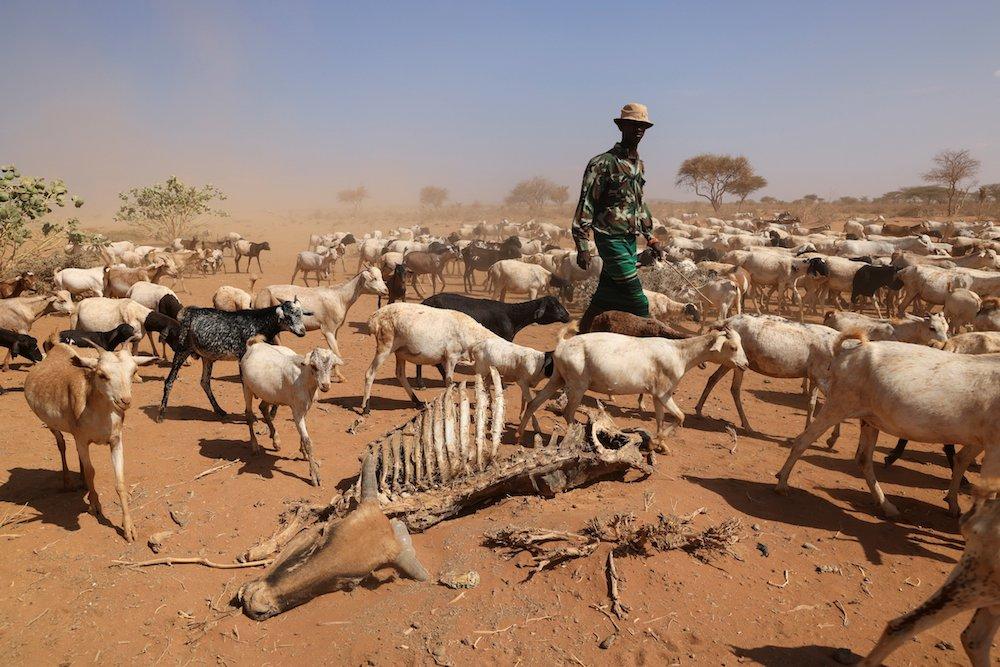
In West Pokot, the death of a single animal can mean a child losing the money needed to stay in school.
For pastoralist families, livestock is more than a source of food. It is a livelihood, a means of paying school fees and a way to meet the costs of healthcare. When drought wipes out animals or floods destroy livelihoods, the consequences reach far beyond the loss of property.
Emmanuel Kiptoo, a youth leader and co-founder of a women’s rights organisation in West Pokot County, knows what these losses mean for communities already struggling to survive.
He says climate change is disrupting the lives of pastoralist families, destroying schools, cutting off roads and bridges, and making it harder for people to access essential services.
The consequences, he says, are especially severe for children and women.
When families lose their livelihoods, the pressure to survive can push children out of school and increase the risk of early marriage. When roads and bridges are destroyed, communities can become isolated from healthcare facilities, contributing to maternal deaths and other preventable hardships.
For Kiptoo, these are not simply environmental problems. They are threats to the basic rights of people whose lives depend on increasingly unpredictable weather.
And he is taking their experiences to an international negotiation where he hopes the people responsible for much of the climate crisis will finally be made to contribute towards its costs.
As African countries negotiate the proposed United Nations Framework Convention on International Tax Cooperation in Nairobi, Kiptoo is demanding that wealthy polluters pay their fair share of taxes and that the money raised reaches communities bearing the consequences of climate change
His concern is that the people suffering the most are being left to shoulder the cost of a crisis they did little to cause.
“We are not coming there just to say something,” he says. “We are coming there with burden of our people, with lives that we don’t know if it’s going to be there tomorrow or it’s going to get destroyed the following day.”
For him, the negotiations offer an opportunity to turn the experiences of communities such as West Pokot into a demand for financial justice.
The question is whether the global tax system can be changed to help those communities rebuild their lives.
When climate change becomes a question of survival
Kiptoo says the effects of climate change are becoming increasingly difficult for pastoralist communities to manage.
In West Pokot, drought threatens livestock and the livelihoods built around it. Flash floods can destroy infrastructure, disrupt access to schools and leave communities struggling to reach essential services.
The loss of an animal may appear in a news report as another consequence of drought. But for a family, Kiptoo says, it can mean losing the money that would have paid for a child’s education, bought food or covered medical expenses.
“When an animal dies in my community, it means that it’s a school fee,” he says.
The same loss can affect a family’s ability to meet basic needs, particularly when livestock is the main source of income.
Kiptoo says the effects extend to women and children, with families facing difficult decisions when they lose the resources needed to support themselves.
He points to the destruction of schools and roads, saying the resulting disruption contributes to high levels of illiteracy and makes it harder for communities to access healthcare.
For women, the consequences can be particularly severe when damaged infrastructure limits access to maternal healthcare.
The climate crisis, he says, is therefore not only about changing weather patterns. It is also about the opportunities people lose when their livelihoods and essential services are disrupted.
And while the effects are felt locally, the decisions about how to finance climate action are being made at a much broader level.
A global tax system under scrutiny
The proposed UN Tax Convention has emerged as a major focus for campaigners seeking to change how countries collect revenue from multinational companies and wealthy individuals.
Evelyn Muendo, a senior policy officer at Tax Justice Network Africa, says the international tax system has historically favoured developed countries, leaving African economies with limited authority to tax income generated within their borders.
She says the system was developed at a time when many African countries had not yet gained political independence, and that its rules have continued to disadvantage countries in the Global South.
African countries are now seeking a greater role in shaping international tax rules through the UN process.
The Africa Group at the United Nations initiated the process in 2022, calling for more inclusive international tax cooperation. The negotiations are expected to conclude in 2027.
For Muendo, the proposed convention is an opportunity to reclaim taxing rights and increase the revenue available for development.
“We aren’t asking for aid. We aren’t asking for loans. We’re asking, let us impose taxes and then use the taxes for our own development,” she says.
The treaty could give countries greater authority to tax multinational companies where they conduct business and generate profits, even when those companies do not have a physical presence in the country.
This is particularly relevant to digital companies that generate revenue from African markets without maintaining offices or other physical operations in every country where they do business.
Muendo says African countries are pushing for tax rules that reflect the realities of a globalised and digital economy.
For Kenya, the potential financial benefits are significant.
Tax Justice Network Africa estimates that fairer global tax rules could help Kenya recover US$943 million in annual tax revenue.
The campaigners argue that additional revenue could help governments finance public services and climate action without relying as heavily on borrowing or external assistance.
For communities such as those in West Pokot, the significance of such reforms lies in whether the resources raised can support people whose livelihoods have been damaged by climate change.
Making polluters contribute
Ucizi Ndulube, a Greenpeace Africa socio-environmental and tax justice campaigner from Zambia, says climate change is placing additional pressure on governments already struggling to meet their development needs.
Kenya’s 2023–2024 floods caused an estimated Sh187.8 billion in damages and losses, according to the National Treasury’s disaster risk financing strategy cited by Ndulube.
She says climate-related economic losses, combined with high debt-servicing costs, leave governments with limited resources to finance climate action and essential public services.
At the same time, households face rising costs of food, transport and energy.
Ndulube argues that the burden of the climate crisis is falling disproportionately on ordinary people, while major polluters continue to generate substantial profits.
Greenpeace Africa is calling for stronger environmental taxation, including a proposed 20 per cent tax on the global profits of major oil and gas companies, with the rate increasing over time.
The campaigners estimate that the measure could raise US$100 billion in its first year, which could be directed towards international climate programmes and communities most affected by climate change.
They also want wealthy individuals and highly polluting industries to contribute more towards climate action, alongside reforms to subsidies for polluting industries.
These are campaigners’ proposals, not agreed provisions of the treaty.
But they reflect a broader demand: that those who have contributed most to the climate crisis should carry a greater share of the financial responsibility for addressing it.
Ndulube says Africa is already facing the consequences of climate change despite contributing relatively little to the problem.
The continent, she says, also loses an estimated US$88.6 billion annually through illicit financial flows, limiting the resources available for development.
For campaigners, recovering lost revenue and introducing fairer taxation could help African countries finance their own development and respond to climate disasters.
From global negotiations to West Pokot
For Kiptoo, the value of the proposed treaty will ultimately depend on whether it changes the lives of people in communities such as his own.
He says he is concerned that climate negotiations could become another process in which affected communities share their experiences but see little action afterwards.
He points to the COP31 climate negotiations, where disagreements over climate finance and the recognition of fossil fuel-related damage remained major concerns.
Kiptoo says he hopes the UN Tax Convention will be different.
He wants the negotiations to produce a framework that ensures polluters contribute fairly and that the resources raised reach communities affected by climate change.
For him, this means moving beyond promises and ensuring that the financial consequences of climate change are not left entirely to families who have lost their livelihoods.
The loss of livestock, the destruction of schools and the disruption of healthcare are already affecting the lives of people in West Pokot.
Kiptoo fears that without meaningful action, the same challenges will continue to affect future generations.
“The things that I’m going to talk about tomorrow is the same things that my young child, my younger brother is going to come in and talk about it the following day,” he says.
His concern is that children who should be building their futures will instead inherit the same struggles their parents and grandparents have faced.
He says he is representing communities whose experiences are often reduced to statistics, even though the consequences are deeply personal.
For him, the negotiations are an opportunity to ensure that those experiences are taken seriously and that the financial resources needed to respond to climate change are made available.
The proposed treaty is still under negotiation, and its final provisions remain uncertain.
But for Kiptoo, the demand is clear: communities that have contributed least to the climate crisis should not continue paying the highest price.
And if the global tax system can be changed to make wealthy polluters contribute more, he hopes the money raised will help ensure that the next drought or flood does not take away another family’s livelihood, another child’s education or another community’s access to essential services.
For West Pokot, climate justice is not simply about who pays for the damage.
It is about whether the people living with the consequences will finally have the resources to rebuild their lives.