African countries are stepping up efforts to make health a central part of global climate negotiations, arguing that climate action must address the growing threats to hospitals, communities and public health services across the continent.
The push comes as the 31st United Nations Climate Change Conference (COP31) enters its final days in Antalya, Türkiye, with five African countries seeking to ensure that health priorities are reflected in national climate positions and the wider negotiations.
Cabo Verde, Côte d’Ivoire, Ghana, Kenya and Zambia have brought their Ministries of Health and Environment together in a coordinated effort supported by the World Health Organization (WHO) and the African Group of Negotiators (AGN).
The initiative seeks to address a longstanding gap in climate diplomacy: although climate-related events increasingly affect public health, health priorities have not received comparable attention in climate financing and negotiations.
Between 2001 and 2021, 56% of public health events recorded in the WHO African Region were climate related. Despite this burden, health receives approximately 2% of adaptation funding and 0.5% of multilateral climate finance.
For African negotiators, the figures strengthen the case for treating health not as a side issue but as a central measure of whether climate policies are protecting people.
Zambia’s experience illustrates the connection. When drought and cholera struck the country simultaneously in 2023 and 2024, water shortages, rising malnutrition and disease outbreaks placed additional pressure on health services.
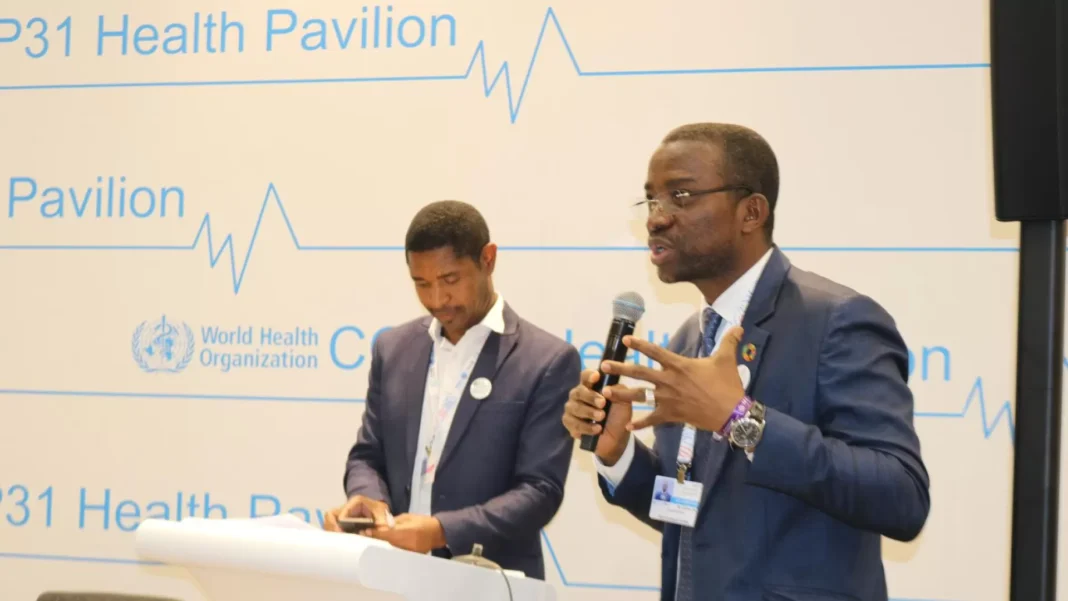
Speaking at a national dialogue in Lusaka in October, Zambia’s Minister of Health, Roma Chilengi, said the effects of extreme climate conditions on health were already evident and required no further debate.
The country’s Minister of Green Economy and Environment, Gilbert Siame, also called for health to be included in the formal language of climate negotiations rather than being confined to discussions at side events.
That position reflects a wider African effort to ensure that health officials participate directly in shaping climate policy.
During the October and November dialogues, participating countries worked to incorporate health into their national negotiating positions. Each country also named a health focal point to its COP31 delegation, creating a channel for health priorities to be represented during the negotiations.
The countries are approaching the agenda from different national circumstances.
Ghana has agreed to carry health into every negotiating track and has completed a costed Health National Adaptation Plan worth GHS 110.4 million.
Côte d’Ivoire is working towards ensuring that 60% of health facilities built or rehabilitated meet climate-resilient standards by 2035. Its health, environment and weather services have adopted a coordinated principle of observing risks, issuing alerts and taking action.
Cabo Verde has called for climate positions that protect the most vulnerable, while Kenya has agreed on positions covering adaptation, climate finance, Loss and Damage and the just transition.
For Kenya, WHO Representative Dr Neema Rusibamayila Kimambo urged the Ministries of Health and Environment to ensure that the country’s leadership position in climate change and health negotiations translates into meaningful influence.
The countries are also advancing common demands. These include support to report on health indicators under the Global Goal on Adaptation, more accessible grant-based climate finance and the inclusion of health losses in the costs of climate disasters.
The demands seek to make health impacts more visible in the decisions that shape climate funding and national adaptation priorities.
A further step towards building a common African position came on 11 November, when WHO’s Regional Office for Africa, Africa CDC and Amref Health Africa, working in partnership with the African Group of Negotiators, briefed African negotiators under a tripartite agreement.
The briefing emphasised that health provides a strong argument for climate action and should be incorporated across negotiating areas rather than handled as a separate discussion.
WHO Africa’s climate change and health team lead, Dr Jeremiah Mushosho, said the success of climate adaptation should be assessed through its ability to protect lives and keep health facilities operational during climate disasters and pandemics.
WHO Representative for Cabo Verde, Dr Ann Lindstrand, similarly stressed that resilient health systems are essential to genuine climate resilience.
However, the diplomatic momentum still faces a major test: translating national commitments and a common African position into negotiated outcomes and financing.
WHO has called on the COP31 Presidency and participating countries to include health in the conference outcomes, including the cover decision, establish a platform for dialogue on health and help finance health adaptation plans that African countries have already developed.
The conference is expected to provide a foundation for further discussions ahead of COP32 in Addis Ababa, Ethiopia, in 2027. Participating countries will hold feedback meetings to assess progress and prepare for the next round of negotiations.
For Africa, the significance of COP31 will ultimately depend on whether health moves from the margins of climate diplomacy into the decisions, financing arrangements and adaptation commitments that guide action on the continent.
The message from the participating countries is clear: climate negotiations cannot adequately address the risks facing African communities without recognising the health systems expected to protect them.