
African leaders have called for increased domestic health financing, stronger public health institutions and greater accountability as the continent seeks to reduce its dependence on external funding and strengthen its capacity to respond to health emergencies.
The call was made during the opening of the Fifth International Conference on Public Health in Africa (CPHIA 2026), which brought together heads of state, health ministers, scientists and public health experts in Addis Ababa, Ethiopia.
The conference, running from November 23 to 27, is co-hosted by the Africa Centres for Disease Control and Prevention (Africa CDC) and the Ethiopian government under the theme, “Africa’s Health Security and Sovereignty: Transformation from Health Dependency and Vulnerability to Ownership and Resilience.”
The gathering comes as declining external health financing and persistent disease threats place increasing pressure on African governments to mobilise domestic resources, strengthen health systems and take greater responsibility for the continent’s health security.
Opening the conference, Africa CDC Director General Dr Jean Kaseya said health sovereignty must be accompanied by responsible leadership, transparent governance and accountability.
“CPHIA is not a conference. CPHIA is a movement, a movement for Africa’s security and sovereignty,” Kaseya said, stressing that African ownership of health systems must be matched by public trust and effective governance.
The conference also marks a decade of Africa CDC’s work supporting disease surveillance, emergency preparedness, health workforce development and cooperation among African Union member states.
African leaders push for stronger health systems
African Union Commission Chairperson Mahmoud Ali Youssouf urged governments to renew efforts to meet the Abuja Declaration target of allocating at least 15 per cent of national budgets to health.
He said increased investment must go hand in hand with more efficient public spending and stronger accountability to ensure resources translate into accessible and affordable healthcare.
Youssouf also called for greater investment in African pharmaceutical and vaccine manufacturing, research institutions and innovation.
He said the African Medicines Agency, the African Continental Free Trade Area and pooled procurement arrangements could help strengthen local production and develop a more resilient continental health industry.
Other priorities highlighted during the opening included improved disease surveillance, stronger early-warning systems, emergency preparedness and investment in the health workforce.
The AU Commission chairperson emphasised that these commitments should result in better access to vaccines, quality maternal healthcare and timely treatment.
Tanzania champions maternal and child health
A major announcement at the opening was the launch of the African Union Champions’ Continental Roadmap on Reproductive, Maternal, Newborn, Child and Adolescent Health (RMNCAH) for 2026–2030.
The roadmap, championed by Tanzanian President Samia Suluhu Hassan, aims to accelerate progress towards three targets: ending home deliveries, preventing maternal and newborn deaths, and ensuring that no child misses routine vaccination.
Hassan called on African Union member states to appoint empowered national focal points and incorporate the roadmap’s priorities into existing national health strategies.
She said the success of the initiative would depend on effective implementation at country level, particularly in communities where access to essential health services remains limited.
The Tanzanian president also announced an initial commitment of 60 scholarships for specialised training in midwifery, anaesthesia, obstetrics and gynaecology, and neonatal care.
The scholarships will be complemented by shorter, competency-based training opportunities aimed at strengthening the health workforce.
Hassan called for expanded access to skilled and respectful maternity care, alongside routine childhood vaccination, particularly among underserved populations.
Ethiopia showcases digital health ambitions
Ethiopia used the conference to present its African Union Artificial Intelligence and Digital Health Championship, highlighting the potential of African-led technology to improve healthcare access and strengthen health systems.
A documentary presented during the opening showcased the country’s investments in digital public infrastructure, electronic health records, community-level digital health systems and artificial intelligence.
Prime Minister Abiy Ahmed Ali said digital technologies could help overcome geographical barriers and shortages of specialised health professionals, particularly in remote communities.
He described a future in which midwives in distant health facilities could consult specialists when complications arise, doctors could share medical images for expert review, and patients could access their medical records securely across different facilities.
“Distance should no longer mean working alone,” Abiy said.
The Ethiopian prime minister called for increased investment in African research institutions, laboratories, professional training and locally developed technologies.
He also identified three areas for continental cooperation: establishing centres of medical excellence, strengthening collective purchasing of African-produced medicines and health products, and improving accountability for implementation.
Sierra Leone highlights progress in preventing deaths
Sierra Leone President Julius Maada Bio presented results from his country’s national campaign to reduce preventable maternal and child deaths and reach children who have missed routine vaccination.
The campaign involves weekly reviews of maternal and child deaths by the Ministry of Health, hospitals and district teams. The reviews identify contributing factors, assign corrective actions and monitor progress.
Bio reported that maternal deaths had declined by approximately 34 per cent, while child deaths had fallen by 12 per cent compared with the corresponding period of the previous year.
The campaign had also reached 10,764 children who had previously missed vaccination, exceeding its target.
However, he acknowledged that progress remains uneven, with maternal deaths increasing in Freetown and persistent challenges in referrals and emergency care.
The president called for stronger emergency obstetric services, improved ambulance referrals and adequate supplies of blood, essential medicines and trained health personnel.
He reaffirmed Sierra Leone’s commitment to increasing domestic health financing through its national health compact.
Drawing on the country’s experience during the 2014 Ebola outbreak, Bio also offered to share lessons on emergency response with other African countries.
He urged governments to adopt regular accountability reviews, including the weekly assessments used in Sierra Leone to identify gaps and track corrective measures.
Public health leaders and scientists recognised
The opening ceremony also recognised African leaders, researchers and global health partners for their contributions to public health.
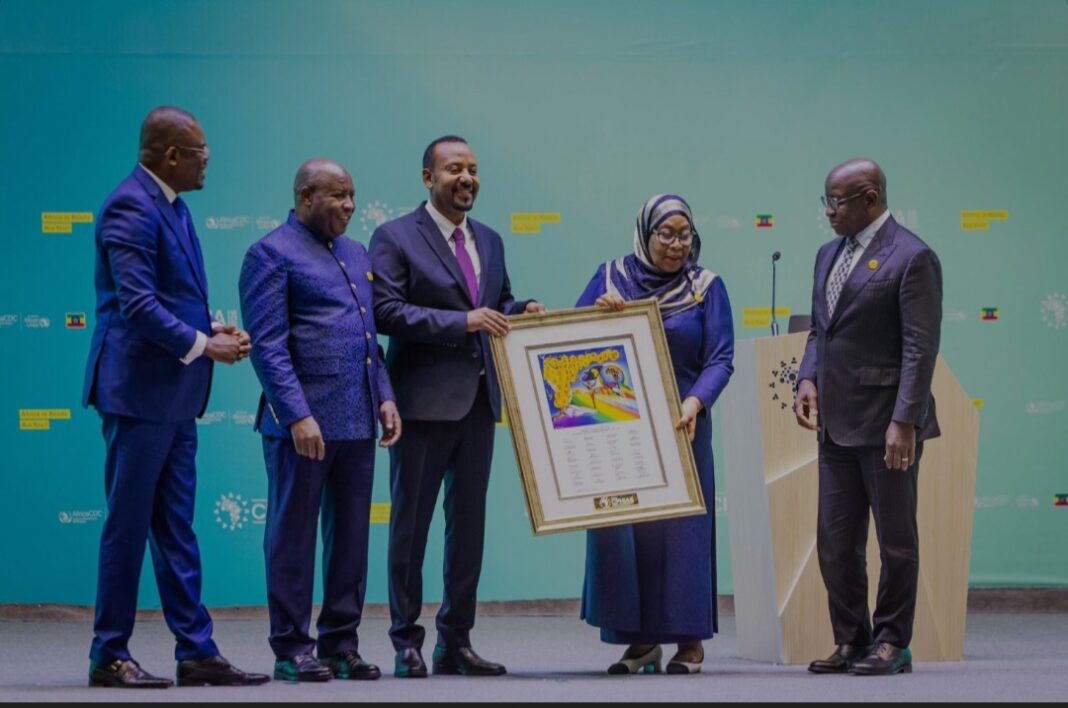
Presidential Awards for Health Transformation were presented to Burundi President Évariste Ndayishimiye, Angola President João Lourenço, Ghana President John Dramani Mahama, Namibia President Netumbo Nandi-Ndaitwah and Sierra Leone President Julius Maada Bio.
Cameroonian scientist Professor Rose Gana Fomban Leke of the University of Yaoundé received the Distinguished Scientist Award for her contributions to malaria research and immunisation.
Extraordinary Global Health Leadership Awards were presented to Dr Sania Nishtar of Gavi, Dr Richard Hatchett of the Coalition for Epidemic Preparedness Innovations and Dr Philippe Duneton of Unitaid.
The awards recognised their contributions to vaccine access, epidemic preparedness and equitable access to essential health technologies.
As CPHIA 2026 continues through November 27, African governments face the challenge of translating commitments made at the conference into stronger national health systems, sustainable financing and improved access to essential healthcare.
For Africa CDC, the broader ambition is to move the continent from dependence and vulnerability towards greater ownership of its health priorities, institutions and resources.
The conference’s central message is that health sovereignty requires more than political declarations. It demands sustained domestic investment, effective institutions and accountability for delivering results to African communities.