
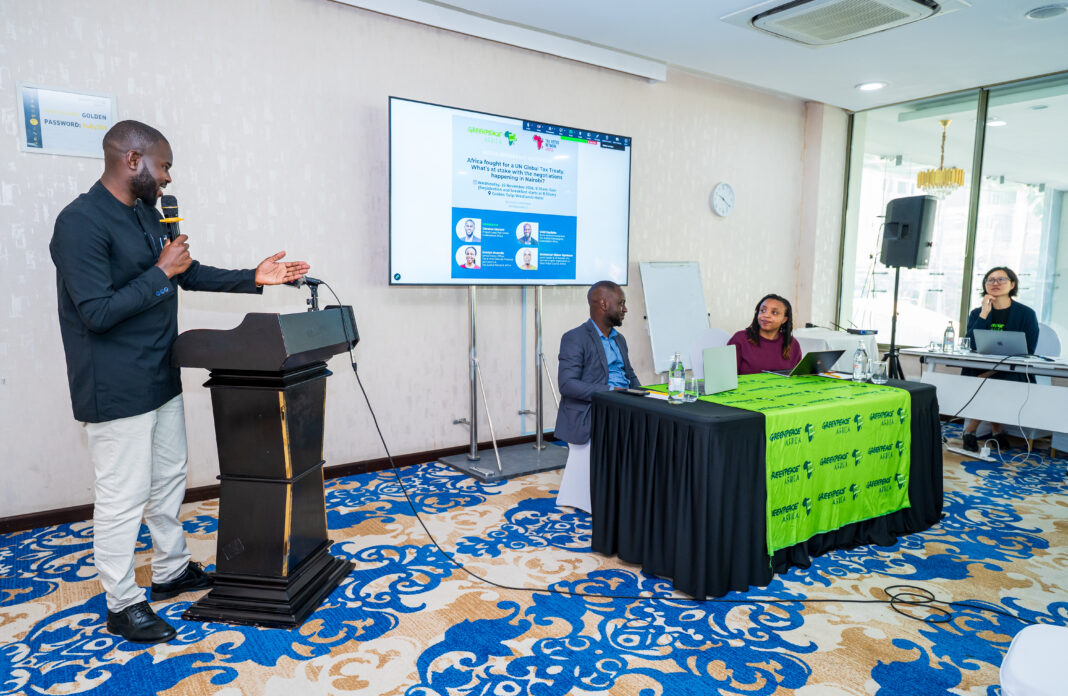

African campaigners are pushing for a global tax treaty that could give countries greater power to tax multinational companies and raise revenue for climate action.
African campaigners are demanding a fundamental overhaul of global tax rules, arguing that the continent cannot finance its development and respond to climate change while losing billions of dollars in potential revenue.
The demand comes as negotiations on the proposed United Nations Framework Convention on International Tax Cooperation bring together countries seeking to reshape an international tax system that campaigners say has historically favoured wealthier nations.
The proposed treaty could give African countries greater authority to tax multinational companies operating within their economies, address profit shifting and establish new taxes on major polluters and wealthy individuals.
For Kenya, the stakes are significant. Tax Justice Network Africa estimates that fairer international tax rules could help the country recover US$943 million in annual tax revenue.
The negotiations also present an opportunity to address the financial pressures facing African governments as climate disasters increase spending needs while debt servicing and limited domestic revenue constrain public budgets.
Ucizi Ndulube, a socio-environmental and tax justice campaigner at Greenpeace Africa, says the continent is facing the consequences of a climate crisis it contributed relatively little to, while struggling to mobilise the resources needed to respond.
Kenya’s 2023–2024 floods caused an estimated Sh187.8 billion in damages and losses, according to the National Treasury’s disaster risk financing strategy cited by Ndulube.
She says climate-related economic losses, combined with rising fuel and food prices, are placing additional pressure on households and governments.
At the same time, major oil and gas companies continue to generate substantial profits.
Greenpeace Africa is calling for a 20 per cent tax on the global profits of major fossil fuel companies, with the rate increasing over time. The campaigners estimate that the measure could raise US$100 billion in its first year for international climate programmes.
They are also advocating for progressive taxation of extreme wealth and a shift in public subsidies away from polluting industries towards climate and nature protection.
“These communities did their least to cause this climate crisis,” Ndulube says, arguing that wealthy polluters should contribute more towards addressing its consequences.
The campaigners say the proposed treaty could help African countries reduce dependence on external financing by increasing the revenue they collect from economic activity within their borders.
Evelyn Muendo, a senior policy officer at Tax Justice Network Africa, says the international tax system was developed at a time when many African countries had not yet gained political independence.
The rules, she says, have continued to limit the ability of African countries to tax income generated within their economies, particularly through bilateral tax agreements and arrangements that allow profits to be shifted across borders.
In 2022, the Africa Group at the United Nations initiated a process to reform international tax cooperation. Led by Nigeria, the group tabled a resolution calling for a more inclusive and effective global tax system.
The resolution was adopted by the UN General Assembly, paving the way for negotiations on a binding international instrument.
Muendo says African countries are negotiating as a bloc, seeking common positions on how to reclaim taxing rights and increase domestic revenue.
“We aren’t asking for aid. We aren’t asking for loans. We’re asking, let us impose taxes and then use the taxes for our own development,” she says.
One of the central disputes concerns the allocation of taxing rights between countries.
African negotiators want countries to have the right to tax income generated through economic activities taking place within their borders, even when the companies involved are based elsewhere.
The issue is particularly relevant to digital companies that generate revenue from African markets without maintaining a physical presence in every country where they operate.
Under current international tax rules, the absence of physical operations can make it difficult for countries to tax some of the income generated from their markets.
Muendo says the proposed treaty should reflect the realities of a globalised and digital economy, allowing countries to tax multinational companies where they conduct business and make profits.
The negotiations are also expected to address how decisions will be made under the proposed convention.
African countries are pushing for a conference of parties to serve as the treaty’s supreme decision-making body, alongside majority-based voting rather than consensus.
Muendo says consensus-based negotiations can allow a small number of countries to block decisions supported by the majority.
The proposal remains controversial, particularly among countries that favour consensus-based decision-making.
The United States withdrew from the negotiations in February 2025, according to Muendo, highlighting the geopolitical divisions surrounding efforts to reform international tax rules.
The proposed treaty is expected to be completed in 2027, with further negotiations required to settle its provisions and decision-making framework.
For campaigners, the outcome will determine whether African countries can secure greater control over the revenue generated within their economies.
Emmanuel Kiptoo, a youth leader and co-founder of a women’s rights organisation in West Pokot County, says the debate over taxation has direct consequences for communities facing droughts and floods.
He says climate disasters are destroying livelihoods, damaging schools and roads, and making it harder for pastoralist families to access education and healthcare.
When livestock dies, Kiptoo says, families lose the income they depend on to pay school fees, buy food and meet medical expenses.
He wants the proposed treaty to ensure that the money raised through fairer taxation reaches communities affected by climate change.
The negotiations, he says, must produce tangible outcomes for people whose livelihoods are increasingly threatened by environmental disasters.
For African campaigners, the proposed convention is therefore not simply a technical exercise in international taxation. It is a contest over who has the authority to collect revenue, who bears the cost of climate change and whether the continent can mobilise more of its own resources to finance development.
The final provisions remain under negotiation, but campaigners say the opportunity to reshape global tax rules is one African countries cannot afford to lose.