In 2010, when Alice Ilantoi was rescued from the prospect of female genital mutilation (FGM) and an early marriage, her future was being decided by circumstances she was too young to control.
At just eight years old, she was facing a marriage to a man aged 60. Her childhood, education and the opportunity to determine the direction of her own life were at risk of being taken away.
Then Christian Mission Aid (CMA) intervened.
The organisation took her to its Girls Rescue Centre in Kajiado, where she found shelter, education and a community of people willing to support her. What followed was a journey that would eventually take her from a classroom to university, and from being a girl in need of protection to a woman determined to help others find the same protection.
“I got education there, I got friends, I got a shelter and I got people who supported me throughout my education journey,” she recalls.
Before arriving at the centre, education had been one of the challenges confronting her. By the time she completed secondary school, she had gained something more than an academic qualification: the opportunity to imagine a future beyond the circumstances into which she had been born.
Today, Ilantoi is a human resource professional with a degree in human resource management. She is also the founder of Oloip Foundation, an initiative she established to raise awareness about FGM, early marriage, school dropouts and early pregnancies among girls in her Maasai community.
Her journey captures a central question confronting organisations working to protect vulnerable children: What happens after a girl is rescued?
For Ilantoi, the answer lies in what comes next — education, economic independence, the ability to make decisions about her own life and the opportunity to help other girls avoid the circumstances she faced.
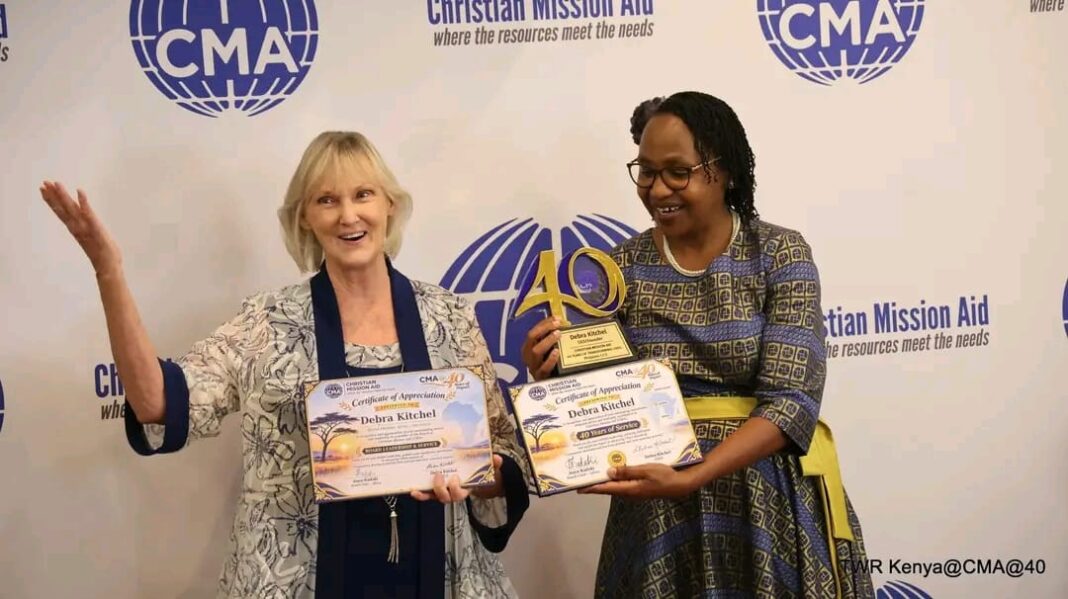
As CMA celebrates four decades of service, her story offers a human perspective on the organisation’s work across Kenya, Uganda and South Sudan. It also illustrates the distance between rescuing a child from immediate danger and creating the conditions in which she can build an independent future.
The distinction matters in communities where harmful practices, poverty and limited educational opportunities can reinforce one another.
For CMA, founded in 1986, the work of changing lives has increasingly involved addressing these interconnected challenges.
The organisation operates across four broad areas: children and youth, community development, aid and relief, and Christian outreach ministries. Its programmes include education and mentorship, clean water provision, agriculture, emergency assistance, medical and nutrition support, and training for community and church leaders.
Yet in Ilantoi’s story, the significance of these programmes becomes visible through a single life.
She was rescued in 2010, two years after CMA established its Girls Rescue Centre in 2008. According to the organisation’s co-founder and chief executive officer, Debra Kitchel, the centre has since rescued more than 200 girls.
The centre provides a safe environment for girls escaping FGM and forced early marriage, supporting them through secondary education and, where possible, further training at college or university.
Kitchel says the organisation’s approach is built around the belief that girls should be able to determine their own futures.
She is particularly opposed to the idea that medicalising FGM makes the practice acceptable.
“The girls have a right to refuse whoever mutilates their body,” she says, arguing that the practice is wrong whether it takes place in a traditional setting or a medical facility.
But rescue and education are only part of the response.
Kitchel points to the economic pressures facing some rural families, where girls may be married off in exchange for livestock or money. In such circumstances, the decision to marry off a daughter cannot be separated from the household’s struggle to survive.
She argues that helping families improve their livelihoods, while ensuring girls can complete their education, is essential to addressing the conditions that sustain early marriage.
The challenge is not simply to persuade a family to abandon a harmful practice. It is also to help create a future in which the family does not feel compelled to sacrifice a girl’s education and independence for immediate economic survival.
For Ilantoi, this understanding has become the foundation of her own work.
After completing her education, she began thinking about the girls who remained in villages where information about their rights and the consequences of FGM was not always readily available.
She recognised that while CMA’s rescue centre offered an important lifeline, many girls needed support before they reached a point where escape became their only option.
“The CMA helps through the Girls Rescue Centre, but they don’t come to the villages to spread awareness,” she says.
Her response was to establish Oloip Foundation, which she says means “shade”.
The foundation seeks to reach girls in schools with information about FGM, early marriage, early pregnancies and school dropout. During school holidays, she also engages parents, seeking to create awareness within the families and communities where decisions about girls’ futures are often made.
Her work reflects a shift from responding to individual cases of vulnerability towards preventing the circumstances that place girls at risk.
It is also a reminder that the impact of an intervention may extend beyond the person who directly benefits from it.
A girl who receives an education can become a professional. A professional can establish an organisation. And that organisation can reach girls who might otherwise never encounter the support that changed her own life.
For Kitchel, this is part of the broader purpose of CMA’s work: building the capacity of people and communities to improve their own lives.
“We always say, how can we make someone’s life better?” she says.
The question is reflected in the organisation’s community development programmes, which include adult literacy, agriculture, agroforestry and household water filters.
In Kajiado, where some families rely on water collected from ponds, CMA has distributed thousands of household water filters. Kitchel says the filters have helped families access cleaner drinking water, reducing illnesses that affect children and interrupt their schooling.
The organisation hopes to expand the programme to other areas where access to clean water remains a challenge.
For families facing poverty, the benefits of such interventions can extend beyond health. When children are healthier and able to attend school, and households spend less on treating preventable illnesses, families may have more opportunities to direct their limited resources towards other needs.
The same principle underpins CMA’s work in agriculture and income generation: supporting families to improve their livelihoods rather than relying solely on short-term assistance.
In some of the remote areas where the organisation works, including Turkana, Pokot and Mount Elgon, its programmes also involve training pastors and community leaders, supporting education and providing emergency assistance.
In South Sudan, where CMA has operated for more than three decades, its work includes nutrition and medical programmes.
These interventions address different needs, but they share an emphasis on strengthening people’s ability to improve their circumstances.
For Thomas Obunde, CMA’s Africa programme director, development is about restoring dignity and creating opportunities by working alongside communities.
He says the organisation’s programmes seek to meet both spiritual and socioeconomic needs, whether supporting a girl escaping early marriage, a family without clean water or a community leader serving in a remote area.
The organisation now has more than 400 staff across Kenya, Uganda and South Sudan, according to Obunde.
He describes the anniversary as a milestone rather than a conclusion, pointing to continuing challenges such as conflict, poverty, displacement and food insecurity.
“Forty years is a milestone, not a finish line,” he says.
That unfinished work is visible in the continued need to protect girls from FGM and early marriage.
Although Kitchel says communities are increasingly educated about the dangers of these practices, she acknowledges that resistance remains, particularly among people who are deeply attached to traditional customs.
CMA’s response includes training pastors in rural communities, incorporating lessons on harmful traditional practices into their training so they can speak against FGM and early marriage.
The approach recognises the influence local leaders hold within their communities. Rather than relying exclusively on outside interventions, it seeks to equip people already trusted by the community to support change.
For Ilantoi, the need to continue that work is personal.
She knows what it means to face a future shaped by decisions made by others. She also knows what can become possible when a girl is given the opportunity to remain in school and develop her own ambitions.
Her message to girls in Kajiado is to speak out, pursue education and seek support when they face harmful practices.
Through Oloip Foundation, she hopes to ensure that more girls receive information and support before they are forced to leave their homes in search of safety.
The organisation she founded does not replace the role of rescue centres. Instead, it seeks to extend the work of protection into the schools and villages where girls live.
This is where the significance of CMA’s 40-year anniversary becomes more than a celebration of longevity.
The organisation’s history is not only measured by the programmes it has implemented or the communities it has reached. It is also reflected in what happens when the people it supports begin to shape their own communities.
Ilantoi’s journey demonstrates that possibility.
She entered the Girls Rescue Centre as a child whose future was under threat. She left with an education, professional qualifications and the determination to help other girls avoid the circumstances she faced.
Her story does not mean that the work of ending FGM and early marriage is complete. Nor does it suggest that education alone can overcome every social and economic barrier facing girls.
But it shows what can happen when protection is followed by sustained support.
As CMA looks towards its next four decades, Kitchel says the needs remain great, from children seeking education to families struggling to generate income and pastors serving in remote communities.
The organisation hopes that a younger generation will carry its mission forward.
For Ilantoi, that future is already taking shape.
It is present in the girls she hopes to reach through Oloip Foundation, the parents she seeks to engage and the communities where she wants education and awareness to become part of the response to harmful practices.
Forty years after CMA began its work, her journey offers a reminder that the impact of community development can extend far beyond the original intervention.
Sometimes, it begins with a girl who is given the chance to stay in school.
And sometimes, that girl grows up to become the person who helps others find their way there.