
The question hanging over the final hours of COP31 is no longer whether governments recognise the urgency of climate change. It is whether they are prepared to put that recognition into an agreement that names the problem, commits to addressing it and provides the resources to make change possible.
With the United Nations climate summit scheduled to close on Friday, a coalition of countries from Europe, Africa, Latin America and the Pacific has rejected the proposed Antalya Accord, arguing that the draft falls short of what the climate crisis demands.
Their objection centres on two critical omissions: a clear commitment to move away from fossil fuels and stronger provisions for climate finance.
The dispute has exposed a deeper contradiction at the heart of the negotiations. Governments are being asked to accelerate climate action while remaining divided over who should pay for it, how quickly the global energy system should change and whether the final agreement will explicitly identify fossil fuels as a central part of the problem.
For countries already facing the consequences of climate change, the outcome carries implications beyond the negotiating rooms in Antalya.
It concerns whether the international climate process can translate years of promises into decisions that protect vulnerable communities, support developing economies and reduce the emissions driving global warming.
At a press conference on Friday, France and Panama led a group of countries including Belgium, Côte d’Ivoire, Finland, Greece, Guatemala, Spain, Sweden and Vanuatu in demanding a stronger agreement.
The coalition brought together countries that do not usually negotiate as a single bloc, united by their insistence that the final document must reflect the urgency of the climate crisis.
“We cannot [tell] the world we are now getting to 1.5 [degrees of warming] and then do business as if nothing was happening,” France’s Minister for Ecological Transition, Monique Barbut, said.
Her remarks captured the frustration surrounding the draft: the world is approaching a critical warming threshold, yet the proposed agreement does not explicitly address the fossil fuels responsible for much of the warming.
For Barbut, the crisis cannot be separated into competing geographical interests.
The consequences of climate change, she argued, are not confined to either the Global North or the Global South.
They are a question of survival.
Panama’s Environment Minister, Juan Carlos Navarro, was even more direct.
His country had already announced that it would formally object to any agreement that failed to include language on fossil fuels.
Because decisions at UN climate summits are generally adopted by consensus, a single country’s formal objection can prevent an agreement from being adopted.
Panama’s position therefore placed additional pressure on the presidency as negotiators worked against the summit’s scheduled closing time.
“It is not acceptable to have a COP or a cover document that does not even mention fossil fuels, and we simply will not put up with it,” Navarro said.
The disagreement is not simply about wording.
For the countries demanding stronger language, the absence of fossil fuels from the draft risks weakening the agreement’s ability to address the principal source of the climate crisis.
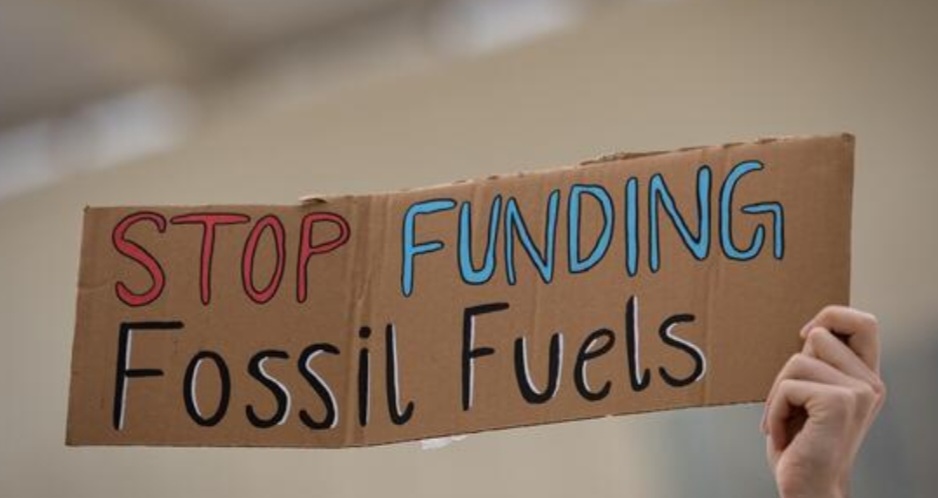
The coalition wants the final text to recognise the need for a clear and orderly transition away from fossil fuels, alongside stronger commitments on climate finance, renewable energy, methane reduction and international cooperation.
Its six priorities include grounding climate decisions in science, ensuring that those most responsible for emissions contribute fairly to climate action, accelerating clean electrification and strengthening coordination between the international conventions addressing climate change, biodiversity and desertification.
The demands reflect an attempt to connect the causes of climate change with the financial and political responsibilities required to address them.
Without that connection, the coalition argues, the agreement risks promising ambition without establishing the conditions necessary to achieve it.
The missing link between climate ambition and finance
The dispute over fossil fuels has unfolded alongside growing frustration over the financing of climate action.
For developing countries, the transition to cleaner energy and the protection of communities from climate impacts require resources that many cannot mobilise independently.
That financing question has become one of the most contentious issues at COP31.
UN Secretary-General António Guterres warned world leaders in Antalya last week that governments must accelerate the transition away from fossil fuels while protecting workers and communities affected by the shift.
He also called for the delivery of climate finance promised to developing countries.
Guterres urged governments to triple adaptation funding by 2035 and called for taxes on windfall profits from fossil fuel companies to help vulnerable nations recover from climate disasters.
His position linked the energy transition with the responsibility to support countries facing the consequences of emissions they did little to produce.
“Polluters must pay,” he said, warning that the world could not afford further delays.
The demand for climate finance is therefore not separate from the debate over fossil fuels.
It is part of the same argument over responsibility.
Countries seeking stronger climate action are insisting that governments and industries that have contributed most to emissions must also contribute fairly to addressing the damage.
Navarro summarised that position in simple terms.
“You pollute; you pay. It’s actually rather simple. You cause the problem, you must help to fix it,” he said.
For the countries challenging the draft, a stronger climate agreement must move beyond general expressions of solidarity.
It must establish a clearer relationship between emissions, financial responsibility and the support needed by developing countries to transition to cleaner economies.
The question is whether governments can agree on that responsibility before the negotiations conclude.
A transition without a clear destination?
The proposed agreement has also drawn criticism for promoting carbon capture technologies while omitting explicit language on fossil fuels.
For Barbut, the contradiction raises questions about the direction of the climate negotiations.
“So what does it mean? It means we don’t recognize what is the problem,” she said.
The disagreement reflects competing views about how the global economy should respond to climate change.
While some governments are pushing for a clear commitment to move away from fossil fuels, the draft’s treatment of carbon capture has raised concerns among countries seeking stronger language on the energy transition.
The issue is not simply whether governments will invest in technologies intended to reduce emissions.
It is whether the final agreement will clearly acknowledge the need to move away from fossil fuels rather than rely on a collection of measures that critics say may leave the underlying problem insufficiently addressed.
The coalition is also calling for faster reductions in methane emissions, which can deliver relatively rapid climate benefits, and a stronger shift towards renewable electricity.
Together, the demands seek to establish a more coherent direction for climate action.
But with governments still divided, the final text remained uncertain.
By Friday afternoon, the COP31 presidency had not published a new version of the proposed Antalya Accord, leaving delegations working from Thursday’s draft.
The delay added to concerns that the summit could close without resolving its most contentious issues.
The Global South’s patience wears thin
Outside the negotiations, civil society organisations were increasingly vocal in their rejection of the proposed agreement.
At a final press conference organised by the Climate Action Network, campaigners stood behind speakers holding black signs bearing the word “shame”.
The coalition of environmental organisations called on developing countries to reject the draft, arguing that it failed to protect communities or address the priorities of the Global South.
“There is nothing on the table that protects people or addresses the priorities of the Global South,” said Tasneem Essop, executive director of Climate Action Network International.
Campaigners accused wealthy countries of blocking progress on climate finance, emissions reductions and support for workers and communities affected by the transition to cleaner economies.
Their frustration reflects a growing concern that developing countries are being asked to demonstrate greater climate ambition without receiving the support necessary to deliver it.
Mohamed Adow, founder of Power Shift Africa, described the negotiations in stark terms.
“The COP Presidents want to tell us this has been a great COP. Well, I can tell you without any doubt that this has been the worst COP ever,” he said.
His criticism was directed at what he described as a failure by developed countries to match demands for greater climate ambition with the financial support needed to achieve it.
The dispute has also raised questions about the future of the UN climate process itself.
For campaigners, the negotiations remain one of the few international spaces where developing countries and civil society can hold wealthier nations accountable for their climate commitments.
“The COP is not dying; It’s being killed. Not because it’s bloated. Not because it’s inefficient or useless. It’s being killed because it’s the last space where civil society, where developing countries, can hold developed countries accountable,” said Anabella Rosemberg, senior adviser on just transition at Climate Action Network.
Her remarks underscore the stakes of the negotiations beyond the wording of a single agreement.
The credibility of the process depends not only on whether governments reach consensus, but also on whether that consensus reflects the concerns of the countries and communities most exposed to climate change.
A deal is not the same as climate action
As the summit approaches its conclusion, governments face a difficult choice.
They can adopt an agreement that secures consensus but leaves major questions about fossil fuels and climate finance unresolved, or continue negotiating over the issues that have divided them, risking a delay in the adoption of the final text.
Panama’s warning has made clear that consensus cannot simply be assumed.
The coalition’s demands also demonstrate that the dispute is not limited to a single country or negotiating bloc.
Governments from different regions have united around the need for a stronger agreement, suggesting that the concerns over fossil fuels and climate finance extend beyond the traditional divisions of climate diplomacy.
Yet the final outcome remains dependent on whether nearly 200 governments can agree on a text that addresses those concerns.
The urgency is particularly stark in the context of the 1.5-degree warming threshold, which has become a central reference point for international climate action.
For countries demanding stronger commitments, an agreement that does not explicitly address fossil fuels risks falling short of the scientific and political urgency of the crisis.
For developing countries, the absence of stronger financing provisions would leave another critical question unanswered: how they are expected to implement climate commitments without adequate support.
The two issues are inseparable.
A transition away from fossil fuels requires investment in cleaner energy systems, while adapting to climate impacts requires resources for communities already facing growing risks.
The challenge is to turn those realities into an agreement that governments are willing to adopt and capable of implementing.
As negotiations continue in Antalya, the question is whether the final accord will offer more than a statement of shared concern.
For the countries challenging the draft, the test is whether the agreement names the source of the crisis, establishes a clearer path away from it and ensures that those most responsible contribute to the cost of change.
Without those commitments, the climate summit risks ending with a deal that secures consensus in the negotiating rooms but leaves the central demands of vulnerable countries unresolved.
And for those countries, the cost of another delay is not measured in the hours remaining before the summit closes.
It is measured in the years they have already spent waiting for climate promises to become action.