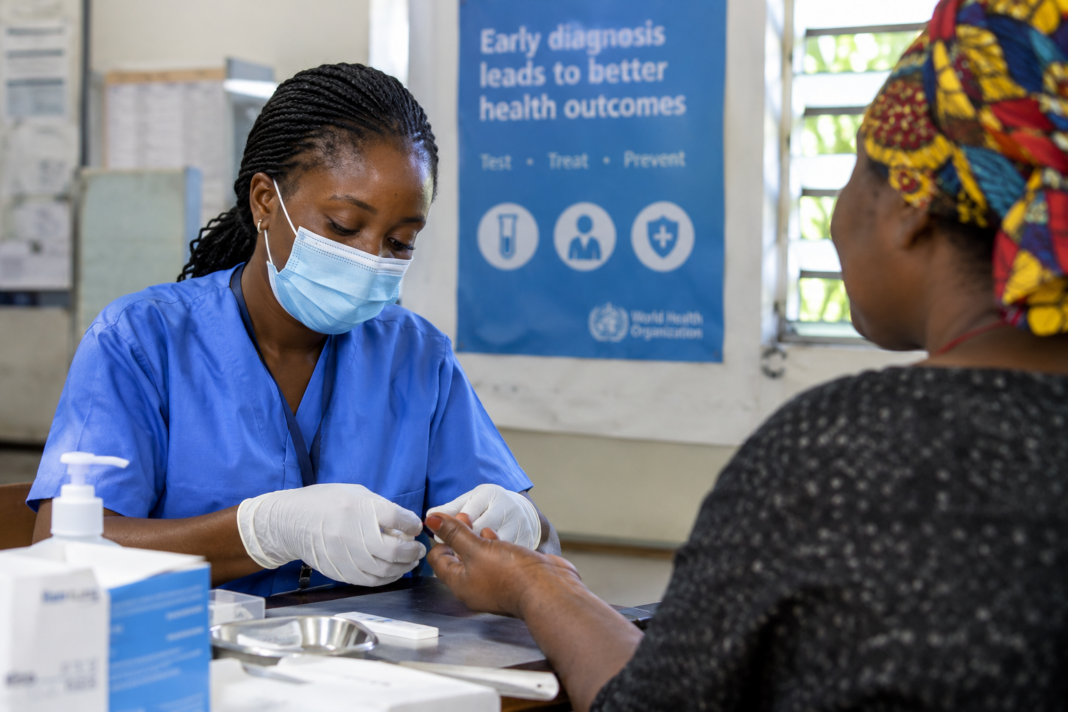

Nearly half of the world’s population lacks access to timely and reliable diagnosis, raising concerns about delayed treatment, escalating healthcare costs and preventable complications as global health leaders push for stronger diagnostic systems.
According to the World Health Organization (WHO), 47 per cent of the global population still faces barriers to timely and reliable diagnosis, limiting opportunities for early disease detection and effective treatment.
The challenge took centre stage at the World Health Summit 2026 in Berlin, Germany, where the Global Diagnostics Coalition (GDC) brought together government officials, health experts, civil society organisations, industry representatives and development partners to discuss ways of closing the diagnostic gap.
WHO Director-General Dr Tedros Adhanom Ghebreyesus warned that health systems cannot respond effectively to diseases and emerging health threats without accurate and timely diagnostic services.
“Without timely and accurate diagnostics, we’re flying blind,” he said in a video message opening the event.
The discussions focused on moving beyond commitments towards practical action, including strengthening national diagnostic systems, increasing investment and ensuring diagnostic services are accessible to communities.
When patients struggle to get answers
The consequences of delayed diagnosis were illustrated by Carol Nawina, Executive Director of CITAMplus, who recounted her experience of repeatedly seeking medical attention before receiving diagnoses of HIV, tuberculosis and cancer.
Her experience highlighted how gaps in diagnostic services can expose patients to repeated hospital visits, mounting medical expenses, worsening illness and missed opportunities for timely treatment.
Nawina called for healthcare services to be organised around people’s needs rather than individual diseases, arguing that patients should not have to navigate fragmented systems to obtain a diagnosis.
She also urged governments and health partners to involve communities in designing healthcare services, shaping innovation and holding institutions accountable.
“Our experiences are not merely stories to be shared at meetings. They are the evidence that must inform decisions and guide investments,” she said.
Her remarks underscored a central challenge facing health systems: improving access to healthcare requires more than establishing facilities. Patients must also be able to access the tests and expertise needed to identify illnesses and determine appropriate treatment.
Strengthening diagnostic systems
Participants highlighted the need for governments to invest in diagnostic infrastructure, strengthen the health workforce and establish regulatory systems that allow appropriate innovations to reach patients.
Dr Mohamed Fawzi, Radiology Advisor to Egypt’s Minister of Health and Population, shared lessons from Egypt’s efforts to expand screening, diagnostic imaging and teleradiology.
The experience highlighted the importance of connecting diagnostic services to treatment and continuing care so that patients can benefit from the results of medical investigations.
Experts also called for stronger evidence demonstrating the health and economic benefits of diagnostics to help governments prioritise investments.
Clear national diagnostic strategies were identified as essential to coordinating partners and funding, reducing fragmented disease-specific interventions and ensuring investments respond to countries’ actual healthcare needs.
The discussions also emphasised the importance of preparing diagnostic systems before emergencies emerge, rather than attempting to build capacity only after a public health crisis has begun.
Reliable diagnostic services support everyday healthcare while strengthening countries’ ability to detect and respond to infectious disease outbreaks and other health threats.
A global coalition seeks coordinated action
The meeting marked a milestone for the Global Diagnostics Coalition, which was launched a year earlier to strengthen collaboration and improve access to diagnostic services worldwide.
Presenting the coalition’s progress, Kylie Shae, Team Lead for Medical Devices and Assistive Technology at WHO and chair of the GDC, outlined its work through three pillars: Illuminate, Champion and Integrate.
The initiative seeks to strengthen knowledge-sharing, advocacy and coordination among stakeholders working to expand access to diagnostics.
Closing the event, Deusdedit Mubangizi, Director of WHO’s Department of Medicines and Health Products Policy and Standards, called on stakeholders to turn growing recognition of the diagnostic gap into concrete action.
The coalition plans to continue supporting country leadership and aligning partners across the diagnostics sector to expand equitable access to diagnostic services.
However, closing the gap will require sustained political commitment, financing, trained personnel, reliable infrastructure and diagnostic technologies suited to local needs.
For millions of patients, the challenge is not simply reaching a health facility but obtaining an accurate diagnosis in time for treatment to make a difference.
Strengthening diagnostic systems could therefore help health services move towards earlier intervention, more effective treatment and greater preparedness for future health emergencies.