

UNICEF says 665 million children live in countries where interest payments on public debt exceed combined spending on health, education and social protection.
The growing debt burden in developing countries is threatening children’s access to essential services, with governments spending billions on interest payments at the expense of healthcare, education and social protection, the United Nations Children’s Fund (UNICEF) has warned.
UNICEF Executive Director Catherine Russell said debt pressures were undermining public investment in children, leaving millions without adequate nutrition, healthcare and learning opportunities.
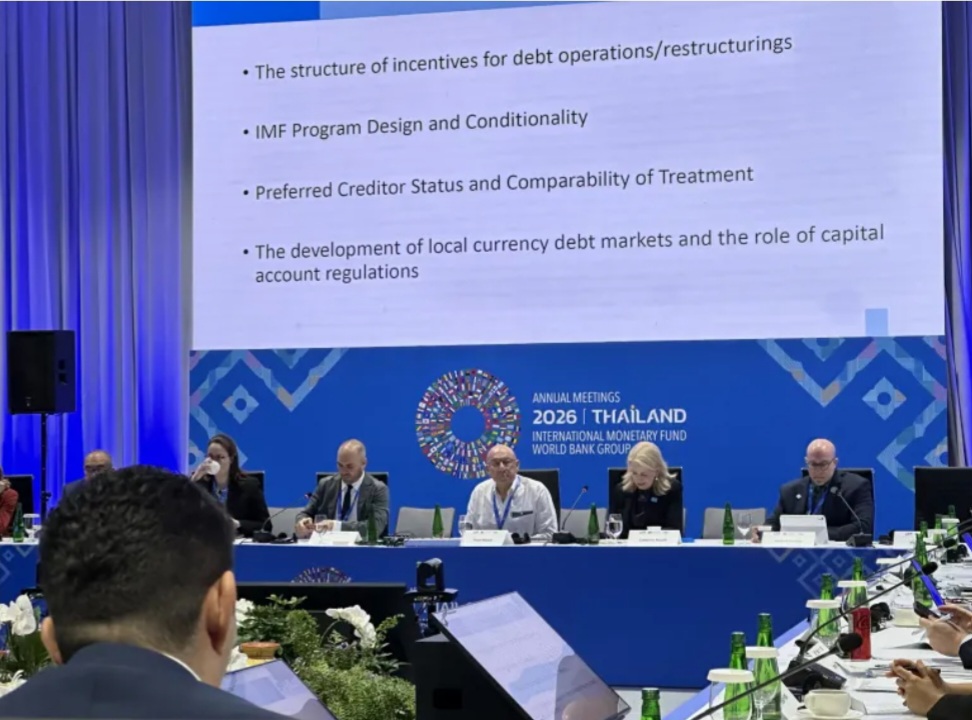
Speaking at a high-level workshop on sovereign debt and capital flows in developing countries in crisis on October 15, Russell said governments in 34 countries, home to 1.1 billion children, spend more on interest payments than on healthcare.
Across low- and lower-middle-income countries, 665 million children live in countries where debt interest payments exceed combined government spending on health, education and social protection.
“The decisions made about borrowing, spending, and debt relief have profound consequences for children and for the opportunities available to them,” Russell said.
She acknowledged that borrowing remains an important tool for development but warned that unsustainable debt levels can force governments to make spending decisions that disproportionately affect children.
The impact extends beyond immediate cuts to public services, with UNICEF warning that inadequate investment in children’s health, education and nutrition could have long-term consequences for economic growth and government revenue.
According to Russell, underinvestment in children weakens future productivity and economic growth, undermining the very foundations of debt sustainability.
The warning comes as developing countries face mounting pressure to balance debt obligations with the need to finance essential public services.
UNICEF said its forthcoming book, Children and the Global Debt Crisis, draws on new analysis and country studies to examine how debt pressures affect essential services, how responses to debt crises can worsen the situation, and why existing international debt restructuring mechanisms are falling short.
Russell said budget figures alone may fail to capture the full impact of fiscal pressure on children. While governments may protect allocations for public sector salaries, she noted, essential supplies such as medicines and school materials, as well as maintenance, can face cuts.
She also cautioned that safeguards designed to protect social spending do not necessarily guarantee that children receive the services they need.
Debt crisis responses can further compound the problem, with fiscal adjustment measures squeezing essential investments and prolonged debt restructuring leaving affected populations waiting years for relief.
UNICEF also raised concerns about the pace and effectiveness of international debt relief mechanisms, including the Common Framework, which was established to facilitate debt treatment for eligible countries.
While the framework has helped bring creditors together, Russell said negotiations remain slow, creditor participation is difficult and questions persist about whether the relief provided is sufficient.
She called for debt sustainability assessments to better account for the long-term economic consequences of failing to invest in children.
Russell welcomed an agreement by the International Monetary Fund and the World Bank to introduce a long-term module into debt sustainability analysis, describing it as an important first step towards addressing the gap.
She urged governments, creditors and international financial institutions to adopt a debt management approach that places children’s needs at the centre of economic decision-making.
Among the proposed measures are faster and more effective debt restructuring, stronger safeguards to ensure social spending translates into essential services, and assessments of the impact on children before governments make borrowing and fiscal decisions.
She also called for stronger national debt management and greater transparency in public borrowing.
The UNICEF chief said debt sustainability and investment in children should not be treated as competing priorities, arguing that protecting children’s access to essential services is critical to long-term economic stability.
“Debt can be restructured. But children’s futures cannot be put on hold,” Russell said.