In a quiet clinic on a small island somewhere in the Pacific, a nurse checks her only refrigerator to make sure the vaccines inside are still cold. Thousands of kilometres away, in Geneva, two of the world’s most influential health and development institutions signed a document that could, in time, help make sure clinics like hers never have to worry about that refrigerator again.
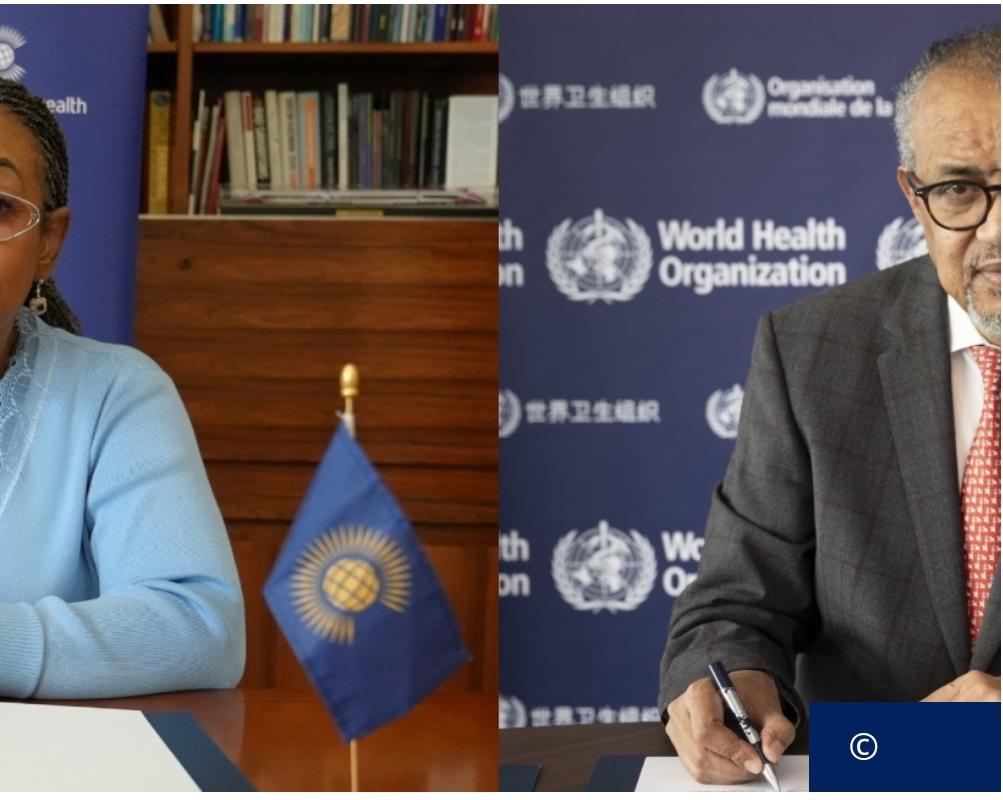
Today, the World Health Organization and the Commonwealth Secretariat renewed the Memorandum of Understanding that binds them together, extending their partnership for another four years. It is not a flashy announcement.
There were no fireworks, no viral moments. But for the 56 countries of the Commonwealth home to roughly a third of the world’s population ,it is the kind of quiet institutional commitment that, over time, decides whether a rural health post gets electricity, whether a health worker gets trained, or whether a small island state has any voice at all in the rooms where global health policy gets made.
Two Signatures, One Vision
The agreement bears the signatures of Commonwealth Secretary-General Shirley Botchwey and WHO Director-General Tedros Adhanom Ghebreyesus, two leaders who, in their own words, see this moment as more than paperwork. Dr Tedros described the arrangement as serving a double purpose building durable health systems while also helping countries meet urgent threats head-on, pairing WHO’s scientific and technical know-how with the Commonwealth’s power to bring heads of state and government to the same table.
Botchwey, for her part, framed the renewal as proof that ambition means little without delivery, tying it to the Commonwealth’s own strategic plan, which puts partnership at the centre of how it intends to get things done, because, as she put it, no single institution can face down today’s tangled health and development challenges alone.
Four Priorities, One Mission
Behind the diplomatic language sits a fairly concrete to-do list. Over the next four years, the two organizations plan to focus their combined efforts on four fronts:
– Building the basics — strengthening primary health care and the everyday systems that underpin universal health coverage, including digital health tools that let a health worker in a remote village do far more than the equipment on their desk might suggest.
– Looking upstream — tackling the root causes of illness that live outside hospital walls: housing, sanitation, education, trade policy — the quiet determinants that shape a population’s health long before anyone gets sick.
– Closing the gap — improving health service coverage and financial protection, with explicit attention to the inequities and gender gaps that keep too many people one bad diagnosis away from poverty.
– Facing the storm — preparing health systems for a warming world, building the kind of climate resilience that means a hospital doesn’t go dark during a cyclone, or a supply chain doesn’t collapse during a flood.
A Partnership With a Track Record
This isn’t a first date. WHO and the Commonwealth Secretariat first signed an MoU in 2022, and the new agreement builds directly on that foundation. Their collaboration runs through familiar channels — high-level advocacy campaigns and multi-stakeholder dialogues, technical guidance rooted in WHO’s global norms and standards, and a particular focus on the world’s most vulnerable countries, including the small island and coastal states that make up a significant share of the Commonwealth’s membership.
It’s that last piece , the attention to Small States that may matter most in practice. Small States often lack the negotiating weight of larger nations, yet face some of the sharpest health and climate risks on the planet. A renewed, four-year commitment gives them something valuable: predictability, and a seat that isn’t up for renegotiation every year.
Why It Matters Beyond the Signing Ceremony
Memoranda of Understanding rarely make headlines, and this one is unlikely to break that pattern. But the story underneath it is a familiar one in global health: progress rarely arrives as a single breakthrough. It arrives as institutions quietly agreeing, again and again, to keep showing up for each other and for the clinics, nurses, and refrigerators that depend on them.
For the nurse checking her vaccine fridge, this agreement won’t change anything tomorrow. But over four years, if the partnership holds its promises, it might just mean one less thing she has to worry about.