
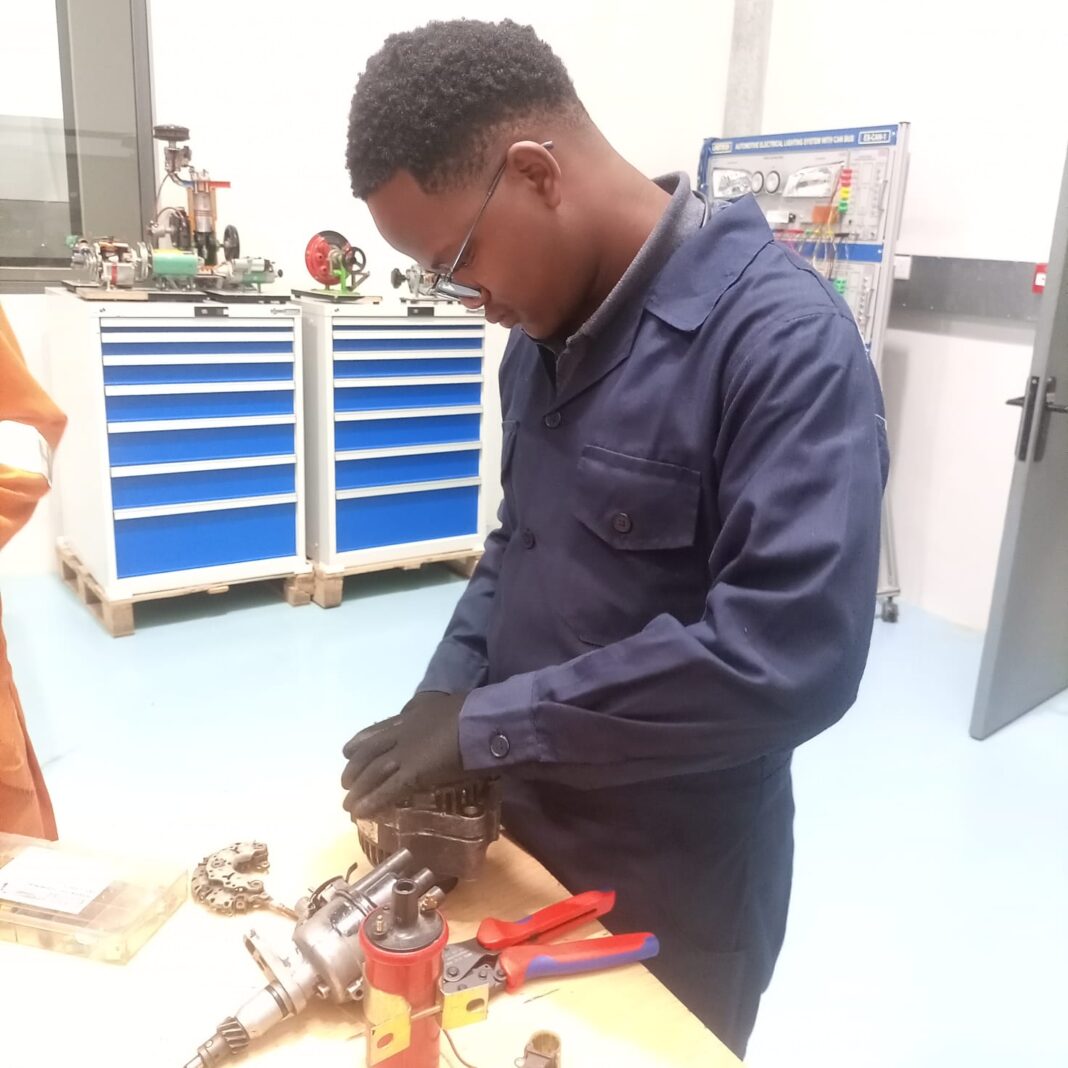

For Hannington Munga, a trainee at Machakos Technical Institute for the Blind, the journey from a Kenyan technical training institution to a potential job in Australia began with information shared by friends and family
Now pursuing a Certificate III in Automotive Lightweight Vehicle Mechanical studies under a partnership between Kenya’s State Department for Technical and Vocational Education and Training (TVET) and Signet Institute of Australia, Munga is preparing for a career that could take him beyond the country’s borders.
The course, which he began in January, combines technical instruction with practical assessments designed to meet Australian training standards. It is part of a government initiative seeking to connect vocational education with international employment opportunities.
For Munga, the prospect of working abroad has not been without uncertainty.
He said the assessment conducted by Australian assessors helped build his confidence in the training he was receiving.
The programme, he explained, includes a four-year employment arrangement, although he was not certain about the specific nature of the work he would undertake after completing his training.
His experience reflects a broader ambition within Kenya’s technical education system: to ensure that vocational training prepares young people not only for local employment but also for opportunities in international labour markets.
But the government’s vision for TVET extends beyond sending skilled workers abroad.
It is also seeking to transform technical institutions into productive enterprises, where students learn through real commercial activities while colleges generate their own income.
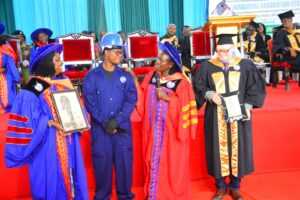
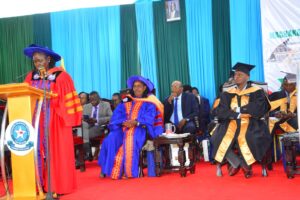
Speaking during the Inauguration graduation of the Machakos Training Institute for The Blind,Dr Esther Thaara Muoria, Principal Secretary in the State Department for TVET, said the government was working to align vocational training with international standards through partnerships such as the one with Signet Institute of Australia.
The first cohort of trainees is undergoing training in several institutions across the country, with the intention of creating a pathway into employment in Australia.
The partnership is designed to connect training with the requirements of employers, rather than leaving graduates to navigate the job market without a clear transition from education to work.
Australian assessors visited the institutions to evaluate the training, with the first cohort receiving a 90 per cent assessment score, according to Muoria.
The next stage, she said, would involve the trainees completing their courses and undergoing further assessments with prospective employers before proceeding to Australia for work.
The initiative offers a potential alternative to the conventional route through which young people complete their education before beginning the often uncertain process of searching for employment.
However, the government’s ambitions are not limited to international labour mobility.
Muoria said the department had also restructured TVET curricula, shifting the emphasis from theoretical instruction towards practical training and industry-based assessments.
Under the revised approach, technical examinations are conducted by the Curriculum Development Assessment and Certification Council (CDACC), replacing the previous examination arrangement through the Kenya National Examinations Council.
The aim is to make vocational training more responsive to the practical demands of the workplace.
For the government, however, practical training should not end with students working on equipment in college workshops.
It should also expose them to the realities of running businesses, serving customers and producing goods for the market.
“We are not looking just only for industries from outside there, but we want industries within the institutions,” Muoria said.
The approach could change the role of vocational institutions from centres that primarily prepare students for employment into places where students acquire skills while participating in productive economic activities.
In automotive training, for example, the department has registered institutions with automotive equipment as garages through an organisation identified by the Principal Secretary as KEMRA.
The institutions can receive vehicles from members of the public for repairs, allowing students to work on actual vehicles while learning their trade.
The arrangement is intended to move training away from dependence on old vehicles kept in workshops for instructional purposes.
Instead, students are expected to work with vehicles brought in by customers, exposing them to the practical challenges of diagnosing and repairing vehicles in a working garage.
The institutions, meanwhile, can earn income from the services they provide.
For students, the experience offers an opportunity to understand not only how to repair vehicles but also how technical skills translate into a service that people are willing to pay for.
For the institutions, it creates a potential revenue stream that could support training and reduce reliance on conventional funding.
The same thinking is being applied to agriculture.
At Nyandarua National Polytechnic, the department is working with agricultural consortiums to connect students with the entire production chain, from preparing land and planting crops to harvesting and exporting produce.
Rather than learning agriculture as a series of disconnected classroom and practical lessons, students are expected to participate in activities that link production to the market.
The partnership also allows them to work alongside exporters, gaining exposure to the processes involved in preparing agricultural products for international markets.
Muoria said the model would help students acquire skills they could replicate after leaving their institutions, while the colleges would generate income from the crops produced and exported.
The approach introduces a different understanding of vocational education, one in which training is linked directly to the production of goods and services.
A student completing agricultural training, for instance, would have experience not only in crop production but also in the commercial processes that determine whether a harvest can reach an export market.
Similarly, a student trained in automotive mechanics would have experience working with customers and actual vehicles, rather than relying exclusively on workshop exercises.
The government hopes that such exposure will give graduates the confidence and practical experience needed to establish businesses or secure employment.
The challenge, however, will be ensuring that the commercial activities remain connected to the primary purpose of the institutions: training students.
As colleges expand their involvement in production and service delivery, their ability to balance commercial operations with access to practical learning will be central to the success of the model.
The international partnership also raises questions about how the country will sustain the pathway beyond the first cohort, including the number of trainees who will eventually secure employment abroad and how the programme will accommodate future graduates.
For Munga, the opportunity represents the possibility of taking skills acquired in Kenya into a foreign labour market.
For the government, it is part of a much wider effort to make technical education more responsive to the needs of employers and the economy.
The emerging model seeks to connect three objectives: training young people, creating opportunities for employment and using technical institutions to produce goods and services.
Its success will depend not only on whether graduates can access international jobs but also on whether the skills they acquire translate into productive opportunities at home.
As Kenya’s TVET institutions move towards becoming training centres and commercial enterprises, the ambition is to ensure that students leave with more than certificates.
They should leave with the practical experience to work, the confidence to start businesses and the skills to participate in the economy, whether in Kenya or abroad.